Cleanroom Panel Standards Explained with ISO 14644 Practical Guide
A practical implementation guide for cleanroom envelope panels aligned with ISO 14644 principles, built for design, QA and validation teams.
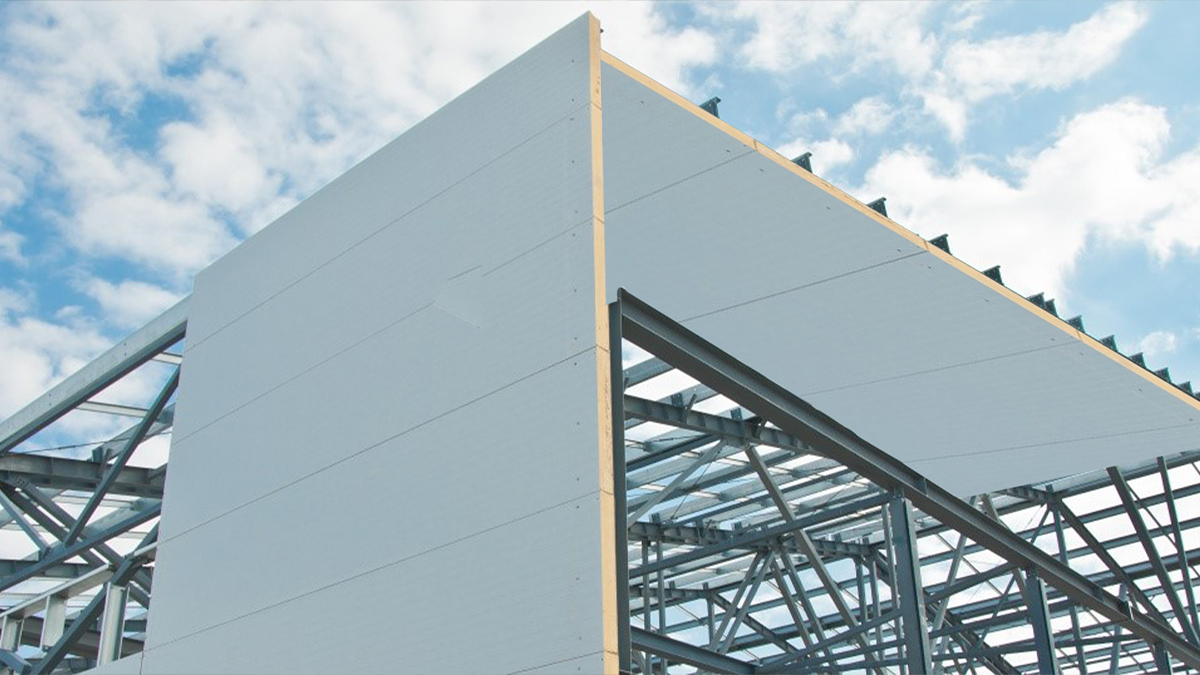
ISO 14644 Is a Performance Framework, Not a Product Catalog
Many project teams ask for "ISO 14644 panels" as if the standard certifies a panel material directly. In practice, ISO 14644 defines cleanroom classification and control principles; panel systems must support those goals through low particle shedding, cleanable surfaces, leak-tight joints, and robust pressure zoning. For pharma and electronics projects in Ahmedabad and Gujarat, panel selection must integrate with HVAC, pressure cascade strategy, and maintenance protocols.
The envelope should enable stable classification, not become a contamination source. That means flush interfaces, minimal ledges, non-shedding finishes, and controlled penetrations. Panel quality is necessary but not sufficient; installation discipline is equally critical.
Core Technical Requirements for Cleanroom Panels
| Requirement | Practical Expectation | Validation Method |
|---|---|---|
| Surface cleanability | Smooth, non-porous coated steel with sealed edges | Visual and wipe-down qualification |
| Joint integrity | Flush joints with validated sealants | Smoke test and pressure hold behavior |
| Particle control support | Low shedding, no exposed fibrous media | Operational particle trend analysis |
| Pressure zoning compatibility | Leak-limited envelope across rooms | Differential pressure stability checks |
Panel Material and Joint Design Considerations
For pharmaceutical spaces, prefer panel systems that combine mechanical rigidity with hygienic finishes and documented cleaning compatibility. Joint details should support easy sanitization and avoid crevice formation where residues can accumulate. Open screw heads inside critical zones are typically avoided. Door and window interfaces require controlled tolerances to preserve pressure regimes.
At design stage, review expansion behavior in seasonal conditions. Ahmedabad plants experience high outdoor thermal swings; envelope movement must not open hidden leakage paths that destabilize pressure cascades in Grade C and Grade D environments.
Comparison of Typical Panel Approaches
| Panel Type | Advantages | Limitations |
|---|---|---|
| PUF/PIR with hygienic skin | Good thermal control and lightweight installation | Requires strict edge sealing discipline |
| Rockwool core cleanroom panel | High fire resistance profile | Weight and handling complexity |
| Modular composite panel systems | Fast build and scalable partitions | Needs high installation precision for airtightness |
Validation and Handover Strategy
Envelope verification should be sequenced with commissioning. Start with pre-HVAC leakage review, then perform pressure stability and airflow balancing, followed by particle class qualification under at-rest and operational states as required by protocol. Capture all non-conformities by location, close them before performance qualification, and freeze as-built interface drawings.
For implementation references and clean construction support, teams often use solution pages such as https://phoenixxsmartbuild.com/solutions/pharma-cleanroom during design coordination and procurement benchmarking.
Frequently Asked Questions
Does ISO 14644 directly certify panel products?
No. ISO 14644 is a cleanroom performance framework. Panels must be selected and installed so the full environment can meet classification and control targets.
What panel feature most affects cleanroom compliance?
Joint integrity is often the most critical feature because leakage and crevices directly impact pressure stability and contamination control.
Can standard industrial PUF panels be used in cleanrooms?
Only if finish quality, joint detailing, and hygienic requirements are suitable for the target area. Dedicated cleanroom-compatible specifications are preferred.
How should cleanroom panel systems be validated?
Validate through leakage checks, pressure performance, airflow balancing, and particle classification tests aligned with project protocol.
Related Resources
Explore related products, locations, case studies, and technical guides from PHOENIXX SMARTBUILD.