Cold Storage Cost Per MT in India 2026: Complete Investment Guide
Plan your cold storage investment with accurate per-metric-ton costs for 2026. Covers all storage types from potato to pharma, capacity-wise budgets from 100MT to 5000MT, government subsidies, and payback analysis.
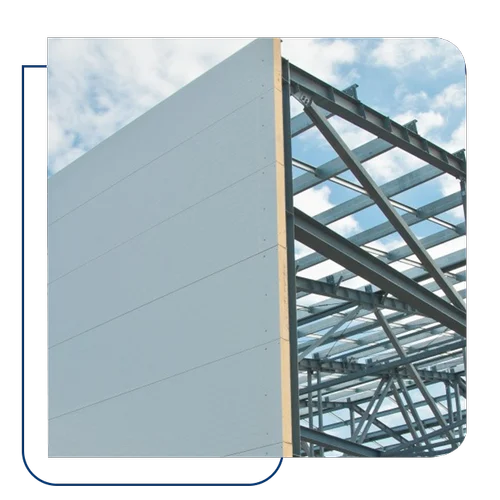
Understanding Cold Storage Investment in India
India’s cold chain infrastructure is expanding rapidly, driven by massive demand for post-harvest storage, pharmaceutical distribution, and the booming quick-commerce sector. According to the National Centre for Cold-chain Development (NCCD), India needs an additional 35 million MT of cold storage capacity to meet growing demand. This gap represents one of the most attractive investment opportunities in Indian infrastructure today.
The cost of setting up a cold storage facility in India is typically measured per metric ton (MT) of storage capacity. This metric allows investors, entrepreneurs, and food processing businesses to quickly estimate the capital expenditure required for their planned capacity. In this guide, we break down the 2026 costs for every major type of cold storage construction project in India.
Cold Storage Cost Per MT by Type (2026 Pricing)
Different commodities require different temperature ranges, humidity controls, and infrastructure specifications. Here’s the cost per metric ton for major cold storage categories:
| Cold Storage Type | Temperature Range | Cost Per MT (₹) | Key Requirements |
|---|---|---|---|
| Potato / Onion Storage | +2°C to +4°C | ₹8,000 – ₹12,000 | Bulk bins, high airflow, humidification |
| Fruit & Vegetable (CA Storage) | 0°C to +5°C | ₹15,000 – ₹22,000 | Controlled atmosphere, gas-tight rooms |
| Multi-Commodity Storage | -5°C to +5°C | ₹12,000 – ₹18,000 | Multiple chambers, flexible racking |
| Frozen Food Storage | -18°C to -25°C | ₹20,000 – ₹30,000 | Heavy insulation, blast freezer, dock levellers |
| Pharmaceutical Storage | +2°C to +8°C | ₹25,000 – ₹40,000 | WHO-GMP compliance, validation, monitoring |
| Deep Freeze / Ice Cream | -25°C to -35°C | ₹28,000 – ₹45,000 | Extra-thick insulation, dual compressors |
Note: These costs include civil work, insulation panels, refrigeration plant, electrical systems, and basic material handling. Land cost is excluded as it varies dramatically by location.
Capacity-Wise Investment Table
Here’s what you can expect to invest based on capacity for a multi-commodity cold storage facility (₹14,000–18,000 per MT average):
| Capacity (MT) | Estimated Investment (₹) | Built-Up Area (Approx.) | Construction Time |
|---|---|---|---|
| 100 MT | ₹15–20 Lakh | 2,500–3,500 sq ft | 45–60 days |
| 500 MT | ₹70–90 Lakh | 8,000–12,000 sq ft | 60–90 days |
| 1,000 MT | ₹1.4–1.8 Crore | 15,000–22,000 sq ft | 90–120 days |
| 2,000 MT | ₹2.6–3.4 Crore | 28,000–40,000 sq ft | 120–150 days |
| 5,000 MT | ₹6.0–8.5 Crore | 60,000–85,000 sq ft | 150–210 days |
Per-MT costs decrease as capacity increases due to economies of scale in refrigeration equipment, insulation procurement, and civil work. A 5,000 MT facility can achieve per-MT costs 15–20% lower than a 500 MT facility.
Component-Wise Cost Breakdown
Understanding where your investment goes helps identify optimisation opportunities. For a typical 1,000 MT multi-commodity cold storage:
| Component | Cost (₹ Lakh) | % of Total |
|---|---|---|
| PIR insulated panels (walls, ceiling, floor) | 30–45 | 20–25% |
| Refrigeration Plant & Equipment | 35–50 | 25–30% |
| Civil Work & Foundation | 20–28 | 14–16% |
| Steel Structure / PEB | 18–25 | 12–15% |
| Electrical & Control Systems | 10–15 | 7–9% |
| Cold storage doors & dock equipment | 6–10 | 4–6% |
| Racking & Material Handling | 5–8 | 3–5% |
| Fire Safety & Compliance | 4–6 | 3–4% |
| Design, PMC & Contingency | 6–10 | 4–6% |
| Total | 1,34–1,97 | 100% |
Insulation panels and refrigeration equipment together account for nearly 50% of the total investment. Choosing high-quality PIR insulated panels reduces long-term energy costs significantly. For a more detailed discussion, see our cold storage construction cost guide.
Annual Operating Costs
Beyond capital expenditure, cold storage operators must budget for ongoing costs. Here’s a typical annual operating cost breakdown for a 1,000 MT facility:
| Operating Expense | Annual Cost (₹ Lakh) |
|---|---|
| Electricity (70% of OPEX) | 18–28 |
| Staff & Security | 8–12 |
| Maintenance & AMC | 3–5 |
| Insurance | 1.5–3 |
| Administrative & Miscellaneous | 2–4 |
| Total Annual OPEX | 32.5–52 |
Electricity is by far the largest operating cost. This is precisely why investing in premium insulation panels pays dividends—every 10% improvement in insulation efficiency reduces electricity bills by 5–7%, translating to ₹1–2 lakh annual savings for a 1,000 MT facility.
Government Subsidies and Financial Assistance
The Indian government actively promotes cold chain infrastructure through several schemes. Here are the major subsidy programmes available in 2026:
National Horticulture Board (NHB)
- Subsidy: Up to 35% of project cost (40% for SC/ST, women entrepreneurs, and NE states)
- Maximum: ₹50 lakh per project
- Eligible: Horticulture produce storage, CA storage, ripening chambers
Mission for Integrated Development of Horticulture (MIDH)
- Subsidy: 35–50% of project cost depending on category
- Coverage: Cold storage, pack houses, reefer vans, primary processing
- Minimum capacity: 5,000 MT and above for cold storage
Pradhan Mantri Kisan SAMPADA Yojana (PMKSY)
- Subsidy: Up to 35% for general category, 50% for NE and hilly regions
- Focus: Integrated cold chain and value addition infrastructure
- Maximum: ₹10 crore per project
State-Level Incentives
Many states offer additional incentives including capital subsidies (5–15%), electricity duty exemptions, stamp duty waivers, and interest subvention on term loans. Gujarat, Maharashtra, Andhra Pradesh, and UP are among the most generous states for cold chain investment.
With government subsidies, the effective per-MT investment for a cold storage facility can be reduced by 30–40%, making the payback period significantly shorter.
Payback Period Analysis
Here’s a realistic payback analysis for a 1,000 MT multi-commodity cold storage:
| Parameter | Without Subsidy | With 35% Subsidy |
|---|---|---|
| Total CAPEX | ₹1.60 Crore | ₹1.04 Crore (effective) |
| Annual Revenue (at 85% occupancy) | ₹68 Lakh | ₹68 Lakh |
| Annual OPEX | ₹40 Lakh | ₹40 Lakh |
| Net Annual Profit (pre-tax) | ₹28 Lakh | ₹28 Lakh |
| Payback Period | 5.7 years | 3.7 years |
| 10-Year ROI | 175% | 269% |
With government subsidies and optimal occupancy rates, cold storage projects can achieve payback in under 4 years, making them one of the most attractive infrastructure investments in India.
How PHOENIXX SmartBuild Reduces Your Cold Storage Cost
As a vertically integrated manufacturer of insulation panels and cold storage construction solutions, PHOENIXX SmartBuild offers several cost advantages:
- Factory-direct pricing on PIR and PUF panels eliminates distributor margins
- Turnkey project execution reduces coordination costs and timeline
- In-house design team optimises panel layouts to minimise wastage
- Panel + door bundling with our cold storage doors offers package pricing
- Subsidy documentation support for NHB, MIDH, and state schemes
Planning a cold storage investment? Get a project estimate from PHOENIXX SmartBuild with detailed capacity planning and subsidy guidance.
Frequently Asked Questions
What is the cost per MT to build a cold storage in India in 2026?
The cost per metric ton varies by type: potato/onion storage costs ₹8,000–12,000/MT, multi-commodity storage costs ₹12,000–18,000/MT, frozen food storage costs ₹20,000–30,000/MT, and pharmaceutical cold storage costs ₹25,000–40,000/MT. These figures include civil work, insulation, refrigeration, and electrical systems.
What is the total investment for a 1,000 MT cold storage?
A 1,000 MT multi-commodity cold storage in India requires an investment of approximately ₹1.4–1.8 crore in 2026, covering all components including civil work, insulation panels, refrigeration plant, electrical systems, and material handling. With government subsidies of 35–50%, the effective investment can be reduced to ₹90 lakh–1.2 crore.
What government subsidies are available for cold storage in India?
Major subsidies include NHB (up to 35–40% of project cost, max ₹50 lakh), MIDH (35–50% for projects above 5,000 MT), and PMKSY (up to 35–50%, max ₹10 crore). Additionally, many states offer capital subsidies, electricity duty exemptions, and stamp duty waivers. Combined, these can reduce your effective investment by 30–40%.
What is the payback period for a cold storage business in India?
The payback period for a cold storage business is typically 4–6 years without subsidies and 3–4 years with government subsidies, assuming 80–85% occupancy. Multi-commodity storage tends to have faster payback than single-commodity storage due to year-round utilisation. With proper location and marketing, some operators achieve payback in under 3.5 years.
Which type of insulation panel is best for cold storage construction?
PIR (Polyisocyanurate) panels are the preferred choice for cold storage due to their superior thermal conductivity (0.018–0.022 W/mK) and better fire rating (B1 class). For storage above 0°C, PUF panels are a cost-effective alternative. Panel thickness depends on operating temperature: 80–100mm for chilled storage, 120–150mm for frozen, and 175–200mm for deep freeze.
Related Resources
Explore related products, locations, case studies, and technical guides from PHOENIXX SMARTBUILD.