How to Build Cold Storage Step by Step – Complete Guide India
A comprehensive 10-step guide to building a cold storage facility in India. Covers planning, panel selection, refrigeration, cold storage doors, regulatory compliance, and commissioning with cost estimates for 2026.
How to Build Cold Storage Step by Step – Complete Guide for India
India loses an estimated 15–20% of its fresh produce annually due to inadequate cold chain infrastructure. With the government’s push through schemes like PM Kisan SAMPADA and the rise of organised retail, building a cold storage facility has become one of the most profitable infrastructure investments in the country.
Whether you’re planning a 500 MT potato cold store in UP, a multi-commodity warehouse in Maharashtra, or a pharmaceutical cold chain facility in Hyderabad, this step-by-step guide covers everything you need to know to build cold storage in India from the ground up.
Step 1: Feasibility Study and Planning
Every successful cold storage project starts with thorough planning:
- Commodity selection: What will you store? Fruits, vegetables, dairy, frozen food, pharmaceuticals, or multi-commodity? Each requires different temperature ranges and handling.
- Capacity planning: Calculate the required storage capacity in metric tonnes (MT). A general thumb rule: 1 MT of potatoes requires approximately 2.5–3.0 cubic metres of storage space.
- Location analysis: Proximity to production areas, markets, transport hubs, and reliable power supply. Land should be on elevated ground to prevent waterlogging.
- Financial planning: Estimate the total project cost, explore government subsidies (30–50% subsidy available under various schemes), and arrange financing.
Read our detailed cold storage construction cost guide to understand the financial aspects.
Step 2: Design and Engineering
Engage a cold storage design consultant or a turnkey solution provider to prepare:
- Architectural layout with chamber sizes, ante-rooms, and loading docks
- Structural design (PEB or conventional RCC frame)
- Refrigeration load calculations based on commodity, ambient temperature, and throughput
- Electrical load estimation and DG backup sizing
- Compliance with FSSAI, APMC, and NABARD guidelines
Step 3: Foundation and Civil Works
Cold storage foundations require special attention:
- Soil testing: Essential for determining foundation type (isolated footing, raft, or pile).
- Anti-heave system: For frozen storage operating below 0°C, install under-floor heating pipes to prevent ground frost heave.
- Floor insulation: 100–150 mm PUF/PIR insulation below the floor slab with a vapour barrier to prevent moisture migration.
- Floor finish: VDF (Vacuum Dewatered Flooring) or tremix flooring with a load capacity of 3–5 tonnes/sq m for forklift movement.
Step 4: Structural Framework
The structural system supports the roof, panels, and refrigeration equipment:
- PEB structure: Preferred for large cold stores (5,000+ sq ft). Offers clear spans up to 60m, fast erection, and optimal integration with panel cladding.
- RCC frame: Used for multi-storey cold stores or where extremely heavy ceiling-mounted equipment is planned.
- Portal frames and purlins: Designed to support panel weight, wind loads, and equipment loads as per IS 875 and IS 800 standards.
Step 5: Insulated Panel Installation
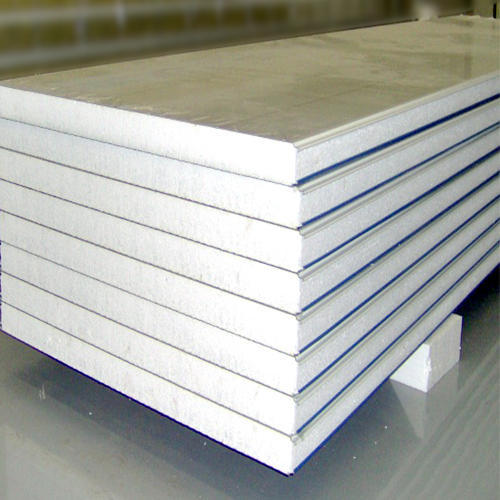
This is the heart of any cold storage project. The insulated panels form the thermal envelope that keeps the cold in and the heat out:
- Panel selection: Use PIR (Polyisocyanurate) Panels for cold storage due to their superior fire rating (B-s1, d0) and slightly better thermal performance than standard PUF. For frozen storage below -18°C, use 100–150 mm thickness.
- Wall panels: Install cam-lock jointed panels for cold rooms. Cam-locks create an airtight, thermal-bridge-free joint – critical for maintaining temperature.
- Ceiling panels: Suspended from the roof structure using threaded rods and channel brackets. Ensure adequate vapour sealing at all ceiling-wall junctions.
- Floor insulation: Pre-installed before concrete slab pour, using high-density PIR boards (45+ kg/m³) to withstand floor loads.
Proper panel installation is critical. Even a small gap or thermal bridge can cause condensation, ice formation, and energy wastage. Always use experienced installers.
Step 6: Cold Storage Doors
Doors are the weakest link in a cold storage’s thermal envelope. Choose the right door type for each application:
- Hinged insulated doors: For walk-in cold rooms with moderate traffic. Available in 80–120 mm thickness.
- Sliding insulated doors: For forklift-accessible chambers. Heavy-duty hardware with floor guides or top-hung rail systems.
- High-speed roll-up doors: For ante-rooms and high-traffic loading docks to minimise cold air loss.
- Strip curtains: Additional barrier at loading docks to reduce air exchange during door openings.
Browse our range of cold storage doors for specifications and pricing.
Step 7: Refrigeration System
The refrigeration system is the most technically complex and expensive component:
- System type: Ammonia (NH3) for large facilities (1000+ MT) or Freon-based (R404A/R449A) for smaller cold rooms.
- Compressors: Reciprocating for small units, screw compressors for medium-large plants. Energy-efficient inverter-driven models are recommended.
- Evaporators: Unit coolers (fan coil units) sized for the required cooling capacity, with electric or hot-gas defrost for frozen applications.
- Condensers: Evaporative condensers for ammonia systems; air-cooled condensers for Freon systems.
- Controls: Microprocessor-based controllers with temperature monitoring, data logging, and alarm systems.
Step 8: Electrical and Automation
Cold storage electrical systems must be robust and reliable:
- Dedicated HT/LT power connection sized for the refrigeration load (typically 1.5–2.0 kW per MT of storage)
- DG backup for 100% refrigeration load to prevent commodity loss during power outages
- LED lighting rated for cold room temperatures (-25°C to +15°C)
- Temperature monitoring and SCADA systems for remote monitoring
- Fire alarm and detection systems as per NBC 2016
Step 9: Testing and Validation
Before loading any commodity, thoroughly test the facility:
- Panel joint inspection: Check all cam-lock joints, sealant lines, and flashing for air-tightness.
- Pull-down test: Run the refrigeration system and record the time to achieve target temperature from ambient. Compare with design pull-down time.
- Temperature mapping: Place data loggers at 9–15 points in each chamber to verify uniform temperature distribution (±2°C tolerance).
- Door seal test: Use a paper strip test or thermal imaging to confirm door seals are effective.
- Electrical testing: Verify earthing, insulation resistance, and automatic transfer switch (ATS) functionality.
Step 10: Commissioning and Operations
The final step involves:
- Obtaining all regulatory approvals (FSSAI license, fire NOC, pollution consent)
- Training operational staff on temperature management, loading patterns, and emergency procedures
- Establishing preventive maintenance schedules for refrigeration equipment, doors, and panels
- Setting up commodity tracking and inventory management systems
- Documenting SOPs for each stored commodity
Conclusion
Building a cold storage in India is a rewarding but complex endeavour that requires careful planning, quality materials, and expert execution. The cold storage construction solutions from PHOENIXX SmartBuild cover everything from PIR panels and cold room doors to turnkey project management.
Contact our team for a free consultation and detailed project estimate tailored to your commodity, capacity, and location.
Frequently Asked Questions
How much does it cost to build a cold storage in India?
The cost of building a cold storage in India ranges from ₹2,500 to ₹5,000 per sq ft depending on the temperature range, capacity, location, and specifications. A 1,000 MT potato cold store typically costs ₹2–3 crore, while a pharmaceutical cold chain facility can cost ₹4–6 crore for a similar footprint.
Which insulated panel is best for cold storage?
PIR (Polyisocyanurate) panels are the best choice for cold storage because they offer superior fire performance (B-s1, d0 rating) compared to standard PUF, along with excellent thermal insulation. For temperatures below -18°C, use 100–150 mm PIR panels. For temperatures between 0°C and 10°C, 80–100 mm PIR panels are sufficient.
What government subsidies are available for cold storage in India?
Several government schemes offer 30–50% subsidies for cold storage construction: PM Kisan SAMPADA Yojana, NABARD’s Cold Chain scheme, NHM (National Horticulture Mission), and state-level subsidies. The subsidy amount depends on the scheme, location, and commodity stored. NABARD typically funds 25–33.33% of the project cost as capital subsidy.
How long does it take to build a cold storage?
A typical cold storage project takes 4–8 months from foundation to commissioning. This includes 1–2 months for civil works, 2–4 weeks for panel installation, 4–6 weeks for refrigeration installation, and 2–4 weeks for electrical work, testing, and commissioning. PEB-based construction is faster than conventional RCC.
Do I need FSSAI license for cold storage?
Yes, a cold storage facility that stores food products requires an FSSAI (Food Safety and Standards Authority of India) license. You need to apply for a Central FSSAI license if the storage capacity exceeds 50,000 litres/MT, or a State FSSAI license for smaller facilities. Additionally, you need fire NOC, pollution consent, and local municipal approvals.
Related Resources
Explore related products, locations, case studies, and technical guides from PHOENIXX SMARTBUILD.