PEB vs Conventional Construction Cost Analysis for Indian Industry
A realistic cost and schedule comparison between PEB and conventional construction for Indian industrial assets, including insulation and OPEX effects.
Capex Is Only One Side of the Decision
Teams evaluating PEB versus conventional RCC or brick-heavy construction often focus only on initial cost per square foot. That creates distorted decisions. Industrial building economics should include construction timeline, financing carry cost, operational energy, and reconfiguration flexibility. In Gujarat, where project speed directly affects production start dates, schedule value alone can justify a different structural choice.
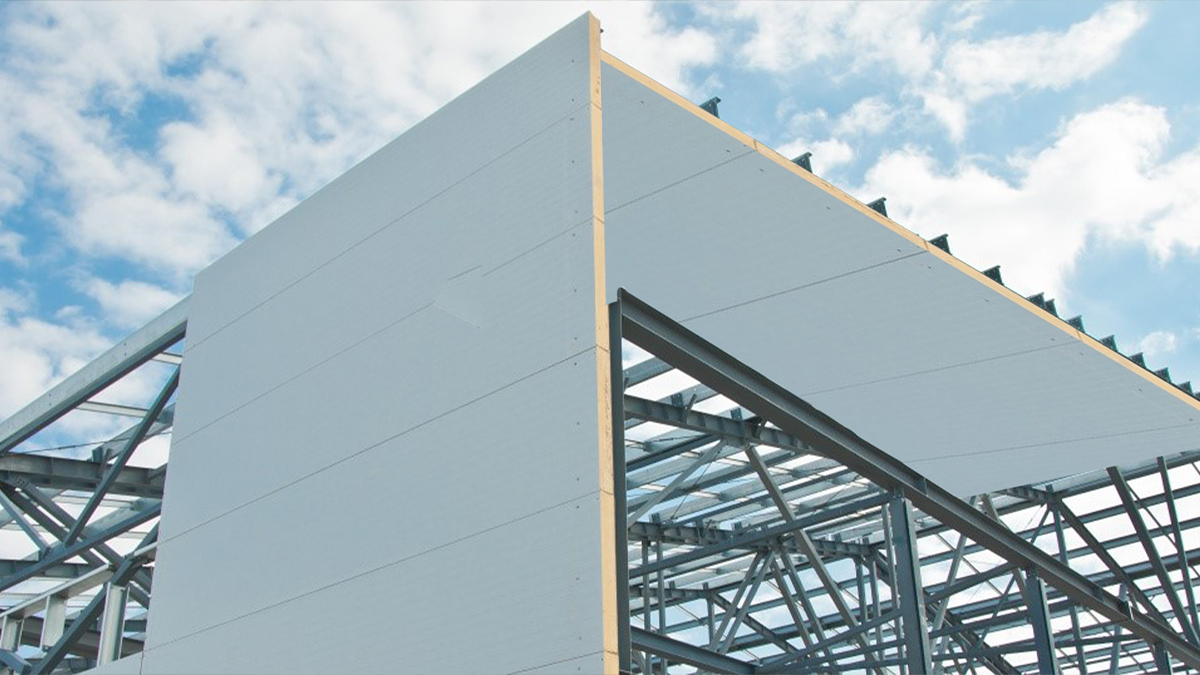
PEB with insulated sandwich envelope usually provides faster closure, lighter foundations, and better thermal control. Conventional systems may offer familiarity, but they often carry higher wet-work timelines and larger dead loads.
Cost and Delivery Comparison
| Decision Parameter | PEB + Sandwich Panels | Conventional Construction |
|---|---|---|
| Execution timeline | Significantly faster due to prefabrication | Longer with multi-stage wet work |
| Foundation demand | Lower due to reduced dead load | Higher due to heavy walls/slabs |
| Thermal performance | High with 60-120 mm insulated panels | Variable; additional insulation usually needed |
| Future expansion | Simpler phased extension approach | More disruptive and time-intensive |
Where Conventional Still Fits
Conventional solutions can remain viable where high mass is beneficial, where architectural constraints dominate, or where local execution practices are deeply embedded and schedule pressure is low. But for logistics, food, engineering, and light manufacturing in Ahmedabad and across Gujarat, PEB systems usually align better with speed-to-operation and thermal cost management.
Thermal Envelope Impact on Operating Cost
The envelope drives recurring cost in conditioned facilities. PUF panel conductivity around 0.022-0.026 W/mK supports tighter thermal control than uninsulated sheet systems and can materially reduce HVAC tonnage requirements. In hot seasons, this impacts both electrical demand peaks and annual consumption. If you model total lifecycle cost over 10-15 years, the envelope decision can outweigh minor capex differences in primary structure.
For practical specification references, teams often benchmark product details from https://phoenixxsmartbuild.com/products/sandwich-panels/wall-puf-panel while developing PEB envelope BOQs.
Scenario-Based Budgeting Approach
- Create at least three scenarios: minimum capex, balanced lifecycle, and high-performance envelope.
- Include financing carry cost linked to delayed commissioning in conventional models.
- Add maintenance assumptions for wall/roof waterproofing cycles.
- Quantify expansion cost after year 3 for realistic growth planning.
When this method is applied rigorously, PEB with insulated envelope frequently emerges as the preferred option for industrial users seeking faster ROI and predictable operating cost.
Frequently Asked Questions
Is PEB always cheaper than conventional construction?
Not in every case on pure capex, but it is often more economical on lifecycle basis when speed, insulation, and expansion flexibility are included.
Why does timeline matter in cost comparison?
Faster completion reduces financing carry cost and allows earlier production or rental revenue, which materially affects overall project economics.
How does insulation change the PEB equation?
Insulated panels reduce thermal load and improve indoor stability, often lowering HVAC operating cost significantly over building life.
What is the common mistake in project budgeting?
Comparing only structural shell rates without incorporating operating cost, maintenance cycles, and expansion impacts.
Related Resources
Explore related products, locations, case studies, and technical guides from PHOENIXX SMARTBUILD.