Prefabricated Building vs Conventional Construction – Full Comparison
A comprehensive comparison of prefabricated building construction (PEB with sandwich panels) and conventional construction in India, covering cost analysis, construction speed, quality control, waste reduction, scalability, environmental impact, and Indian market trends.
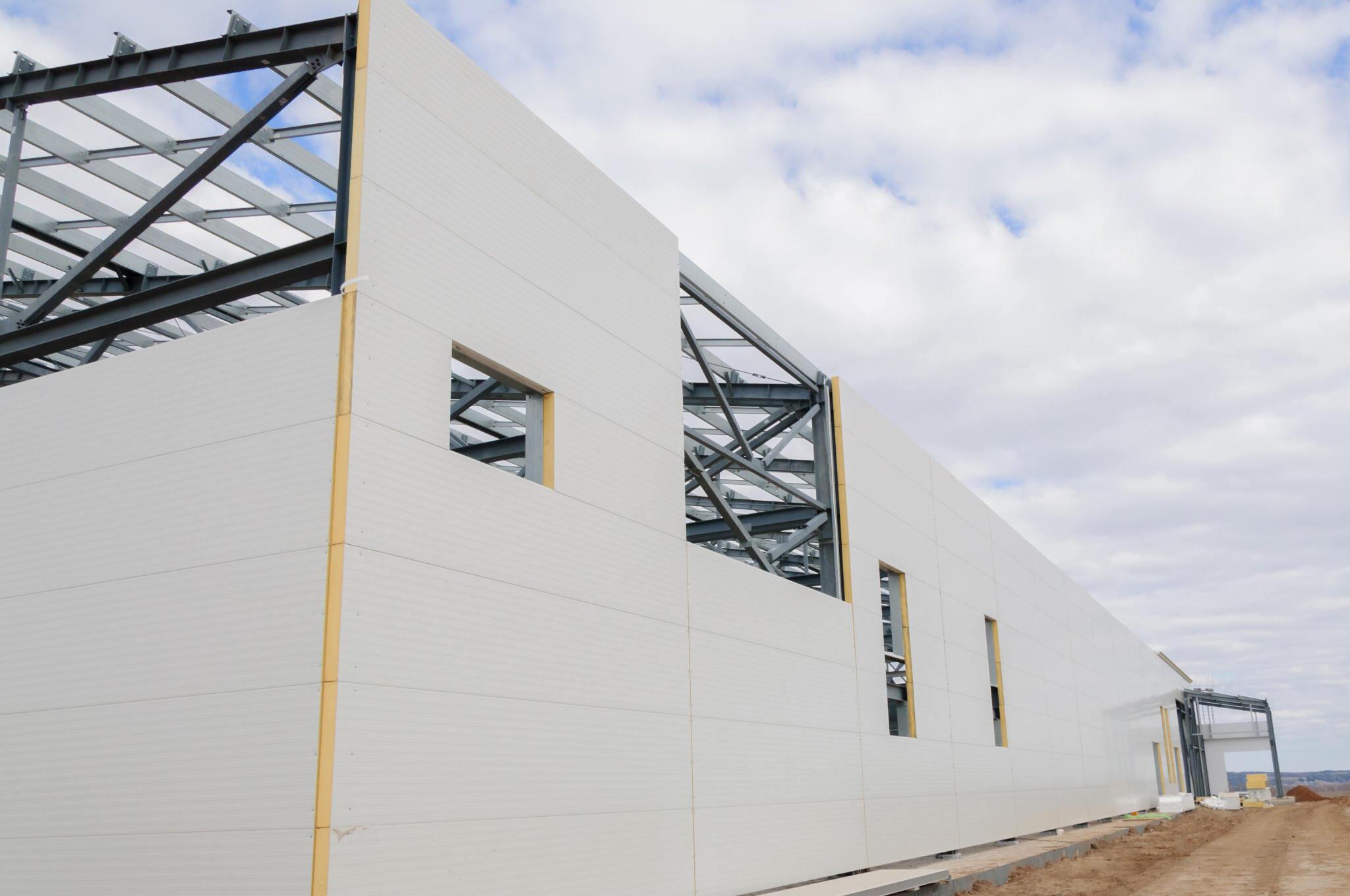
Prefabricated Building vs Conventional Construction – India’s Construction Revolution
India’s construction industry is witnessing a paradigm shift. Prefabricated buildings (PEB)—where structural steel components and insulated sandwich panels are manufactured in a factory and assembled on site—are increasingly replacing conventional brick, concrete, and mortar construction for industrial, commercial, and institutional projects.
This guide by Phoenixx SmartBuild provides a comprehensive comparison between prefabricated and conventional construction methods, with a focus on the Indian market context—costs in INR, Indian climate considerations, local regulations, and industry trends for 2026 and beyond.
What Is Prefabricated Building Construction?
Prefabricated construction (also called Pre-Engineered Building or PEB) involves manufacturing building components—steel frames, columns, rafters, purlins, and insulated sandwich panels—in a controlled factory environment. These components are then transported to the site and assembled using bolted connections and mechanical fasteners.
The result is a high-quality, thermally insulated building constructed in a fraction of the time required for conventional methods, with less waste, better quality control, and predictable costs.
What Is Conventional Construction?
Conventional construction in India typically involves cast-in-situ RCC (Reinforced Cement Concrete) structural frames with brick masonry infill walls, plastering, painting, and separate insulation. Materials are assembled on site by skilled and semi-skilled workers, with quality dependent on workmanship, weather conditions, and supervision.
Comprehensive Comparison Table
| Parameter | Prefabricated (PEB) | Conventional Construction |
|---|---|---|
| Construction Cost (industrial shed) | ₹ 800–₹ 1,200 per sq ft | ₹ 1,100–₹ 1,600 per sq ft |
| Construction Speed | 8–12 weeks | 22–32 weeks |
| Quality Consistency | High (factory-controlled) | Variable (site-dependent) |
| Material Waste | 2–5% | 15–25% |
| Thermal Insulation | Built-in (sandwich panels) | Separate (additional cost) |
| Clear Span Capability | Up to 90 metres | 6–9 metres (standard) |
| Expansion/Modification | Easy (2–4 weeks) | Difficult (2–3 months) |
| Relocatability | Possible (dismantle & reassemble) | Not possible |
| Labour Requirement | 30–50% less labour on site | High (masons, carpenters, helpers) |
| Weather Dependency | Low (factory manufacturing) | High (rain delays curing & masonry) |
| Design Life | 25–30 years | 30–50 years |
| Environmental Impact | Lower (less waste, less water) | Higher (cement production, water use) |
Cost Analysis – Prefab vs Conventional in India
The total project cost of prefabricated construction is typically 20–35% lower than conventional construction for industrial and commercial buildings. The savings come from multiple sources:
- Foundation savings: PEB structures are significantly lighter than RCC, requiring smaller and shallower foundations. Foundation costs can be 30–50% lower.
- Labour savings: Factory manufacturing requires fewer workers on site. Unskilled labour for masonry, plastering, and painting is virtually eliminated.
- Time savings: Shorter construction timelines reduce interest costs on loans, site supervision costs, and machinery rental charges.
- Material efficiency: Factory-controlled manufacturing generates only 2–5% waste compared to 15–25% for conventional site-based construction.
- Eliminated processes: No plastering, painting, waterproofing, or separate insulation is needed with sandwich panel cladding.
Construction Speed – The Game Changer
Speed is perhaps the most compelling advantage of prefabricated construction. While conventional buildings require sequential processes—foundation, column casting, curing, beam casting, slab casting, brick work, plastering, painting—each with mandatory waiting periods, prefabricated construction allows parallel processing:
- Foundation work on site proceeds simultaneously with structural steel fabrication and panel manufacturing in the factory
- Steel erection begins immediately after foundation curing (no multi-week concrete curing delays)
- Panel installation is rapid: a skilled crew can install 200–300 sq metres of sandwich panels per day
- No weather-dependent curing or drying processes
For Indian businesses, where monsoon season can halt conventional construction for 2–3 months, prefabricated construction’s weather independence is a significant practical advantage.
Quality Control
Factory manufacturing offers inherently superior quality control compared to site-based construction:
- Precision cutting and fabrication: CNC machines ensure millimetre-accurate component dimensions
- Controlled environment: No impact of rain, dust, or temperature on manufacturing quality
- Standardised processes: Every weld, bolt hole, and panel is produced to the same specification
- Quality testing: Materials and finished components undergo systematic quality checks before dispatch
Conventional construction quality, by contrast, varies significantly based on the skill level of masons, quality of site supervision, concrete mix consistency, and curing conditions. Column honeycombing, poor plaster adhesion, uneven surfaces, and inadequate curing are common quality issues in Indian construction sites.
Environmental Impact and Sustainability
Prefabricated construction has a substantially lower environmental footprint:
- Material waste: 2–5% for PEB vs 15–25% for conventional, up to 80% less construction waste
- Water consumption: Minimal water needed for assembly vs thousands of litres for concrete curing and masonry
- Cement reduction: Steel and panel-based construction dramatically reduces cement usage—important because cement production accounts for approximately 7% of global CO₂ emissions
- Recyclability: Steel and metal components are 100% recyclable at end of life. Brick and concrete debris has limited reuse value
- Site impact: Smaller construction footprint, less noise, less dust, and less disruption to surrounding areas
As India strengthens its sustainability commitments and green building certifications (IGBC, GRIHA) gain importance, prefabricated construction’s environmental advantages will become increasingly relevant.
Scalability and Replication
For businesses planning multi-location expansion—such as warehouse chains, retail outlets, or manufacturing plants across India—prefabricated construction offers unmatched scalability. Once the design is finalised, identical buildings can be manufactured and erected at multiple locations simultaneously with consistent quality and predictable timelines.
Conventional construction requires replicating the entire design, supervision, and quality management effort at each new location, with variable outcomes.
Indian Market Context – 2026 Trends
The Indian PEB and sandwich panel market is growing at approximately 12–15% annually, driven by:
- Government initiatives like Make in India and PM Gati Shakti boosting industrial infrastructure
- E-commerce growth demanding rapid warehouse construction
- Cold chain development under the Pradhan Mantri Kisan Sampada Yojana
- Increasing labour costs making on-site construction less competitive
- Growing awareness of green building practices and sustainability
Leading industrial developers, logistics companies, and food processing enterprises in India are now overwhelmingly choosing prefabricated construction for new projects, with conventional methods reserved for specific applications.
When Conventional Construction Is Preferred
- Multi-storey buildings above 3–4 floors
- Architecturally complex structures with curved or irregular shapes
- Buildings requiring extremely long design life (50+ years)
- Projects in remote areas where transporting large steel components is impractical
- Small-scale residential or retail projects where standardisation offers limited benefit
Partner with Phoenixx SmartBuild for Prefabricated Excellence
Phoenixx SmartBuild is a leading manufacturer of insulated sandwich panels and provider of complete PEB building solutions in India. From design and engineering to manufacturing and installation, we deliver turnkey prefabricated buildings that save you time, money, and headaches. Our portfolio includes industrial sheds, warehouses, cold storage facilities, and commercial buildings across India.
Ready to build prefab? Get a free quote and let our engineers design the ideal solution for your project.
Frequently Asked Questions
Is prefabricated construction cheaper than conventional in India?
Yes, for industrial and commercial buildings. Prefabricated PEB construction typically costs ₹800–₹1,200 per sq ft compared to ₹1,100–₹1,600 for conventional RCC construction: a saving of 20–35%. Savings come from lighter foundations, less labour, faster timelines, and elimination of plastering, painting, and separate insulation.
How long does a prefabricated building last?
A well-designed prefabricated building (PEB with sandwich panel cladding) has a design life of 25–30 years with minimal maintenance. The galvanised steel structure and PPGI/PPGL coated panels are engineered for durability. With proper maintenance, many PEB buildings exceed their design life comfortably.
Is prefabricated construction suitable for Indian climate?
Absolutely. Prefabricated buildings with insulated sandwich panels are particularly well-suited to Indian conditions. The built-in insulation provides excellent thermal protection against India’s extreme heat, while the factory-sealed joints prevent monsoon water ingress—advantages that conventional brick and concrete buildings lack without expensive add-ons.
What is the biggest advantage of prefabricated construction?
Speed is the single biggest advantage. A prefabricated building can be completed in 8–12 weeks versus 22–32 weeks for conventional construction—nearly 3 times faster. For businesses, this means earlier revenue generation, lower financing costs, and quicker response to market opportunities.
Can prefabricated buildings be expanded later?
Yes, this is a key advantage. Prefabricated PEB buildings can be easily expanded by extending the steel frame and adding more sandwich panels. A typical 5,000 sq ft expansion takes just 2–4 weeks. The building can also be disassembled and relocated if needed, which is not possible with conventional RCC construction.
Related Resources
Explore related products, locations, case studies, and technical guides from PHOENIXX SMARTBUILD.