Sandwich Panel vs Traditional Brick Wall – Which Is Better for Industrial Buildings?
A comprehensive comparison between modern insulated sandwich panels and traditional brick wall construction for industrial buildings, covering cost, construction speed, insulation, maintenance, and long-term value.
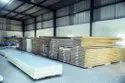
Sandwich Panel vs Brick Wall – The Modern vs Traditional Construction Debate
India’s industrial construction sector is undergoing a major shift. While traditional brick-and-mortar construction has served the country for decades, modern insulated sandwich panels are rapidly becoming the preferred choice for factories, warehouses, cold storage facilities, and commercial buildings.
But is this shift justified? In this guide, we compare sandwich panel construction with traditional brick wall construction across every parameter that matters to builders, architects, and project owners in India.
Construction Cost Comparison
The cost comparison between sandwich panels and brick walls is more nuanced than a simple per-square-foot number. Let’s break it down:
| Cost Component | Sandwich Panel Construction | Brick Wall Construction |
|---|---|---|
| Material Cost (per sq ft of wall) | ₹ 135–₹ 200 | ₹ 80–₹ 120 |
| Labour Cost | Low (fewer workers, semi-skilled) | High (masons, helpers, scaffolding) |
| Foundation Cost | Minimal (lightweight structure) | Heavy (deep foundation needed) |
| Plastering & Painting | Not required | ₹ 25–₹ 45 per sq ft |
| Insulation (separate) | Built-in | ₹ 30–₹ 60 per sq ft additional |
| Total Installed Cost | ₹ 160–₹ 250 per sq ft | ₹ 180–₹ 300 per sq ft |
When you account for plastering, painting, separate insulation, and the heavier foundation required for brick walls, sandwich panel construction often works out equal to or cheaper than brick construction for industrial buildings. For a detailed cost analysis, see our guide on warehouse construction cost with PUF panels.
Construction Speed
This is where sandwich panels offer a transformative advantage. A typical 10,000 sq ft industrial shed takes:
- Sandwich panel construction: 3–4 weeks (including steel structure erection)
- Brick wall construction: 10–14 weeks (including curing, plastering, painting)
Sandwich panels are prefabricated at the factory and simply bolted or screwed to the steel framework on site. There’s no curing time, no plastering, and no painting required. For businesses where time-to-operation is critical—such as e-commerce warehouses, seasonal cold storage, or quick-expansion factories—this speed advantage directly translates to earlier revenue generation.
Thermal Insulation Performance
A standard 50 mm PUF sandwich panel provides an R-value of approximately 2.27 m²K/W, equivalent to a 230 mm (9-inch) brick wall with additional 50 mm EPS insulation. For air-conditioned factories, cold storage rooms, and IT facilities in India’s hot climate, PUF panels reduce cooling energy consumption by 25–40% compared to uninsulated brick walls.
Brick walls without separate insulation have poor thermal performance: a 230 mm brick wall has an R-value of only about 0.45 m²K/W, which is grossly inadequate for temperature-controlled environments.
Structural Strength & Durability
Brick walls are load-bearing and can support multi-storey structures without a steel frame. Sandwich panels, however, are non-load-bearing cladding elements that require a steel frame (PEB structure) for support.
For industrial single-storey or double-storey buildings, the PEB + sandwich panel combination is structurally superior because:
- Steel frames can span much wider column-free areas (up to 60–90 metres)
- Better resistance to seismic forces (lighter overall weight)
- No cracking or water seepage issues common with plastered brick walls
- Panels can be easily replaced if damaged, unlike brick walls that need demolition and rebuilding
Maintenance and Lifecycle Cost
Brick walls require periodic maintenance—repainting every 3–5 years, crack repair, waterproofing treatment, and termite treatment. Sandwich panels with PPGI/PPGL coated facings require minimal maintenance and retain their appearance for 15–20 years with occasional cleaning.
Over a 20-year lifecycle, sandwich panel buildings typically cost 20–30% less to maintain than equivalent brick structures, making them more economical in the long run despite potentially similar upfront costs.
Flexibility and Expansion
One of the most underrated advantages of sandwich panel construction is flexibility. Need to expand your warehouse by 5,000 sq ft? With sandwich panels, you simply extend the steel frame and add more panels: a process that takes 1–2 weeks. With brick walls, expansion means new foundation work, brick laying, curing, plastering, and painting—taking 6–8 weeks or more.
Similarly, if you need to relocate, sandwich panels can be dismantled and reassembled at a new location. Brick walls offer no such flexibility.
When Brick Walls Make Sense
- Multi-storey commercial or residential buildings where load-bearing walls are needed
- Projects where local building codes mandate masonry construction
- Buildings requiring very high fire resistance without metal cladding
- Applications where the aesthetic of exposed brick or plastered finish is desired
When Sandwich Panels Are the Better Choice
- Industrial sheds, warehouses, and factory buildings
- Cold storage and temperature-controlled environments
- Quick-turnaround projects with tight timelines
- Buildings requiring high thermal insulation
- Projects where future expansion or relocation is anticipated
Build Smarter with Phoenixx SmartBuild
At Phoenixx SmartBuild, we supply premium sandwich panels and offer complete PEB building solutions across India. Whether you’re constructing a new warehouse, upgrading an existing factory, or building a cold storage facility, our team helps you choose the most cost-effective and high-performing construction method. Get a free quote today.
Frequently Asked Questions
Is sandwich panel construction cheaper than brick wall?
When you factor in labour, foundation, plastering, painting, and insulation costs, sandwich panel construction often works out equal to or 10–15% cheaper than brick wall construction for industrial buildings. The total installed cost for sandwich panels ranges from ₹160–₹250 per sq ft versus ₹180–₹300 for brick walls.
How long does sandwich panel construction take compared to brick?
Sandwich panel construction is 3–4 times faster. A 10,000 sq ft industrial shed takes approximately 3–4 weeks with sandwich panels versus 10–14 weeks with brick construction. This is because panels are prefabricated and require no curing, plastering, or painting.
Are sandwich panels as strong as brick walls?
Sandwich panels are not load-bearing like brick walls, but when combined with a PEB steel structure, the overall building is structurally superior for industrial applications. Steel frames provide wider spans, better seismic resistance, and the panels themselves resist weather and impact effectively.
Can sandwich panels replace brick walls in all buildings?
No. Sandwich panels are ideal for industrial, commercial, and warehousing applications with steel-framed structures. For multi-storey residential buildings or projects mandating masonry construction by local codes, brick walls remain necessary.
Do sandwich panels require maintenance?
Sandwich panels with PPGI/PPGL coated metal facings require minimal maintenance—occasional cleaning with water is usually sufficient. Unlike brick walls, they do not need repainting, crack repair, or waterproofing. The coating lasts 15–20 years under normal conditions.
Related Resources
Explore related products, locations, case studies, and technical guides from PHOENIXX SMARTBUILD.