What is a Cleanroom & How Does It Work? Complete Guide
A complete guide to cleanrooms—what they are, ISO 14644 classifications, how HVAC and filtration systems work, panel construction, flooring, and GMP compliance for pharma, semiconductor, and biotech industries.
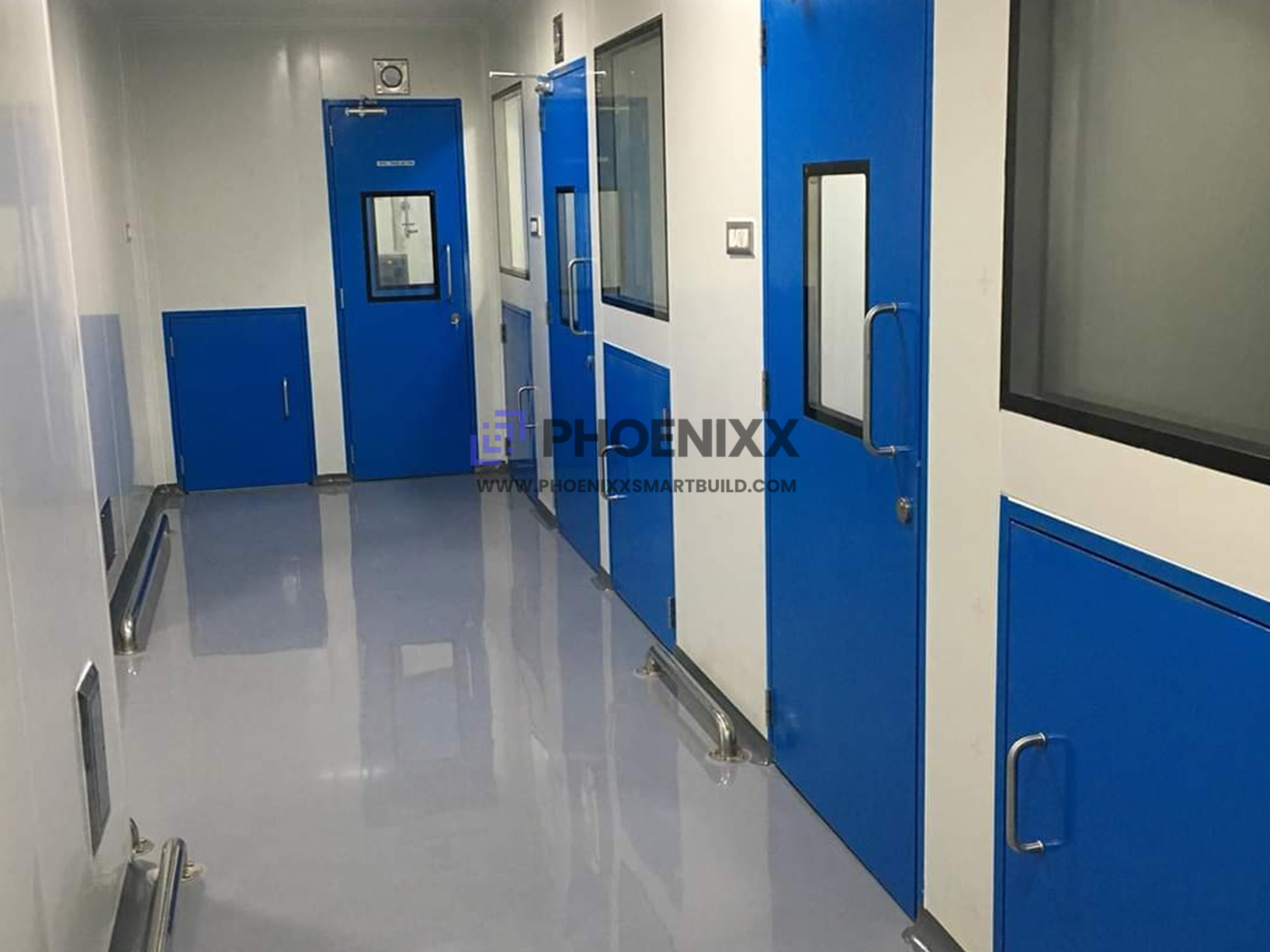
What is a Cleanroom?
A cleanroom is a controlled environment in which the concentration of airborne particles is maintained within specified limits. Unlike ordinary rooms where thousands of particles per cubic metre go unnoticed, cleanrooms use advanced air filtration, precise pressure control, and specialised construction materials to keep contamination levels extremely low—enabling the manufacture of sensitive products such as pharmaceuticals, semiconductors, medical devices, and biotechnology products.
The defining characteristic of a cleanroom is not its cleanliness per se, but its controlled, measurable, and reproducible level of particulate contamination. This is achieved through a combination of HEPA/ULPA filtration, positive or negative pressure differentials, controlled temperature and humidity, and rigorous operational protocols.
ISO 14644 Cleanroom Classifications
The international standard ISO 14644-1 classifies cleanrooms based on the maximum permitted number of particles per cubic metre of air at specified particle sizes. Here are the most commonly used classes:
| ISO Class | Max Particles ≥0.5 μm per m³ | Equivalent US FED STD 209E | Typical Application |
|---|---|---|---|
| ISO 5 | 3,520 | Class 100 | Semiconductor fabrication, aseptic pharma filling |
| ISO 6 | 35,200 | Class 1,000 | Optical assembly, sterile compounding |
| ISO 7 | 352,000 | Class 10,000 | Pharma manufacturing (tablet, capsule), medical devices |
| ISO 8 | 3,520,000 | Class 100,000 | Packaging, general pharma, food processing |
Most pharmaceutical manufacturing in India operates at ISO 7 or ISO 8, while semiconductor and biotech applications require ISO 5 or ISO 6 environments.
How Does a Cleanroom Work?
1. Air Filtration System
The cornerstone of any cleanroom is its air filtration. Outside air passes through a series of filters:
- Pre-filters (G4/F5): Remove coarse dust and large particles.
- Secondary filters (F7/F9): Capture finer particles down to 1 micron.
- HEPA filters (H13/H14): Remove 99.97–99.99% of particles at 0.3 microns. Used for ISO 7 and ISO 8 cleanrooms.
- ULPA filters (U15/U16): Remove 99.999% of particles at 0.12 microns. Required for ISO 5 and ISO 6 environments.
2. Air Change Rate
Cleanrooms maintain a high air change rate: the number of times the entire room volume of air is replaced per hour. ISO 7 cleanrooms typically require 30–60 air changes per hour (ACH), while ISO 5 environments may need 240–600 ACH with unidirectional (laminar) airflow.
3. Pressure Differential
Cleanrooms are maintained at positive pressure relative to surrounding areas (typically 10–15 Pa per stage). This ensures that when a door opens, clean air flows outward rather than contaminated air flowing in. In containment applications (handling hazardous substances), negative pressure is used instead.
4. Temperature & Humidity Control
Precise HVAC systems maintain temperature (typically 20–22°C ± 2°C) and relative humidity (45–55% RH ± 5%) to ensure product stability, operator comfort, and prevention of electrostatic discharge.
Cleanroom Panel Systems
Cleanroom panels form the walls, ceilings, and partitions of the controlled environment. Unlike standard sandwich panels, cleanroom panels must meet additional requirements:
- Flush Joints: Panels interlock with flush, airtight joints to prevent particle harbourage in gaps or crevices. Silicone or polyurethane sealants ensure complete sealing.
- Smooth, Non-Porous Surfaces: Inner facings are coated with food-grade or pharma-grade polyester or PVC coatings that resist chemical cleaning agents and do not shed particles.
- Coving & Radius Corners: Wall-to-wall and wall-to-floor junctions feature radius coving (typically R=50 mm) to eliminate 90-degree corners where dust can accumulate and facilitate cleaning.
- Integrated Services: Panels accommodate flush-mounted light fixtures, HEPA filter modules, electrical outlets, and gas points without compromising the clean envelope.
Phoenixx SmartBuild’s turnkey cleanroom solutions include design, panel manufacturing, HVAC integration, flooring, and validation—delivered as a single-source project to simplify execution and accountability.
Cleanroom Flooring
Cleanroom floors must be seamless, anti-static, chemical-resistant, and easy to clean. Common options include:
- Epoxy Flooring: The most popular choice for ISO 7/8 cleanrooms. Self-levelling epoxy provides a smooth, durable, chemical-resistant surface at ₹200–400 per sq ft.
- PU (Polyurethane) Flooring: More flexible than epoxy, with better crack resistance and thermal shock tolerance. Preferred for areas subject to temperature fluctuations.
- Vinyl/PVC Sheet Flooring: Used in ISO 5/6 environments where heat-welded seams create a truly seamless floor. Anti-static grades prevent electrostatic discharge.
- Raised Access Flooring: Used in semiconductor fabs and data centres, allowing underfloor air distribution and easy routing of services.
Industries That Use Cleanrooms
- Pharmaceutical & Biotech: Tablet manufacturing, injectable filling, API synthesis, vaccine production. India’s pharma industry: the world’s largest generic drug supplier—drives massive cleanroom demand.
- Semiconductor & Electronics: Chip fabrication, LED manufacturing, display panel assembly. India’s emerging semiconductor policy is spurring new fab construction.
- Medical Devices: Assembly and packaging of implants, surgical instruments, and diagnostic kits under controlled conditions.
- Food & Beverage: Aseptic packaging, dairy processing, and nutraceutical manufacturing use ISO 8 cleanrooms for product safety.
- Aerospace & Defence: Satellite assembly, precision optics, and munitions manufacturing require ultra-clean environments.
GMP Compliance in Cleanrooms
India’s pharmaceutical cleanrooms must comply with Schedule M of the Drugs & Cosmetics Act, which aligns with WHO GMP guidelines. Key requirements include documented validation protocols (IQ/OQ/PQ), environmental monitoring, personnel gowning procedures, and periodic re-qualification. For export-oriented units, US FDA 21 CFR Parts 210/211 and EU GMP Annex 1 set even more stringent standards for aseptic manufacturing environments.
Ready to build a cleanroom? Request a consultation from Phoenixx SmartBuild for a comprehensive assessment of your cleanroom requirements, from ISO classification to panel specification and HVAC design.
Frequently Asked Questions
Frequently Asked Questions
What is the cost of cleanroom construction in India?
Cleanroom construction costs in India range from ₹3,000–5,000 per sq ft for ISO 8 rooms to ₹8,000–15,000+ per sq ft for ISO 5 environments. Major cost drivers include the ISO class (higher class = more HEPA filters and air changes), panel specification, flooring type, HVAC capacity, and validation requirements.
What is the difference between ISO 7 and ISO 8 cleanrooms?
An ISO 7 cleanroom allows a maximum of 352,000 particles (≥0.5 μm) per cubic metre, while ISO 8 allows 3,520,000—ten times more. ISO 7 requires 30–60 air changes per hour versus 15–25 for ISO 8, and typically demands gowning with coveralls and shoe covers. Most Indian pharma manufacturing areas operate at ISO 7 or ISO 8.
How often should a cleanroom be validated?
Cleanrooms should undergo annual re-qualification at minimum, with environmental monitoring (particle counts, microbial sampling) performed routinely, often weekly or even continuously for critical ISO 5 zones. Re-validation is also required after any significant modification, such as HVAC changes, panel repairs, or equipment additions.
What type of panels are used for cleanroom walls?
Cleanroom walls use flush-joint insulated sandwich panels with smooth, non-porous inner facings. PUF or PIR core panels with PPGI, PPGL, or stainless steel facings are most common. The panels feature tongue-and-groove or cam-lock jointing systems, radius coving at junctions, and pharma-grade surface coatings that resist chemical cleaning.
Can Phoenixx SmartBuild handle turnkey cleanroom projects?
Yes, Phoenixx SmartBuild offers end-to-end turnkey cleanroom solutions covering design consultancy, panel manufacturing, HVAC system integration, epoxy or vinyl flooring, electrical works, and IQ/OQ/PQ validation—delivered as a single-source project to keep coordination tight and compliance.
Related Resources
Explore related products, locations, case studies, and technical guides from PHOENIXX SMARTBUILD.