What is PIR Panel? Benefits, Uses & Why It Matters
Discover what PIR panels are, how they differ from PUF panels, their superior fire performance, thermal efficiency, and key applications in cold storage, pharma, and food processing.
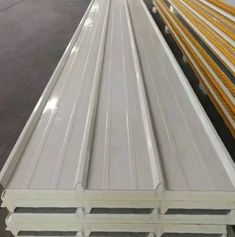
What is a PIR Panel?
A PIR panel (Polyisocyanurate panel) is an advanced insulated sandwich panel featuring a rigid polyisocyanurate foam core bonded between two metal facings. While chemically related to polyurethane (PUF), PIR foam is produced with a higher ratio of isocyanate to polyol, resulting in a predominantly isocyanurate ring structure that delivers significantly improved fire resistance and thermal stability.
PIR panels from Phoenixx SmartBuild are engineered for applications where fire safety is a primary concern—cold storage warehouses storing high-value inventory, pharmaceutical manufacturing facilities, food processing plants, and any project requiring FM Global or equivalent fire-safety approval.
PIR Chemistry Explained
Both PUF and PIR foams begin with similar raw materials—polyol and isocyanate (MDI). The key difference lies in the isocyanate index:
- PUF (Polyurethane): Isocyanate index of approximately 100–110. The reaction produces urethane linkages, yielding a flexible-to-rigid foam with good insulation but moderate fire performance.
- PIR (Polyisocyanurate): Isocyanate index of 180–300. The excess isocyanate self-trimerises to form isocyanurate rings—six-membered molecular structures that are thermally stable up to 200°C and form a protective char layer when exposed to flame.
This char layer is critical: when a PIR panel encounters fire, the surface carbonises and creates an insulating barrier that slows heat penetration and flame spread, buying valuable evacuation and firefighting time.
PIR vs PUF: Key Differences
| Parameter | PUF Panel | PIR Panel |
|---|---|---|
| Core Chemistry | Polyurethane (urethane linkages) | Polyisocyanurate (isocyanurate rings) |
| Fire Reaction | B2 (self-extinguishing) | B1 / Bs1d0 (limited combustibility, low smoke) |
| Char Formation | Minimal | Dense, protective char layer |
| Thermal Conductivity | 0.020–0.024 W/mK | 0.020–0.023 W/mK |
| Max Service Temperature | +80°C | +120°C |
| FM Approval Eligibility | Typically not eligible | Eligible for FM 4880/4881 |
| Cost | Lower | 10–20% premium over PUF |
For a detailed side-by-side analysis, read our guide on PUF panel vs PIR panel comparison.
Superior Fire Performance of PIR Panels
Fire safety is the primary reason specifiers choose PIR over PUF. Here’s what the data shows:
- Euroclass Bs1d0: PIR panels achieve the highest reaction-to-fire classification for organic-core panels under EN 13501-1, meaning limited combustibility, very low smoke production (s1), and no flaming droplets (d0).
- FM 4880/4881 Approval: FM-approved PIR panels pass the rigorous Factory Mutual large-scale fire tests, which are mandatory for insurance compliance in many global and Indian cold storage and warehouse projects.
- Indian NBC Compliance: PIR panels meet and exceed the fire-safety requirements of India’s National Building Code (NBC 2016) for Group A and B occupancies, making them suitable for high-risk storage and manufacturing environments.
Thermal Efficiency of PIR Panels
With a thermal conductivity as low as 0.020 W/mK, PIR panels deliver insulation performance that is equivalent to—or marginally better than—PUF panels. For cold storage operators, this means:
- A 100 mm PIR panel provides the same insulation as approximately 110 mm of PUF, allowing slightly thinner wall constructions and more usable internal volume.
- Energy consumption for refrigeration can be reduced by 25–35% compared to traditional insulation methods like thermocol (EPS) or fibre-glass-lined construction.
- Long-term thermal drift is minimal due to the closed-cell structure retaining low-conductivity blowing gas for decades.
Applications of PIR Panels
Cold Storage & Cold Chain
PIR panels are the preferred choice for modern cold storage facilities in India, especially those financed through bank loans or insured by FM Global-listed carriers. The combination of excellent insulation and fire safety protects both the building structure and billions of rupees worth of perishable inventory.
Pharmaceutical & Biotech
GMP-compliant PIR panels with stainless steel or food-grade coated facings line tablet manufacturing zones, API storage areas, and vaccine cold chain facilities where fire risk must be minimised.
Food Processing
Dairy plants, meat processing units, and ready-to-eat food factories use PIR-cored panels for hygienic, fire-safe, and energy-efficient construction. Smooth internal surfaces facilitate CIP (Clean-in-Place) procedures.
Data Centres & IT Facilities
The low flammability and smoke characteristics of PIR panels make them increasingly popular for data centre envelope construction, where fire protection of high-value IT equipment is paramount.
Why PIR Panels Matter for Indian Projects
India’s cold chain infrastructure is expanding rapidly under government schemes like PM Kisan SAMPADA Yojana and the Agriculture Infrastructure Fund. As project sizes grow and insurance requirements tighten, the demand for PIR panels is accelerating. Phoenixx SmartBuild manufactures PIR panels in multiple thicknesses (40–200 mm) with certifications that meet both Indian and international standards. Request a quote to discuss your project’s fire-safety and insulation requirements with our engineering team.
Frequently Asked Questions
Frequently Asked Questions
Is PIR panel better than PUF panel?
PIR panels offer superior fire resistance (Bs1d0 vs B2) and slightly better thermal stability compared to PUF panels. They are the better choice when fire safety is critical—such as in cold storage, pharma, and insured warehouses. PUF panels remain cost-effective for applications where standard fire ratings suffice.
What does FM approval mean for PIR panels?
FM (Factory Mutual) approval means the panel has passed large-scale fire tests conducted by FM Global under standards FM 4880 or FM 4881. This approval is often required by insurance companies to provide coverage for cold storage and warehouse facilities, and it certifies the panel’s fire-safe performance under real-world conditions.
Can PIR panels be used for roofing?
Yes, PIR panels are used for both wall cladding and roofing. PIR roof panels are especially common in cold storage facilities and food processing plants where roof-level fire protection is critical. They are available in standard trapezoidal and concealed-fix profiles.
What is the cost difference between PIR and PUF panels?
PIR panels typically cost 10–20% more than equivalent PUF panels due to the higher isocyanate content and additional fire-retardant chemistry. However, the savings on insurance premiums and improved fire safety often offset this premium, especially for high-value storage facilities.
Are PIR panels suitable for deep-freeze cold storage?
Absolutely. PIR panels in 120–200 mm thicknesses are widely used for deep-freeze storage operating at −18°C to −35°C. Their excellent thermal conductivity (0.020–0.023 W/mK) combined with FM-approved fire safety makes them the preferred choice for modern cold chain facilities in India.
Related Resources
Explore related products, locations, case studies, and technical guides from PHOENIXX SMARTBUILD.