10 Advantages of Prefabricated Buildings in India
Explore the top 10 advantages of prefabricated buildings in India, from faster construction timelines and cost savings to superior quality control and environmental sustainability.
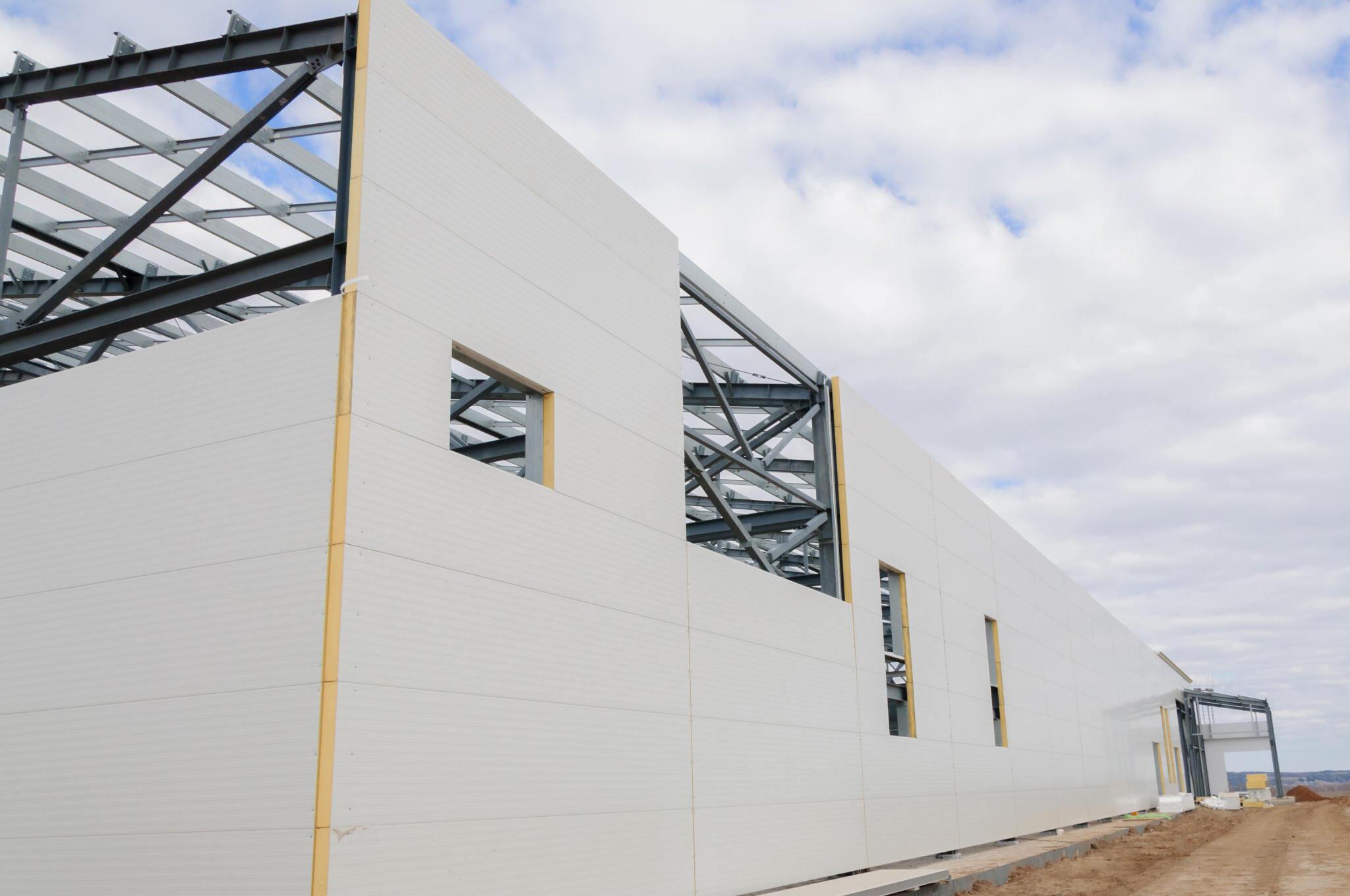
Why Prefabricated Buildings Are Transforming Indian Construction
India’s construction industry is undergoing a fundamental shift. Rising labour costs, tighter project deadlines, quality expectations, and sustainability mandates are pushing developers, industrialists, and government agencies towards prefabricated construction: a method where building components are manufactured in a controlled factory environment and assembled on site. Pre-Engineered Buildings (PEB) with insulated sandwich panel cladding represent the most mature and widely adopted form of prefabrication in India today.
Here are 10 compelling advantages that make prefabricated buildings the smart choice for industrial, commercial, and institutional projects across India.
1. Dramatically Faster Construction
The single biggest advantage of prefabricated buildings is speed. Since structural steel fabrication, panel manufacturing, and site civil works proceed simultaneously, the total project timeline is compressed by 40–60% compared to conventional construction.
A 5,000 sq m warehouse that would take 8–10 months with brick-and-mortar construction can be completed in just 10–14 weeks using PEB with PUF panel cladding. For businesses, this means earlier occupancy, faster revenue generation, and reduced interest burden on construction finance.
2. Significant Cost Savings
Prefabricated buildings deliver 15–30% cost savings over conventional construction. The savings stem from multiple factors:
- Optimised material usage: Computer-aided design minimises steel consumption by 20–30%.
- Reduced foundation costs: Lighter structures require smaller foundations, saving 30–40% on civil works.
- Lower labour costs: Factory automation reduces dependence on skilled site labour, which is increasingly scarce and expensive in India.
- Shorter timelines: Compressed schedules reduce site overheads, supervision costs, and financing charges.
3. Superior Quality Control
In conventional construction, quality depends on site conditions, weather, and the skills of individual workers. Prefabricated components are manufactured in a factory-controlled environment with automated welding, CNC cutting, precision roll-forming, and systematic quality checks at every stage. The result is consistent dimensional accuracy, better weld quality, and uniform panel properties—batch after batch.
4. Environmental Sustainability
Prefab construction is inherently more sustainable than conventional building methods:
- Material waste: Factory fabrication generates only 2–5% waste versus 15–25% at conventional construction sites.
- Energy efficiency: Insulated sandwich panels reduce operational energy consumption by 25–40% over the building’s lifetime.
- Recyclability: Steel structures are 95–100% recyclable at end-of-life, and PUF panel steel facings are fully recyclable.
- Reduced site disturbance: Shorter construction periods mean less noise, dust, and disruption to surrounding areas.
5. Design Flexibility & Customisation
Prefabricated buildings are not “cookie-cutter” boxes. Modern PEB design software allows architects and engineers to create varied building shapes, clear spans up to 90 metres, variable eave heights, mezzanine floors, curved roofs, and architecturally appealing façades. Panels are available in numerous colours, profiles, and finishes to match any aesthetic requirement.
6. Minimal Construction Waste
India generates an estimated 150 million tonnes of construction and demolition (C&D) waste annually: a major environmental and logistical challenge. Prefabricated construction drastically reduces waste by cutting and shaping materials to precise dimensions in the factory. Off-cuts are recycled, and packaging is minimal. This aligns with India’s Construction and Demolition Waste Management Rules, 2016.
7. Enhanced Worker Safety
Factory manufacturing environments are safer than construction sites. Workers operate with proper PPE, ergonomic workstations, and safety protocols. On-site erection of prefabricated components involves trained crews using cranes and mechanical fastening rather than extensive scaffolding, hot welding, and manual material handling, reducing accident rates significantly.
8. Weather Independence
Conventional construction in India faces significant disruptions during the 4–5 month monsoon season and extreme summer heat. Prefabricated components are manufactured indoors regardless of weather. Site erection, involving primarily bolted connections and panel clipping, can continue in light rain and is far less weather-sensitive than concrete pouring, plastering, or bricklaying.
9. Easy Expansion & Relocation
Prefabricated buildings are inherently modular. Need to add a bay to your warehouse or extend your production line? Additional bays can be designed and added with minimal disruption to ongoing operations. In some cases, prefab structures can even be partially dismantled and relocated to a new site: an impossibility with conventional RCC construction.
10. Strong Resale & Residual Value
Steel prefabricated buildings retain significant residual value. The structural steel can be resold or repurposed, and insulated panels can be reused if carefully dismantled. This contrasts with conventional buildings where demolition yields only rubble and scrap. For investors and industrialists, this translates to better return on investment and lower write-off risk.
The Indian Context: Why Now?
Several converging trends make this the ideal time for prefabricated construction in India:
- The Make in India initiative is driving rapid expansion of manufacturing capacity, creating demand for quick-to-build factory and warehouse space.
- GST implementation has rationalised logistics, leading to consolidation of warehousing into large, professionally built hubs.
- Rising real estate costs make speed-to-market a competitive advantage—every month saved in construction is a month of earned rent or production revenue.
- Skilled labour shortage in construction makes factory-controlled prefabrication not just preferable, but increasingly necessary.
Phoenixx SmartBuild combines PEB structural engineering with high-performance sandwich panel cladding to deliver complete prefabricated building solutions. Contact us to discuss how prefabrication can accelerate your next project.
Frequently Asked Questions
Frequently Asked Questions
Are prefabricated buildings as strong as conventional buildings?
Yes, prefabricated steel buildings are engineered to meet or exceed the same structural codes (IS 800, IS 875) as conventional buildings. They are designed for the specific wind speed, seismic zone, and load requirements of the project location. In fact, the factory-controlled fabrication often yields more consistent quality than site-built structures.
What is the cost of a prefabricated building in India?
Prefabricated building costs in India range from ₹1,200 to ₹2,500 per sq ft for industrial structures, depending on span, height, crane loads, and cladding type. This is typically 15–30% lower than equivalent conventional construction, with the added benefit of 40–60% faster completion.
How long does a prefabricated building last?
A well-maintained prefabricated steel building lasts 40–50+ years. The structural steel frame, protected with anti-corrosive primer and paint, resists weathering for decades. Insulated cladding panels last 20–30 years and can be replaced without affecting the structure.
Can prefabricated buildings be customised?
Absolutely. Modern prefabricated buildings are fully customisable, from building dimensions, roof slope, and eave height to cladding colour, façade design, mezzanine layout, and service integration (cranes, ventilation, lighting). They are not standard boxes but tailored engineering solutions.
Are prefabricated buildings suitable for India’s climate?
Yes, when combined with insulated sandwich panels (PUF/PIR), prefabricated buildings perform exceptionally well in India’s diverse climate. The panels provide thermal insulation against extreme heat, moisture resistance against monsoon humidity, and the steel structure withstands high wind speeds and seismic loads as per Indian Standards.
Related Resources
Explore related products, locations, case studies, and technical guides from PHOENIXX SMARTBUILD.