10 Benefits of Insulated Panels for Industrial & Commercial Buildings
Explore the top 10 benefits of insulated sandwich panels for industrial and commercial buildings, from thermal insulation and energy savings to fire resistance, hygiene, and sustainability.
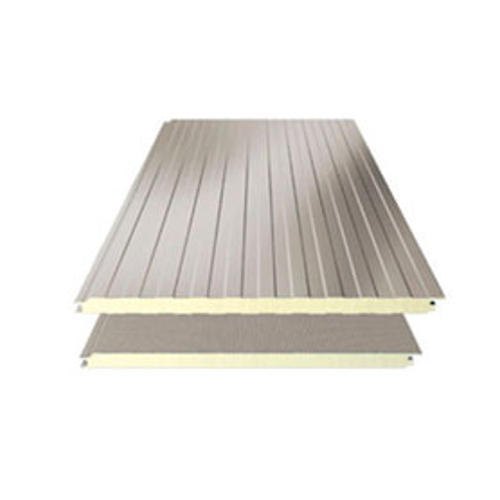
Why Insulated Panels Are the Modern Builder’s Best Ally
Insulated panels (also known as sandwich panels or composite panels) have become the dominant cladding and roofing solution for industrial and commercial construction worldwide. In India, the shift from conventional building materials to insulated sandwich panels is accelerating as builders, architects, and facility owners recognise the comprehensive performance advantages these panels deliver.
Whether you’re constructing a warehouse, factory, cold storage, cleanroom, or commercial complex, here are 10 evidence-based benefits of insulated panels that make them the smart choice.
1. Outstanding Thermal Insulation
The core benefit of insulated panels is right in the name—insulation. A PUF sandwich panel with a thermal conductivity of 0.020–0.024 W/mK provides insulation equivalent to:
- 330 mm of standard brick wall
- 170 mm of aerated concrete block
- 85 mm of extruded polystyrene (XPS)
This means a slim 50 mm PUF panel replaces more than a foot of brickwork in thermal performance, dramatically reducing wall thickness and maximising usable floor space. For cold storage applications, PIR panels achieve even marginally better conductivity at 0.020–0.023 W/mK.
2. Significant Energy Savings
A well-insulated building envelope directly translates to lower energy bills. Studies and real-world data from Indian industrial facilities show that insulated panel cladding reduces:
- HVAC energy consumption by 25–40% compared to single-skin metal sheet buildings.
- Refrigeration energy in cold storage by 30–50% compared to conventional insulated construction (thermocol/brick sandwich).
- Overall building operational cost by 15–25% over its lifecycle.
In India’s climate, where summer temperatures routinely exceed 40–45°C in most industrial regions, the energy savings from proper insulation are substantial and provide payback within 2–4 years.
3. Rapid Installation Speed
Insulated panels are factory-manufactured to precise dimensions and delivered to site ready for installation. A team of 4–6 workers can install 200–400 sq m of panel cladding per day, compared to 20–40 sq m per day for conventional brick wall construction. Key time-saving features include:
- Large format: Panels up to 15 metres long cover vast areas in a single piece.
- Interlocking joints: Tongue-and-groove or cam-lock systems ensure rapid, airtight assembly without wet trades.
- Dry construction: No curing time, no plastering, no painting: the panel surface is the finished surface.
4. Lightweight Construction
A 50 mm PUF panel weighs approximately 10–12 kg/m²—compared to 200+ kg/m² for a 230 mm brick wall with plaster. This dramatic weight reduction has cascading benefits:
- Lighter structural steel framing (15–25% savings in steel weight)
- Smaller foundations
- Lower seismic forces on the structure
- Easier transportation and handling at site
5. Fire Resistance Options
Insulated panels are available in a spectrum of fire performance ratings to match project requirements:
- PUF panels (B2): Self-extinguishing, suitable for general industrial and commercial use.
- PIR panels (Bs1d0): Limited combustibility with low smoke and no flaming droplets, ideal for cold storage and insured warehouses.
- Rockwool panels (A1/A2): Non-combustible core for the highest fire safety requirements—fire walls, escape corridors, and buildings in high-density urban areas.
This range allows engineers to specify the right panel for each zone within a building, optimising both fire safety and cost.
6. Excellent Acoustic Insulation
Insulated panels provide meaningful noise reduction, particularly important for buildings housing noisy machinery or located near residential areas. A standard 50 mm PUF panel offers sound reduction of approximately 25–28 dB (Rw), while 80–100 mm Rockwool panels achieve 32–35 dB. For generator rooms, compressor enclosures, and manufacturing areas with high noise levels, insulated panels serve as effective acoustic barriers.
7. Moisture & Weather Resistance
The closed-cell structure of PUF and PIR foams absorbs less than 2% moisture by volume, making insulated panels inherently resistant to India’s humid and monsoon-prone climate. Combined with:
- Galvalume or galvanised steel facings with polyester or PVDF coatings
- Sealed interlocking joints with sealant and gaskets
- Proper flashing and trim details at penetrations and edges
The result is a building envelope that keeps weather out and conditioned air in, year after year.
8. Hygienic & Easy-to-Clean Surfaces
The smooth, non-porous inner surface of insulated panels is ideal for environments requiring strict hygiene standards:
- Food processing: Panels can be washed down with water and cleaning agents without damage.
- Pharmaceutical: GMP-grade coatings resist chemicals and prevent microbial growth.
- Dairy & beverage: Panel surfaces withstand CIP (Clean-in-Place) processes.
This hygienic property eliminates the need for additional wall linings or tiling—saving both installation cost and ongoing maintenance.
9. Low Maintenance Requirements
Unlike brick walls that require periodic repainting, replastering, and waterproofing, insulated panels need minimal maintenance:
- Annual visual inspection of joints and sealants
- Periodic cleaning with water (for hygienic areas)
- Recoating of the outer surface every 15–20 years (depending on the coating system)
This low-maintenance profile reduces total cost of ownership and minimises disruption to ongoing operations.
10. Sustainability & Recyclability
Insulated panels contribute to sustainable construction in multiple ways:
- Reduced operational carbon: Energy savings from insulation lower the building’s carbon footprint throughout its operational life.
- Minimal construction waste: Factory-cut panels generate 2–5% waste versus 15–25% for conventional construction.
- Steel recyclability: Both metal facings are 100% recyclable. India’s robust steel scrap market ensures facings are recycled at end-of-life.
- IGBC/GRIHA credits: Using insulated panels contributes points towards green building certifications for energy performance, materials efficiency, and indoor environmental quality.
Choosing the Right Insulated Panel
The best panel for your project depends on your specific requirements for insulation, fire rating, budget, and application. Phoenixx SmartBuild manufactures the full range—PUF, PIR, and Rockwool, and our engineering team helps you select the optimal solution. Get in touch for a no-obligation consultation.
Frequently Asked Questions
Frequently Asked Questions
How much energy can insulated panels save?
Insulated sandwich panels reduce HVAC energy consumption by 25–40% compared to single-skin metal sheet buildings, and refrigeration energy by 30–50% in cold storage compared to conventional construction. The exact savings depend on panel thickness, building usage, climate zone, and the efficiency of the HVAC/refrigeration system.
Are insulated panels suitable for food processing plants?
Yes, insulated panels are the preferred wall and ceiling material for food processing plants. Their smooth, non-porous surfaces are easy to clean, resistant to chemicals, and prevent microbial growth. Food-grade coatings and stainless steel facings are available for direct food-contact areas. They meet FSSAI and international HACCP requirements.
How long do insulated panels last?
Quality insulated panels with PPGI/PPGL facings last 25–30 years with standard maintenance. The foam core retains over 90% of its insulation value throughout this period. Steel facings with PVDF coatings or stainless steel can extend the lifespan to 30–40 years even in corrosive or coastal environments.
Can insulated panels be used for both walls and roofs?
Yes, insulated panels are designed for both wall (vertical) and roof (inclined/horizontal) applications. Roof panels typically feature trapezoidal or standing-seam outer profiles for water drainage, while wall panels use flat, micro-ribbed, or architectural profiles. The insulation core and performance properties are similar for both.
What is the R-value of a 50 mm PUF panel?
A 50 mm PUF panel with a thermal conductivity of 0.022 W/mK has an R-value of approximately 2.27 m²K/W (considering foam core only). Including the air film resistances on both surfaces, the total panel R-value is approximately 2.45 m²K/W. This is equivalent to roughly 330 mm of standard brick wall.
Related Resources
Explore related products, locations, case studies, and technical guides from PHOENIXX SMARTBUILD.