Industrial Insulation Guide for Beginners – Everything You Need to Know
A beginner-friendly guide to industrial insulation covering all major types (PUF, PIR, Rockwool, glass wool, EPS), R-value concepts, applications, cost comparisons, and selection criteria for Indian industrial projects.
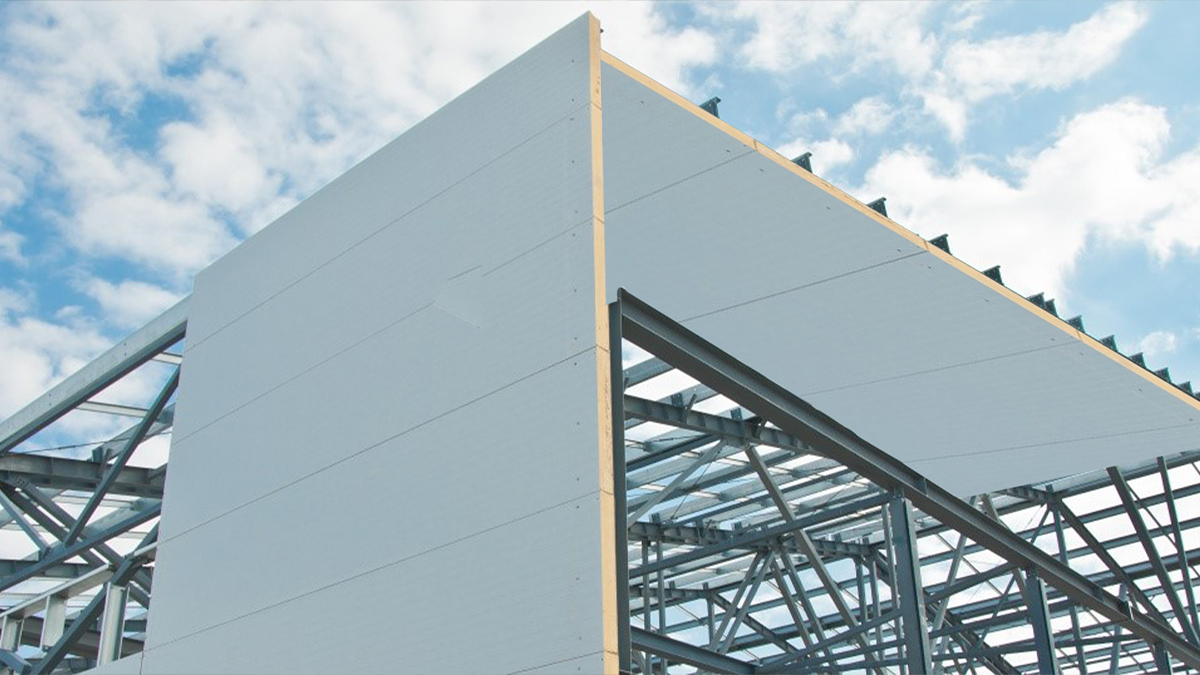
Industrial Insulation Guide for Beginners – Everything You Need to Know
If you’re planning any industrial construction project in India – whether it’s a factory, warehouse, cold storage, or cleanroom – understanding industrial insulation is fundamental to making the right decisions. Insulation directly impacts energy efficiency, worker comfort, product quality, and operational costs.
This guide explains insulation concepts in plain language, compares the major insulation types available in India, and helps you choose the right insulation for your project. No prior technical knowledge required.
What Is Industrial Insulation?
Industrial insulation is a material or system that resists the flow of heat between the inside and outside of a building. In simple terms:
- In summer, insulation keeps the external heat out, keeping the interior cool
- In winter, insulation keeps the internal warmth in, reducing heating costs
- In cold storage, insulation prevents the external heat from entering and warming the refrigerated space
Without insulation, a standard industrial shed in India can reach internal temperatures of 55–65°C during peak summer. With proper insulation, this can be brought down to 35–40°C – a dramatic improvement in working conditions.
Key Insulation Concepts
Thermal Conductivity (k-value or λ-value)
This measures how easily heat passes through a material. Lower values mean better insulation. The unit is W/mK (watts per metre-kelvin).
- PUF foam: 0.020–0.024 W/mK (excellent)
- PIR foam: 0.022–0.025 W/mK (excellent)
- Rockwool: 0.035–0.045 W/mK (good)
- Glass wool: 0.032–0.040 W/mK (good)
- EPS (Thermocol): 0.035–0.040 W/mK (moderate)
- Brick: 0.60–0.80 W/mK (poor insulator)
- Steel: 50 W/mK (essentially no insulation)
R-Value (Thermal Resistance)
The R-value measures the insulating effectiveness of a specific thickness of material. Higher R-value = better insulation.
Formula: R-value = Thickness (in metres) ÷ Thermal conductivity (k-value)
For example, a 50 mm (0.05 m) PUF panel with k-value 0.022 has an R-value of 0.05 ÷ 0.022 = 2.27 m²K/W
U-Value (Thermal Transmittance)
The U-value measures the rate of heat transfer through the complete wall or roof assembly. Lower U-value = better insulation. It is essentially the inverse of the total R-value of the assembly.
Types of Industrial Insulation
1. PUF (Polyurethane Foam)
PUF is the most widely used industrial insulation in India, especially in the form of Sandwich PUF Panels.
- Thermal conductivity: 0.020–0.024 W/mK
- Density: 38–45 kg/m³ (rigid panels)
- Fire rating: Self-extinguishing (B3)
- Temperature range: -50°C to +80°C
- Available forms: Sandwich panels, spray-applied, pipe sections, slabs
- Pros: Best insulation-to-thickness ratio, lightweight, CFC-free options available, versatile
- Cons: Not non-combustible, degrades above 80°C, UV-sensitive (must be covered)
- Best for: Factory roofing, warehouse walls, cold storage, office cabins, general-purpose insulation
2. PIR (Polyisocyanurate)
PIR Panels are a chemical cousin of PUF with enhanced fire properties.
- Thermal conductivity: 0.022–0.025 W/mK
- Density: 40–48 kg/m³
- Fire rating: B-s1, d0 (limited combustibility, minimal smoke)
- Temperature range: -50°C to +120°C
- Pros: Better fire performance than PUF, excellent insulation, higher temperature tolerance
- Cons: 5–15% more expensive than PUF
- Best for: Cold storage, food processing, pharmaceuticals, cleanrooms, any project where fire safety is a priority
3. Rockwool (Mineral Wool)
Rockwool Panels use mineral fibres made from volcanic basalt rock.
- Thermal conductivity: 0.035–0.045 W/mK
- Density: 80–150 kg/m³ (panel-grade)
- Fire rating: Non-combustible (A1 class), up to 4-hour fire resistance
- Temperature range: -50°C to +750°C
- Pros: Best fire performance, excellent sound insulation, non-combustible
- Cons: Lower insulation per thickness than PUF/PIR, heavier, can absorb moisture if vapour barrier is compromised
- Best for: Fire-rated walls, escape corridors, high-temperature applications, acoustic insulation, oil & gas facilities
4. Glass Wool
Glass wool is made from recycled glass fibres and is available as blankets, rolls, and boards.
- Thermal conductivity: 0.032–0.040 W/mK
- Density: 10–48 kg/m³
- Fire rating: Non-combustible
- Pros: Economical, good acoustic properties, flexible
- Cons: Low compressive strength, absorbs moisture readily, requires a separate structural cladding system
- Best for: Under-deck insulation in existing sheds, acoustic barriers, HVAC duct insulation
5. EPS (Expanded Polystyrene / Thermocol)
EPS is the most economical insulation but has significant limitations:
- Thermal conductivity: 0.035–0.040 W/mK
- Density: 15–30 kg/m³
- Fire rating: Combustible (B3) – melts and burns with toxic fumes
- Pros: Very low cost, lightweight
- Cons: Poor fire performance, degrades over time, absorbs moisture, pest-prone
- Best for: Non-critical applications where budget is the only constraint. Not recommended for cold storage or any food/pharma application.
Quick Comparison Table
| Property | PUF | PIR | Rockwool | Glass Wool | EPS |
|---|---|---|---|---|---|
| Thermal conductivity (W/mK) | 0.022 | 0.023 | 0.040 | 0.036 | 0.038 |
| Fire performance | Self-ext. | B-s1, d0 | A1 (best) | Non-comb. | Combustible |
| Cost index | Medium | Med-High | Medium | Low | Lowest |
| Moisture resistance | Excellent | Excellent | Moderate | Poor | Moderate |
| Compressive strength | High | High | Medium | Low | Low |
| Sound insulation | Moderate | Moderate | Excellent | Excellent | Poor |
How to Choose the Right Insulation
Follow these three steps:
- Define the application: Is it a factory, warehouse, cold storage, or cleanroom? Each has different thermal and fire requirements.
- Determine the thermal requirement: What temperature do you need to maintain? Higher temperature differentials require thicker insulation or materials with lower k-values.
- Check fire and regulatory requirements: Does your project need formal fire ratings? Does your insurer require non-combustible construction?
When in doubt, PUF sandwich panels are the safe default for most industrial applications, while PIR is the better choice for cold storage and fire-sensitive projects.
Conclusion
Industrial insulation is not a one-size-fits-all solution. Each insulation type has specific strengths that make it ideal for certain applications. Understanding the basics of thermal conductivity, R-values, and fire ratings helps you make informed decisions and avoid costly mistakes.
PHOENIXX SmartBuild offers the complete range of industrial insulation solutions – browse our product lineup or get a free consultation from our engineering team to find the best insulation for your project.
Frequently Asked Questions
What is the best insulation for industrial buildings in India?
PUF (Polyurethane Foam) sandwich panels are the best all-round insulation for industrial buildings in India. They offer the lowest thermal conductivity (0.022 W/mK), are lightweight, moisture-resistant, and available as ready-to-install sandwich panels. For projects requiring fire rating, PIR or Rockwool panels are recommended.
What is R-value and why does it matter?
R-value measures the thermal resistance of an insulation material. Higher R-value means better insulation. It is calculated as thickness (metres) divided by thermal conductivity. For example, 100 mm of PUF has an R-value of 4.5, while the same thickness of Rockwool has an R-value of about 2.5. Higher R-value means less heat transfer and lower energy bills.
Is PUF insulation safe for food storage?
Yes, PUF insulation used in sandwich panels is safe for food storage when the panels have food-grade stainless steel or PPGI facings. The PUF core is sealed between the metal sheets and does not come in contact with stored food. For food-related applications, PIR panels are often preferred due to their better fire rating and compliance with food safety regulations.
How much does industrial insulation cost in India?
Industrial insulation costs depend on the type and thickness. PUF sandwich panels range from ₹105–370 per sq ft, PIR panels from ₹200–400 per sq ft, and Rockwool panels from ₹180–350 per sq ft. Glass wool is cheaper at ₹20–60 per sq ft but requires separate cladding. The best value depends on your specific thermal and fire requirements.
Can insulation reduce factory electricity bills?
Yes, proper insulation can significantly reduce electricity bills. An insulated factory roof can reduce cooling costs by 30–50% by preventing solar heat from entering the building. For air-conditioned factories, the savings are even greater because the HVAC system works less to maintain the desired temperature. The typical payback period for insulation investment is 2–4 years.
Related Resources
Explore related products, locations, case studies, and technical guides from PHOENIXX SMARTBUILD.