PIR Panel Buying Guide in India for Industrial and Cold Chain
A procurement and engineering guide to selecting PIR sandwich panels with focus on fire performance, thermal reliability and practical QA in Indian conditions.
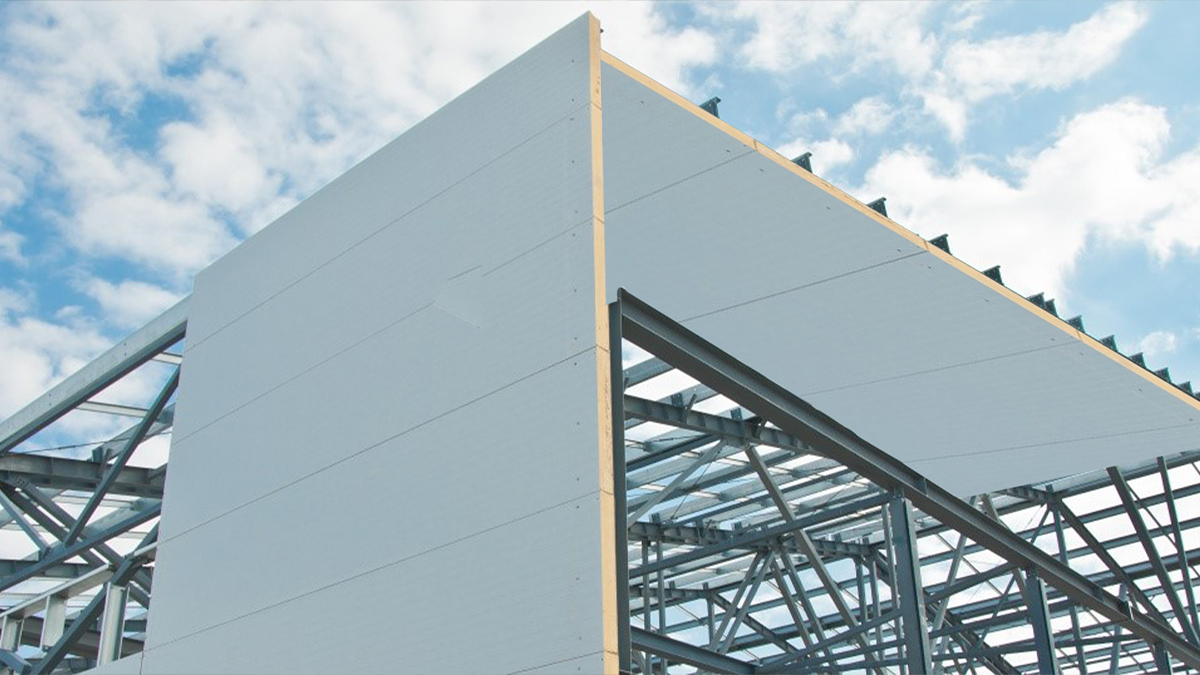
Why PIR Is Chosen in High-Risk Environments
PIR panels are often selected where clients need stronger fire behavior than standard PUR while retaining low thermal conductivity and low panel weight. In pharma blocks, battery rooms, and process utilities, design teams in Gujarat increasingly evaluate PIR as a risk-balanced alternative. PIR core chemistry promotes char formation under heat and can reduce flame spread characteristics compared with conventional PU formulations, but project success still depends on system-level detailing.
When buying PIR panels in India, ask for data that goes beyond brochure claims. Fire behavior should reference recognized test standards and complete panel assembly, not only small material coupons. Thermal conductivity, joint design, and skin coating also influence long-term performance.
Critical Comparison: PIR vs PUF for Buyers
| Parameter | PIR Panel | Standard PUF Panel |
|---|---|---|
| Thermal conductivity | ~0.021-0.023 W/mK | ~0.022-0.026 W/mK |
| Fire behavior profile | Improved charring and slower spread | Good insulation but lower fire class potential |
| Price band | Higher than PUF | Lower capex |
| Typical use case | Higher fire sensitivity zones | General industrial and cold chain use |
What to Ask Vendors Before You Issue PO
- Declared core density and manufacturing tolerance range.
- Fire test references for assembled panel system and joint condition.
- Coating type (PPGI/PPGL), zinc or AZ value, and paint system details.
- Joint geometry drawings and approved fastener spacing.
- Supply chain lead time and replacement panel availability in India.
Insist on sample cross-sections and verify bond quality between core and steel skins. Weak bonding creates long-term risk under thermal cycling, especially in Ahmedabad where roofs see significant daily expansion movement.
Application Fit in Ahmedabad and Gujarat
For industrial parks in Ahmedabad, Vadodara, Bharuch, and Sanand, PIR is usually justified in utilities and production zones with stricter fire strategy. In less sensitive warehouse envelopes, high-quality PUF often delivers better capex efficiency. The correct approach is not ideology; it is risk zoning by occupancy and process hazard.
If your site combines cold room and dispatch operations, you may use PIR in high-risk interfaces and PUF elsewhere, provided interface detailing is engineered correctly. The product references on https://phoenixxsmartbuild.com/products/sandwich-panels/sandwich-puf-panel can be used as a baseline for side-by-side technical comparison during procurement review.
Commercial Model and Lifecycle View
Buyers should compare not only panel rate per square foot, but full installed value including fire barriers, sealants, flashing complexity, and expected insurance implications. In some projects, improved fire behavior can support risk management outcomes that offset part of capex delta. In others, over-specification increases cost without meaningful hazard reduction.
Run a 10-year lifecycle model with at least three scenarios: standard PUF, targeted PIR zoning, and full PIR envelope. Include downtime cost assumptions because envelope failure cost is often higher than panel material cost.
Frequently Asked Questions
Is PIR always better than PUF for industrial projects?
Not always. PIR can offer better fire behavior, but the decision should follow hazard zoning, budget, and lifecycle objectives rather than blanket preference.
What thermal conductivity range should buyers verify?
For PIR, buyers typically expect approximately 0.021-0.023 W/mK depending on formulation and test basis. Always ask for declared values with test references.
Can PIR and PUF be used in the same facility?
Yes, mixed zoning is common. Use PIR in higher-risk areas and PUF in standard envelope zones, with engineered interface detailing.
What is the most common procurement mistake?
Comparing only basic panel price without verifying fire test references, joint detailing, coating quality, and long-term replacement support.
Related Resources
Explore related products, locations, case studies, and technical guides from PHOENIXX SMARTBUILD.