Understanding PUF Sandwich Panels – Structure, Types & Applications
Learn everything about PUF sandwich panels – from their steel-PUF-steel construction and manufacturing process to panel types, technical specifications, and applications across industries like cold storage, pharma, and warehousing.
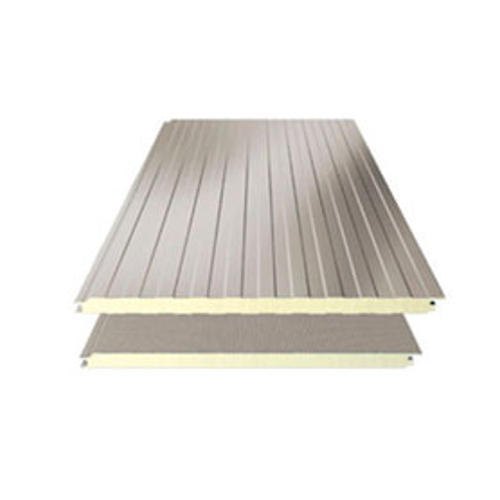
What Is a PUF Sandwich Panel?
A PUF sandwich panel is a prefabricated building material consisting of three layers: two outer metal sheets (typically pre-painted galvanised steel or aluminium) bonded to a rigid polyurethane foam (PUF) core. This steel–PUF–steel construction creates a composite panel that is lightweight yet structurally strong, with exceptional thermal insulation properties.
The term “sandwich” comes from the panel’s layered structure, similar to a sandwich – the metal facings act as the “bread” providing structural strength and weather protection, while the PUF core acts as the “filling” providing insulation and rigidity. This design principle delivers a panel that is significantly more efficient than single-material construction methods.
PUF sandwich panels are used extensively in industrial construction, cold storage, cleanrooms, food processing plants, and commercial buildings across India and globally.
Anatomy of a PUF Sandwich Panel
Understanding the structure helps you appreciate why PUF sandwich panels outperform conventional building materials:
1. Outer Metal Facing (External Sheet)
The external sheet is typically 0.35–0.60mm thick pre-painted galvanised iron (PPGI) or pre-painted galvalume (PPGL). It provides weather resistance, structural strength, and aesthetic appeal. Available profiles include flat, micro-ribbed, and trapezoidal for different applications.
2. PUF Core (Insulation Layer)
The polyurethane foam core has a density of 38–42 kg/m³ (standard) or 40–45 kg/m³ (high-density for cold storage). PUF has the lowest thermal conductivity (0.020–0.024 W/mK) among commonly used insulation materials, making it the most efficient choice for thermal insulation.
3. Inner Metal Facing (Internal Sheet)
The internal sheet is similar to the external sheet and can be customised based on the application. For food processing and pharma, stainless steel or food-grade coated sheets are used. For general industrial use, standard PPGI is sufficient.
4. Adhesive Bond
In continuous-line manufacturing, the PUF core chemically bonds to both metal facings during the foaming process, creating an integral composite. This eliminates the need for separate adhesives and ensures a permanent, reliable bond.
Manufacturing Process
Modern PUF sandwich panels are manufactured on a continuous production line, ensuring consistent quality and precision:
- Coil Decoiling: Steel coils (PPGI/PPGL) are loaded onto decoilers and fed into the line.
- Roll Forming: The steel sheets pass through roll-forming stations that create the desired profile (flat, ribbed, or trapezoidal).
- Pre-Heating: Metal sheets are pre-heated to improve PUF adhesion.
- PUF Injection: A precisely metered mixture of polyol and isocyanate is dispensed between the two metal sheets.
- Foaming & Curing: The chemical reaction creates rigid PUF foam that expands to fill the cavity and bonds to both sheets. The panel passes through a double-belt laminator under controlled temperature and pressure.
- Cutting: Panels are cut to specified lengths using automated saws.
- Quality Check: Every panel is inspected for density, adhesion, dimensional accuracy, and surface finish.
- Packaging & Dispatch: Panels are stacked, edge-protected, and wrapped for transit.
Types of PUF Sandwich Panels
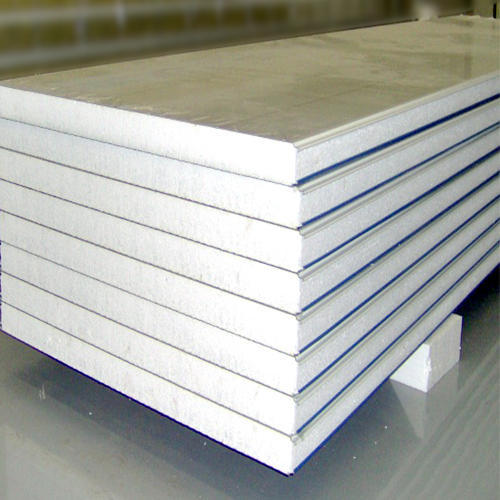
PUF sandwich panels come in several types, each designed for specific applications:
Wall Panels
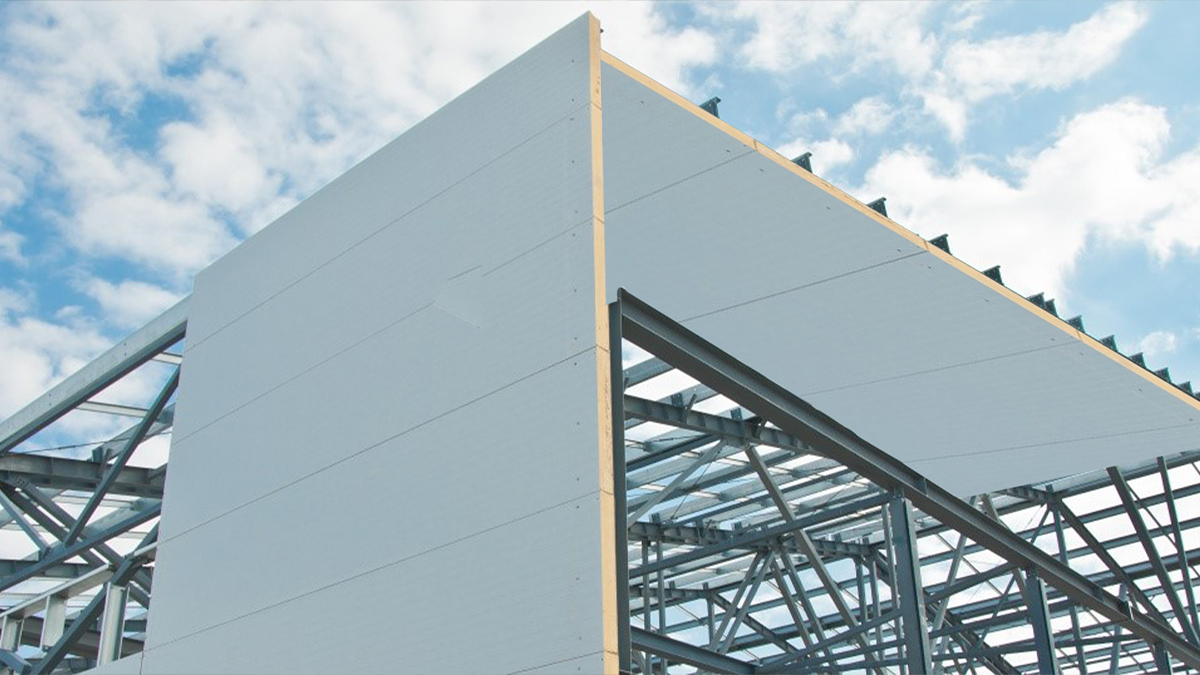
Wall panels feature flat or micro-ribbed profiles and are designed for vertical installation. They provide thermal insulation, weather protection, and acoustic dampening for building envelopes. Common thicknesses range from 40mm to 100mm.
Roofing Panels
Roofing panels have a trapezoidal external profile for water drainage and load-bearing capacity. The internal face is typically flat or lightly ribbed. Thicknesses range from 40mm to 120mm depending on span and insulation requirements.
Ceiling Panels
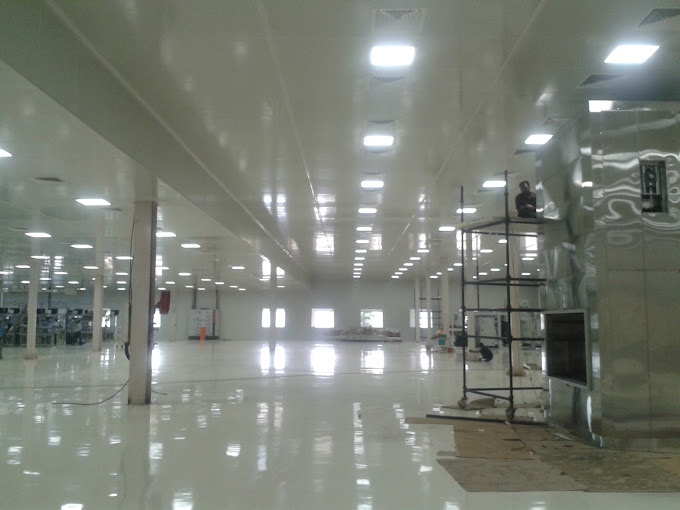
Ceiling panels are flat on both sides and are used for false ceilings in cleanrooms, food processing plants, and cold storage. They are designed for horizontal installation with concealed fixing systems.
Cold Storage Panels
Cold storage panels are high-density PUF panels (40–45 kg/m³) with cam-lock or tongue-and-groove joints for airtight assembly. Available in thicknesses from 60mm to 200mm for temperatures ranging from +15°C to −40°C.
Technical Specifications
Here are the key technical parameters for PHOENIXX PUF sandwich panels:
| Parameter | Standard Panel | High-Density Panel |
|---|---|---|
| Core Density | 38–42 kg/m³ | 40–45 kg/m³ |
| Thermal Conductivity | 0.022 W/mK | 0.020 W/mK |
| Fire Rating | B2 (self-extinguishing) | B1 (flame retardant) |
| Compressive Strength | ≥100 kPa | ≥120 kPa |
| Steel Thickness | 0.35–0.50mm (PPGI) | 0.45–0.60mm (PPGI/SS) |
| Panel Width | 1000mm / 1100mm | 1000mm / 1100mm |
| Panel Length | Up to 12,000mm | Up to 12,000mm |
| Available Thicknesses | 40, 50, 60, 80, 100mm | 60, 80, 100, 120, 150, 200mm |
| Temperature Range | −10°C to +80°C | −40°C to +80°C |
| Water Absorption | ≤1.5% by volume | ≤1.0% by volume |
PUF vs PIR – Which Sandwich Panel Is Right for You?
While PUF panels are the most widely used insulated panels in India, PIR (Polyisocyanurate) panels are gaining popularity for applications requiring higher fire resistance:
| Parameter | PUF Panel | PIR Panel |
|---|---|---|
| Fire Performance | B2 (self-extinguishing) | B1 / Bs1d0 (FM approved) |
| Thermal Conductivity | 0.022 W/mK | 0.021 W/mK |
| Price | Standard | 15–25% premium |
| Best For | Warehouses, general industrial | Pharma, food, high-value storage |
For a detailed comparison, read our guide on what is a PUF panel.
Applications Across Industries
PUF sandwich panels are used in virtually every sector of the construction industry:
- Cold Storage & Cold Chain: Walk-in coolers, blast freezers, ripening chambers, milk chilling centres.
- Food Processing: FSSAI-compliant production areas, packaging zones, cleanrooms.
- Pharmaceuticals: GMP-compliant cleanrooms, API storage, vaccine cold chains.
- Warehousing: E-commerce fulfilment centres, 3PL warehouses, free trade zones.
- Industrial Manufacturing: Factory cladding, paint shops, assembly plants.
- Commercial Buildings: Offices, malls, hotels, data centres.
- Agriculture: Packhouses, greenhouses, onion/potato storage.
Why Choose PHOENIXX PUF Sandwich Panels
PHOENIXX SmartBuild manufactures PUF sandwich panels on a continuous production line with automated density control, ensuring every panel meets the highest quality standards. Our panels are trusted by 500+ projects across India, from cold storage facilities in Gujarat to pharmaceutical cleanrooms in Maharashtra.
Get a quote in 24 hours. Share your project requirements and receive a detailed quotation with specifications, pricing, and delivery timeline. Get technical datasheet →

Frequently Asked Questions
What is a PUF sandwich panel made of?
A PUF sandwich panel consists of three layers: two outer metal sheets (typically 0.35–0.60mm PPGI or PPGL steel) bonded to a rigid polyurethane foam (PUF) core with a density of 38–45 kg/m³. The PUF core provides thermal insulation while the metal facings provide structural strength and weather protection.
What is the thermal conductivity of PUF sandwich panels?
PUF sandwich panels have a thermal conductivity of 0.020–0.024 W/mK, which is the lowest among commonly used insulation materials. This means a 50mm PUF panel provides equivalent insulation to approximately 250mm of brick wall or 75mm of glass wool, making it extremely space-efficient.
What are the different types of PUF sandwich panels?
The main types are: Wall panels (flat/micro-ribbed profiles for vertical installation), Roofing panels (trapezoidal profile for water drainage and load bearing), Ceiling panels (flat on both sides for false ceilings), and Cold storage panels (high-density with cam-lock joints for airtight assembly). Each type is designed for specific applications and installation orientations.
How long do PUF sandwich panels last?
PUF sandwich panels typically have a lifespan of 25–35 years with proper installation and maintenance. The PUF core retains its insulation properties for the entire lifespan. The metal facings, if properly coated (PPGI/PPGL), resist corrosion for 20–30 years. Regular inspection of joints and sealants extends the overall panel life.
What is the difference between PUF and PIR sandwich panels?
Both use polyurethane-based foam cores, but PIR (Polyisocyanurate) has a modified chemistry that provides superior fire resistance (B1/Bs1d0 rating vs B2 for PUF). PIR panels cost 15–25% more than PUF panels. PUF is ideal for general industrial applications, while PIR is preferred for pharma, food processing, and high-value storage where fire safety is critical.
Related Resources
Explore related products, locations, case studies, and technical guides from PHOENIXX SMARTBUILD.