PUF Panels in the Education Sector – Schools, Labs & Prefab Classrooms
How PUF panels are revolutionising educational infrastructure in India – from prefab classrooms built in 30 days to insulated science labs, acoustic auditoriums, and hostel buildings. Cost advantages, PM SHRI schools initiative, and thermal comfort benefits.
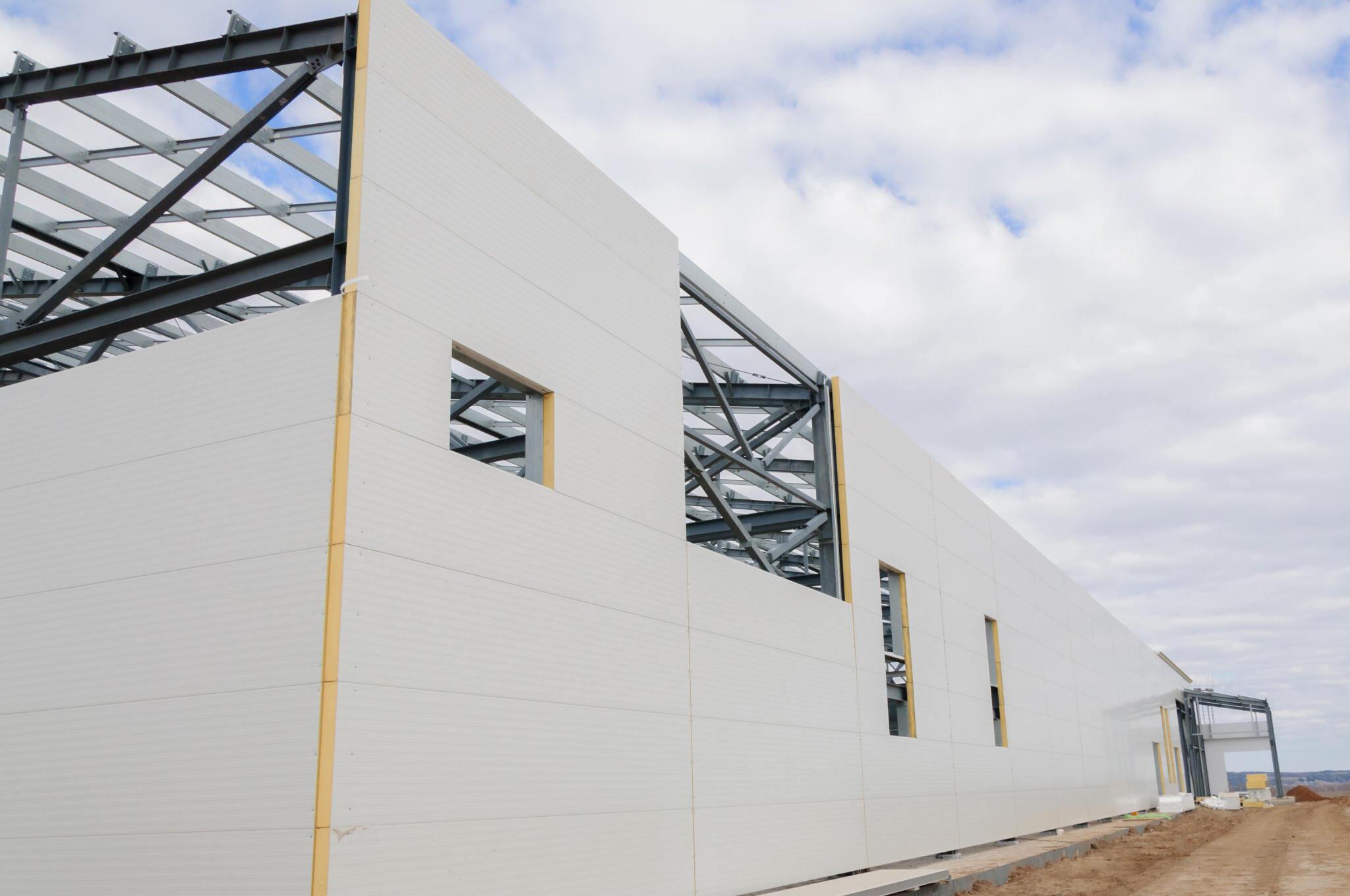
India’s Education Infrastructure Gap – And How PUF Panels Can Bridge It
India needs to build approximately 1.5 lakh new classrooms annually to meet Right to Education (RTE) norms and accommodate its growing student population. Traditional brick-and-mortar construction takes 6–12 months per school building and requires skilled masons who are increasingly scarce in rural areas. The result: a massive backlog of inadequate, uncomfortable, and structurally deficient school buildings.
PUF (Polyurethane Foam) panels offer a revolutionary alternative. A complete school building – classrooms, corridors, labs, and administrative offices – can be erected in 30–45 days using PUF panel-based prefab construction. These buildings are thermally comfortable, structurally sound, aesthetically appealing, and cost-competitive with conventional construction.
In this guide, the engineering team at Phoenixx SmartBuild explores how PUF panels are being deployed across India’s education sector – from government schools in rural Rajasthan to private international schools in Gujarat and Maharashtra.
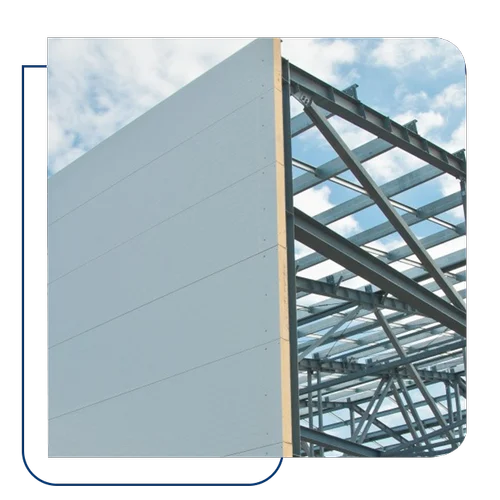
PUF Panel Applications in Education
1. Prefab Classrooms
Prefab classrooms built with PUF panels are the fastest way to add educational capacity. A standard classroom (600–800 sq ft) can be erected in 5–7 days from panel delivery, with complete finishing including flooring, electrical, and painting completed within 15–20 days.
Key advantages of PUF panel prefab classrooms:
- Construction speed: 30 days from order to occupancy vs 6–8 months for brick
- Thermal comfort: 8–12°C cooler than outdoor temperature without AC – critical for student concentration
- Relocatable: If a school needs to move or expand, panels can be disassembled and reused
- Earthquake resistant: Lightweight panels on steel frame absorb seismic energy better than rigid brick
- All-weather construction: Panel installation is unaffected by monsoon, unlike brick masonry
2. Science and Computer Laboratories
School and college laboratories require controlled environments that traditional construction struggles to provide:
- Chemistry labs: PUF panels with chemical-resistant facings protect against spills and fumes
- Computer labs: Insulated enclosures maintain optimal temperature (22–25°C) for equipment longevity
- Physics labs: Vibration-dampening properties of PUF core improve experiment accuracy
- Biology labs: Hygienic, non-porous surfaces prevent bacterial growth in specimen storage areas
PUF sandwich panels with 50 mm thickness provide the ideal combination of insulation, structural strength, and clean surface finish for laboratory environments.
3. Auditorium and Hall Acoustic Insulation
School auditoriums and examination halls built with bare brick or RCC suffer from poor acoustics – excessive reverberation makes it difficult for students to hear speakers clearly. PUF panels with perforated facings provide:
- Sound absorption: NRC (Noise Reduction Coefficient) of 0.30–0.55 depending on facing type
- Sound insulation: STC (Sound Transmission Class) of 25–32 dB for the panel alone
- Thermal insulation: Reducing AC costs for large-volume auditorium spaces
- Quick installation: Acoustic PUF panels can be retrofitted to existing halls in 3–5 days
4. Hostel and Residential Buildings
PUF panel-based hostel construction is gaining traction for universities, ITIs, and boarding schools:
- 50-room hostel built in 45–60 days vs 12–18 months for conventional construction
- Superior thermal insulation keeps rooms comfortable in summer (Rajasthan, MP, Gujarat) and winter (Himachal, Uttarakhand)
- Modular design allows future expansion wing-by-wing
- Fire-retardant grades available for hostel safety compliance
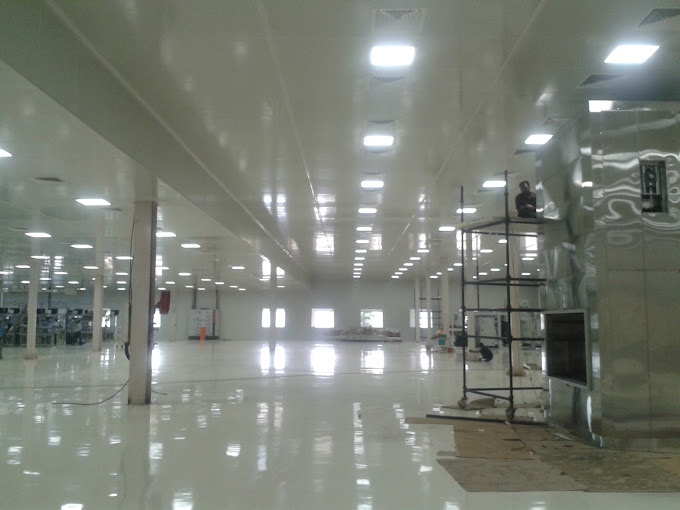
PM SHRI Schools Initiative – PUF Panel Opportunity
The Government of India’s PM SHRI (Schools for Rising India) initiative aims to upgrade 14,500 schools across the country as model institutions. Key infrastructure components that PUF panels can address include:
- Smart classrooms: Insulated, acoustically treated rooms for digital learning
- Science labs: Modern, temperature-controlled laboratory facilities
- Library and reading rooms: Comfortable, quiet study environments
- Sports facilities: Indoor sports halls with insulated roofing
- Green building compliance: PUF panels naturally meet ECBC energy standards
PUF panel construction aligns perfectly with PM SHRI’s emphasis on speed, quality, and sustainability. A school building that takes 8–10 months with conventional construction can be delivered in under 60 days with PUF panel + PEB structure technology.
Cost Comparison: PUF Panel vs Brick School Buildings
For a typical 4-classroom school building (3,200 sq ft) in rural India:
| Parameter | PUF Panel + Steel Frame | Brick + RCC |
|---|---|---|
| Construction Cost | ₹ 18–22 lakh | ₹ 16–20 lakh |
| Construction Time | 30–45 days | 6–8 months |
| Annual Energy Cost (cooling) | ₹ 35,000–45,000 | ₹ 65,000–85,000 |
| 5-Year Maintenance Cost | ₹ 40,000–60,000 | ₹ 1.5–2.5 lakh |
| Indoor Temperature (summer, no AC) | 30–33°C | 36–40°C |
| Earthquake Resistance | Excellent (lightweight) | Moderate (heavy, rigid) |
| Relocatable | Yes | No |
| Total 5-Year Cost | ₹ 20–25 lakh | ₹ 22–28 lakh |
The initial cost difference is marginal (PUF may be 10–15% higher for basic buildings), but the dramatically faster construction time means students are in comfortable classrooms months earlier. Over 5 years, PUF panel schools are actually 10–15% cheaper when energy and maintenance savings are included.
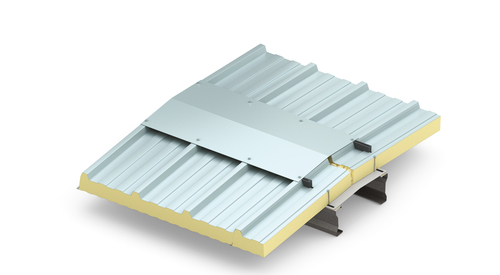
Thermal Comfort: Why It Matters for Learning
Research consistently shows that classroom temperature directly impacts student performance. A study by the Harvard T.H. Chan School of Public Health found that students in un-air-conditioned buildings during hot periods scored 13% lower on cognitive tests than those in cooled environments.
In India, where millions of students study in buildings that reach 38–42°C during summer, this translates to a tangible learning deficit. PUF panel walls and roofing reduce indoor temperatures by 8–12°C below ambient without any air conditioning, keeping classrooms at 30–33°C even when it’s 43°C outside. This passive cooling effect improves student comfort, concentration, and academic outcomes.
Structural Safety and Durability
PUF panel school buildings on steel frames offer superior safety characteristics:
- Seismic Zone IV–V compliance: Lightweight panels reduce seismic load by 80% compared to brick
- Wind load resistance: Panels rated for 150–180 km/h wind speeds (cyclone-resistant)
- Fire retardant: FR-grade PUF panels with B2 classification for school safety
- Termite and pest proof: Metal facings prevent termite damage that plagues brick schools
- 25–30 year design life with minimal structural maintenance
Phoenixx SmartBuild for Education Projects
Phoenixx SmartBuild has supplied PUF panels for educational institutions across Gujarat, Rajasthan, Madhya Pradesh, and Maharashtra. Our education sector capabilities include:
- Turnkey solutions: Panel supply + steel structure + installation coordination
- Custom sizing: Panels manufactured to exact classroom dimensions, minimising waste
- Safety compliance: Fire-retardant panels meeting school safety norms
- Competitive pricing: Government project pricing available for bulk orders
- Pan-India delivery from our Beawar, Rajasthan facility
Get quote in 24 hours. Whether you’re upgrading an existing school or building a new campus, Phoenixx SmartBuild delivers the fastest, most cost-effective construction solution. Get education sector quote →
Frequently Asked Questions
How quickly can a PUF panel school building be constructed?
A 4-classroom school building (3,200 sq ft) can be constructed in 30–45 days using PUF panels on a steel frame. This compares to 6–8 months for conventional brick and RCC construction. Larger school campuses with 8–12 classrooms, labs, and administrative blocks can be completed in 60–90 days.
Are PUF panel classrooms safe for children?
Yes. PUF panel classrooms on steel frames meet seismic zone IV–V safety standards, are fire-retardant (B2 grade), and resist wind loads up to 180 km/h. They are lighter than brick structures, which actually makes them safer during earthquakes. Phoenixx SmartBuild uses only BIS-certified materials with zero harmful emissions.
How much cooler are PUF panel classrooms compared to brick?
PUF panel classrooms are 8–12°C cooler than outdoor temperature without air conditioning, compared to 3–5°C for brick classrooms. On a 43°C day, a PUF panel classroom stays at 30–33°C while a brick classroom reaches 38–40°C. This passive cooling significantly improves student comfort and concentration.
What is the cost of PUF panel school buildings?
A 4-classroom PUF panel school building costs ₹ 18–22 lakh, which is comparable to brick construction (₹ 16–20 lakh). Over 5 years, PUF panel schools are 10–15% cheaper due to lower energy and maintenance costs. Government project pricing is available for bulk orders through Phoenixx SmartBuild.
Can PUF panel school buildings be expanded or relocated?
Yes. One of the key advantages of PUF panel construction is modularity. Additional classrooms, labs, or wings can be added in 15–20 days without disrupting existing operations. Panels can also be disassembled and relocated to a new site, recovering 60–70% of material value – ideal for temporary or evolving school infrastructure.
Related Resources
Explore related products, locations, case studies, and technical guides from PHOENIXX SMARTBUILD.