Warehouse Construction Guide India – Planning to Completion
A comprehensive warehouse construction guide for India covering site selection, regulatory approvals, structural options (PEB vs conventional), wall and roof panel selection, flooring, electrical systems, fire safety, and project timelines.
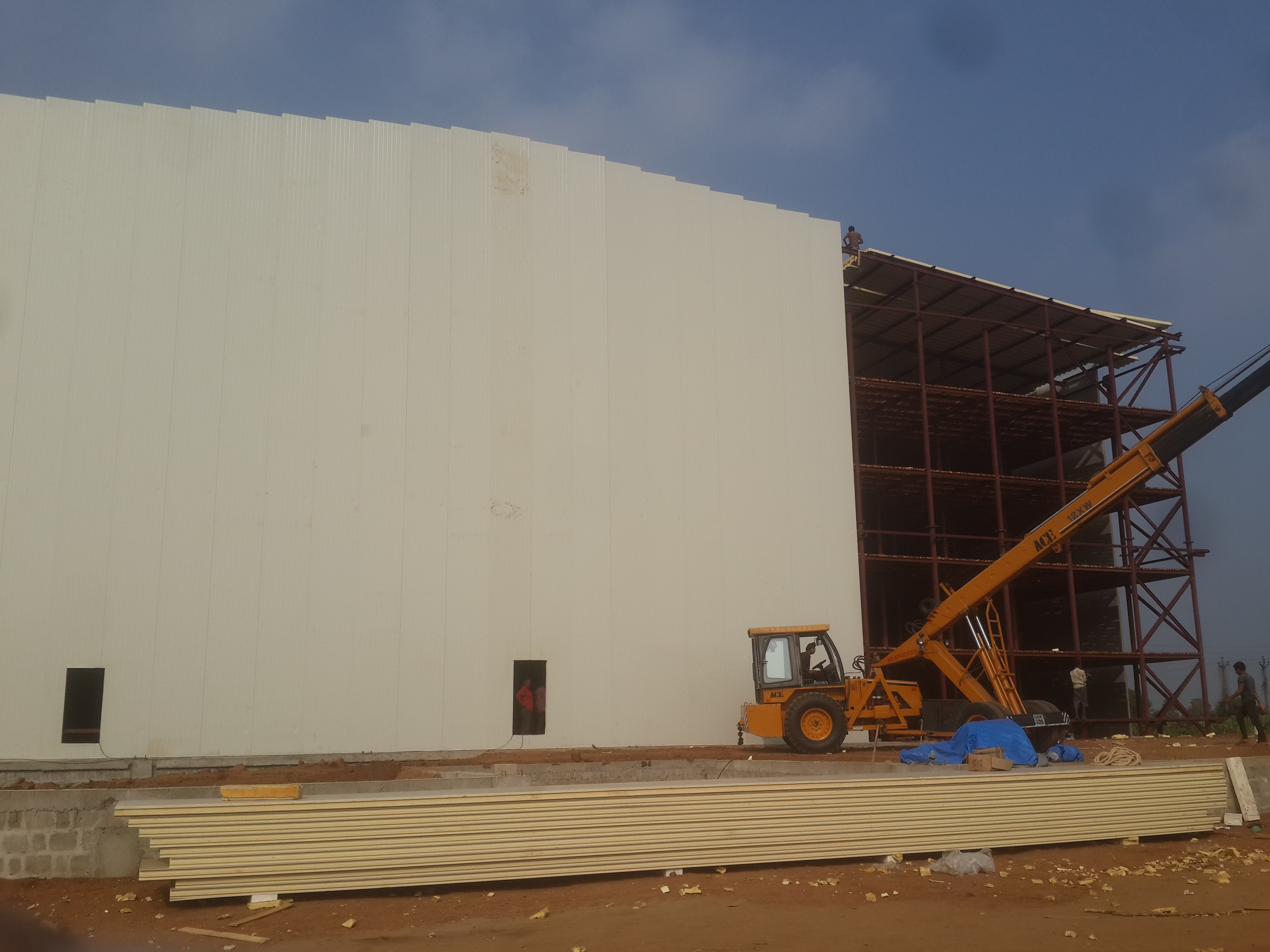
Warehouse Construction Guide India – Planning to Completion
India’s warehousing sector is booming. Driven by the growth of e-commerce, organised retail, cold chain logistics, and the implementation of GST (which has encouraged larger, regional warehouses over smaller state-level godowns), the demand for modern warehouse construction has never been higher.
Whether you’re building a 10,000 sq ft storage godown or a 200,000 sq ft Grade A logistics warehouse, this comprehensive guide walks you through every stage of warehouse construction in India – from site selection to handover.
Phase 1: Site Selection and Land Acquisition
Choosing the right location is the foundation of a successful warehouse project:
- Connectivity: Proximity to national highways, expressways, rail heads, ports, or airports depending on your supply chain needs.
- Market access: Analyse the demand centres your warehouse will serve. A location within 50–100 km of major consumption centres optimises last-mile delivery.
- Land characteristics: Flat terrain, good soil bearing capacity (minimum 1.5–2.0 tonnes/sq m), above flood level, and with adequate drainage.
- Infrastructure: Reliable electricity supply (11 kV or 33 kV line nearby), water source, and approach road suitable for heavy vehicles.
- Zoning: Ensure the land is zoned for industrial/warehousing use. Check the master plan of the local development authority.
- Emerging warehouse hubs: Bhiwandi (Mumbai), Hosur (Chennai), Luhari (Delhi-NCR), Chakan (Pune), Hoskote (Bangalore), and Dholera (Gujarat) are popular corridors.
Phase 2: Regulatory Approvals
Before construction can begin, obtain these key approvals:
- Land use conversion: If the land is agricultural, obtain NA (Non-Agricultural) conversion from the local revenue authority.
- Building plan approval: Submit architectural and structural drawings to the local municipal corporation or development authority.
- Environmental clearance: Required for warehouses above 20,000 sq m (varies by state) from the State Pollution Control Board.
- Fire NOC: Obtain No Objection Certificate from the Fire Department. This influences building design, exit widths, fire suppression systems, and panel specifications.
- Electrical approval: Permission from the state electricity board for HT/LT connection.
- Labour licenses: Registration under Building and Other Construction Workers Act.
The approval process typically takes 2–6 months depending on the state and local authority efficiency. Start the process as early as possible.
Phase 3: Structural System Selection – PEB vs Conventional
This is one of the most important decisions in warehouse construction. The two primary options are:
PEB (Pre-Engineered Buildings)
PEB construction is the preferred choice for modern warehouses due to:
- Clear spans up to 60+ metres without intermediate columns, maximising usable floor area
- 40–50% faster construction compared to conventional steel/RCC
- 15–25% lower structural cost due to optimised steel usage (computer-designed sections)
- Better integration with insulated panel cladding systems
- Expansion-friendly: Easy to extend the building length by adding bays
Conventional Steel/RCC
- Suitable for multi-storey warehouses (2–4 floors)
- Required for very heavy point loads (e.g., heavy machinery storage)
- Better for irregular site shapes that don’t suit standard PEB bay sizes
- Higher cost and longer construction time
For the vast majority of single-storey warehouses in India, PEB is the clear winner on cost, speed, and functionality.
Phase 4: Wall and Roof Panel Selection
The building envelope (walls and roof) determines the warehouse’s thermal performance, weather resistance, and aesthetics:
Roofing
- Grade A warehouses: Roofing PUF Panels (50–80 mm) for insulation, leak resistance, and long lifespan
- Budget warehouses: Colour-coated metal sheets with under-deck insulation as a cost-effective alternative
- Roof slope: Minimum 1:10 (5.7°) for PUF panels, 1:6 (9.5°) for metal sheets in heavy rainfall areas
Walls
- Main cladding: Sandwich PUF Panels (40–60 mm) for the full wall height, or brick dado (lower 1.2 m) with PUF panels above
- Loading dock walls: Consider impact-resistant concrete or steel bollards at dock bumper areas
- Aesthetic considerations: Colour-coded wall panels enhance branding and comply with Grade A warehouse specifications
Read our detailed warehouse construction cost with PUF panels guide for budget planning.
Phase 5: Flooring
Warehouse flooring must withstand heavy forklift traffic, racking loads, and abrasion:
- VDF (Vacuum Dewatered Flooring): The standard for Grade A warehouses. FM2 flatness tolerance (3 mm over 3 m). Load capacity: 5–7 tonnes/sq m. Cost: ₹80–120 per sq ft.
- Tremix flooring: Machine-levelled concrete floor. Good for general warehousing. FM3 tolerance. Cost: ₹60–90 per sq ft.
- Joint layout: Saw-cut contraction joints at 6 m x 6 m grid to control cracking. Joint filler with polyurethane sealant for forklift-friendly movement.
- Hardener: Surface hardener (metallic or non-metallic) applied during finishing for abrasion resistance.
- Floor coating: Epoxy or polyurethane coating for dust-free, easy-to-clean surfaces (required for food/pharma warehouses).
Phase 6: Electrical and Lighting
- Power supply: HT connection (11 kV) for warehouses with connected load above 100 kVA. DG backup sized at 50–100% of connected load.
- Lighting: LED high-bay fixtures (150–200W) mounted at 8–12 m height. Illumination: 200–300 lux at floor level for general warehousing, 500+ lux for picking areas.
- Charging stations: Dedicated EV/forklift charging area with appropriate electrical provisions.
- Data and security: Structured cabling for CCTV, access control, and warehouse management system (WMS) infrastructure.
Phase 7: Fire Safety
Fire safety is mandatory and regulated by NBC 2016 and state fire services:
- Fire detection: Addressable fire alarm system with smoke and heat detectors throughout the warehouse.
- Fire suppression: Sprinkler system designed per IS 15105 or NFPA 13. Typically requires a fire water tank (capacity 200–500 KL based on building size), fire pumps (main + jockey + standby), and sprinkler piping.
- Fire extinguishers: Portable fire extinguishers as per NBC 2016 requirements.
- Emergency exits: Minimum two exits from each compartment, with illuminated exit signage and emergency lighting.
- Fire breaks: Compartmentalisation of large warehouses into zones of 4,000–8,000 sq m with fire-rated walls (Rockwool panels or concrete).
Phase 8: Project Timeline
A typical warehouse construction timeline for a 50,000 sq ft PEB-based warehouse in India:
| Phase | Duration |
|---|---|
| Design and approvals | 6–12 weeks |
| Foundation and civil works | 4–8 weeks |
| PEB steel erection | 3–6 weeks |
| Panel cladding (roof + walls) | 2–4 weeks |
| Flooring | 2–4 weeks |
| Electrical and fire safety | 3–5 weeks |
| External works and landscaping | 2–3 weeks |
| Total | 22–42 weeks (5–10 months) |
PEB-based construction is typically 30–50% faster than conventional RCC construction.
Conclusion
Building a modern warehouse in India is a multi-phase project that requires coordination across design, structural, cladding, flooring, electrical, and fire safety disciplines. By choosing PEB construction with PUF sandwich panel cladding, you can achieve the fastest construction timeline with excellent thermal performance and the lowest total cost of ownership.
PHOENIXX SmartBuild provides PUF panels, roofing systems, and technical support for warehouse projects across India. Request a free consultation to get started on your warehouse project.
Frequently Asked Questions
How much does it cost to build a warehouse in India per sq ft?
Warehouse construction costs in India range from ₹800 to ₹2,500 per sq ft for a complete, ready-to-use facility. A basic PEB-based warehouse with metal cladding costs ₹800–1,200 per sq ft, while a Grade A warehouse with PUF panel cladding, VDF flooring, and full fire safety systems costs ₹1,500–2,500 per sq ft. Land cost is additional.
Is PEB better than conventional construction for warehouses?
Yes, for single-storey warehouses, PEB is generally superior. It offers clear spans up to 60+ metres (no columns obstructing storage space), 40–50% faster construction, 15–25% lower structural cost, and better compatibility with insulated panel cladding. Conventional RCC is only preferred for multi-storey warehouses or very irregular site shapes.
What approvals are needed for warehouse construction in India?
Key approvals include: land use conversion (NA permission if agricultural land), building plan approval from the local development authority, environmental clearance from the State Pollution Control Board (for larger projects), fire NOC from the Fire Department, electrical connection approval, and labour licenses. The approval process takes 2–6 months.
How long does it take to build a warehouse in India?
A typical 50,000 sq ft PEB-based warehouse takes 5–10 months from foundation to handover. This includes 6–12 weeks for design and approvals, 4–8 weeks for foundation, 3–6 weeks for steel erection, 2–4 weeks for panel cladding, and 5–12 weeks for flooring, electrical, and fire safety. Conventional construction takes 30–50% longer.
What is the best roofing material for a warehouse in India?
PUF (Polyurethane Foam) roofing panels (50–80 mm thickness) are the best choice for modern warehouses. They provide excellent thermal insulation (reducing cooling costs by 30–50%), leak-free performance with concealed-fix profiles, and a 25–30 year lifespan. For budget projects, colour-coated metal sheets with under-deck insulation are a viable alternative.
Related Resources
Explore related products, locations, case studies, and technical guides from PHOENIXX SMARTBUILD.