What is PEB Structure? Pre-Engineered Building Guide India
A comprehensive guide to Pre-Engineered Buildings (PEB) in India—definition, components, advantages over conventional construction, applications, and cost overview for warehouses, factories, and commercial buildings.
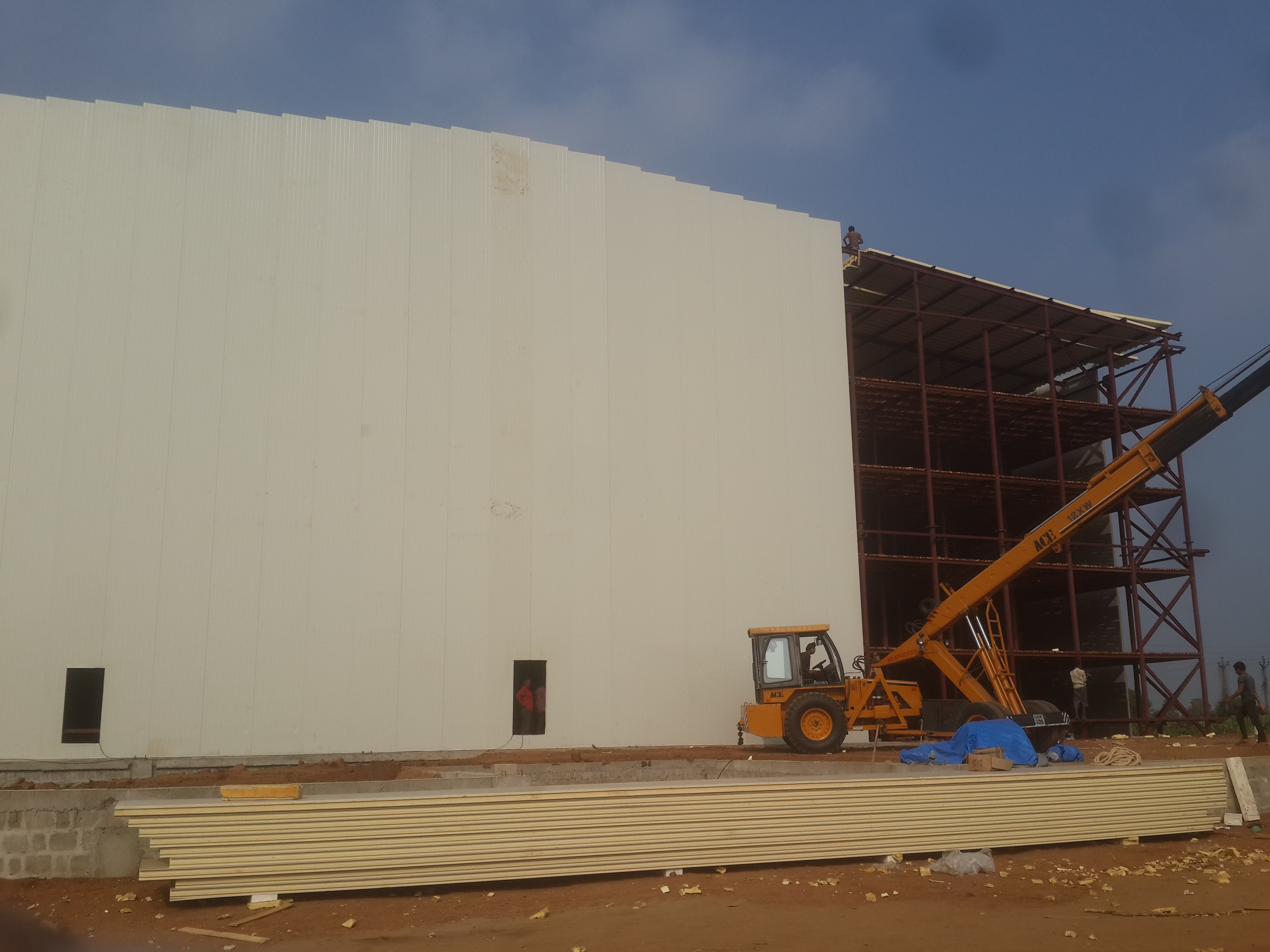
What is a PEB Structure?
A PEB (Pre-Engineered Building) is a steel building system designed, fabricated, and partially assembled in a factory before being transported to the construction site for rapid erection. Unlike conventional steel structures where each member is individually designed and fabricated, PEB uses standardised design methodologies, computer-aided engineering, and automated manufacturing to produce building components that fit together precisely—like a large-scale construction kit.
The result is a building that can be designed, manufactured, and erected in 30–50% less time than conventional construction, with material savings of 20–30% and significantly higher quality control. In India, PEB structures have become the preferred choice for warehouses, factories, logistics hubs, showrooms, sports facilities, and aircraft hangars.
Components of a PEB Structure
1. Primary Framing
The primary frame is the structural skeleton of the building, consisting of:
- Rigid Frame Columns: Tapered or uniform I-section columns that transfer vertical and lateral loads to the foundation.
- Rigid Frame Rafters: Tapered I-section beams spanning the width of the building, forming the roof slope. Clear spans of 30–90 metres are achievable without interior columns.
- Crane Beams: For buildings with overhead cranes (up to 250 MT capacity), crane beams are integrated into the primary frame design.
2. Secondary Framing
Secondary members distribute loads from the cladding to the primary frame:
- Purlins: Z or C-section cold-formed steel members that support roof panels and transfer roof loads to rafters.
- Girts: Similar to purlins but oriented horizontally on walls to support wall cladding panels.
- Eave Struts: Members at the eave line that connect the roof and wall systems.
3. Cladding (Panels)
The building envelope is formed by cladding panels that provide weather protection, thermal insulation, and aesthetics. Options include:
- PUF sandwich panels: the most popular choice for insulated roofing and wall cladding in PEB structures.
- Single-skin profiled steel sheets—for budget-conscious projects without insulation requirements.
- Double-skin systems with fibre-glass or rockwool insulation—for projects requiring fire-rated or acoustic solutions.
4. Accessories & Components
- Ridge Ventilators & Turbo Vents: Natural ventilation solutions for industrial sheds.
- Gutters & Downspouts: Pre-engineered drainage systems sized for Indian monsoon rainfall intensities.
- Skylights: Polycarbonate or FRP roof lights for natural daylight.
- Sliding/Rolling Doors: Large motorised doors for vehicle access.
- Mezzanine Floors: Pre-engineered intermediate floors for offices, storage, or equipment platforms.
PEB vs Conventional Construction
| Parameter | PEB Structure | Conventional Steel/RCC |
|---|---|---|
| Design & Fabrication | 4–8 weeks | 8–16 weeks |
| Erection Speed | 500–1,000 sq m/day | 50–150 sq m/day |
| Total Project Time | 8–16 weeks | 20–40 weeks |
| Steel Consumption | 8–14 kg/sq m | 18–30 kg/sq m |
| Foundation Cost | Lower (lighter structure) | Higher (heavier loads) |
| Clear Span Capability | Up to 90 m | Typically <30 m without trusses |
| Expansion Flexibility | Easy (modular design) | Difficult and costly |
| Quality Control | Factory-controlled, consistent | Site-dependent, variable |
Applications of PEB Structures in India
- Warehouses & Logistics Hubs: E-commerce giants and 3PL operators are driving demand for large-span, quickly erected PEB warehouses across India’s logistics corridors. Read our guide on warehouse construction cost with PUF panels.
- Manufacturing Factories: Automotive, FMCG, electronics, and textile factories benefit from PEB’s clear-span interiors, overhead crane compatibility, and rapid timelines.
- Showrooms & Retail: Branded showrooms and hypermarkets use PEB for speed-to-market and architectural flexibility with attractive façade panels.
- Cold Storage: PEB structures with PUF/PIR cladding form the building shell for modern cold storage facilities.
- Sports & Recreation: Badminton courts, indoor stadiums, and swimming pool enclosures leverage PEB’s long-span capability.
- Aircraft Hangars: Clear spans of 60–90 metres make PEB the only practical solution for hangar construction.
The Indian PEB Market
India’s PEB market has grown at a CAGR of 12–15% over the past decade and is projected to exceed ₹50,000 crore by 2028. Key growth drivers include:
- The Make in India initiative driving manufacturing capacity expansion.
- Growth of organised warehousing under GST’s hub-and-spoke logistics model.
- Rising labour costs making factory-controlled prefabrication more cost-competitive.
- Increasing awareness of sustainable, low-waste construction methods.
PEB Construction Cost Overview
PEB building costs in India typically range from ₹1,200 to ₹2,500 per sq ft (all-inclusive), depending on:
- Span and height: Larger spans and taller buildings require heavier primary frames.
- Crane capacity: Buildings with 10+ MT overhead cranes need reinforced columns and crane beams.
- Cladding type: Single-skin sheets are the cheapest; PUF sandwich panels add ₹100–200/sq ft but provide insulation.
- Location and logistics: Freight costs vary by distance from the manufacturing plant.
For a project-specific estimate, request a quotation from Phoenixx SmartBuild’s PEB division.
Frequently Asked Questions
Frequently Asked Questions
What is the full form of PEB in construction?
PEB stands for Pre-Engineered Building. It refers to a steel building system where structural components are designed using specialised software, fabricated in a factory under controlled conditions, and then assembled at the construction site. This approach delivers faster construction, lower costs, and higher quality compared to conventional methods.
What is the lifespan of a PEB structure?
A well-designed and properly maintained PEB structure lasts 40–50 years or more. The primary steel frame, protected with primer and finish coats, resists corrosion for decades. Cladding panels may need replacement or recoating after 20–30 years depending on environmental conditions.
Is PEB cheaper than conventional construction?
Yes, PEB is typically 15–30% cheaper than conventional steel or RCC construction. Savings come from optimised steel design (20–30% less steel), reduced foundation costs (lighter structure), faster erection (less labour), and minimal material waste. The larger the building, the greater the cost advantage.
Can PEB buildings have multiple floors?
Yes, PEB structures can incorporate mezzanine floors and multi-storey configurations. While single-storey clear-span buildings are the most common PEB application, multi-storey PEB designs are increasingly used for office blocks, showrooms, and mixed-use industrial facilities up to 3–4 storeys.
What is the maximum span of a PEB building?
PEB technology can achieve clear spans of up to 90 metres without intermediate columns. Standard warehouse and factory spans range from 24 to 60 metres. For spans exceeding 60 metres, specialised design approaches such as truss rafters or cable-stayed systems are employed.
Related Resources
Explore related products, locations, case studies, and technical guides from PHOENIXX SMARTBUILD.