What is PUF Panel? Complete Guide to Polyurethane Foam Panels
A comprehensive guide explaining what PUF panels are, their manufacturing process, key properties, industrial applications, and why they dominate modern Indian construction.
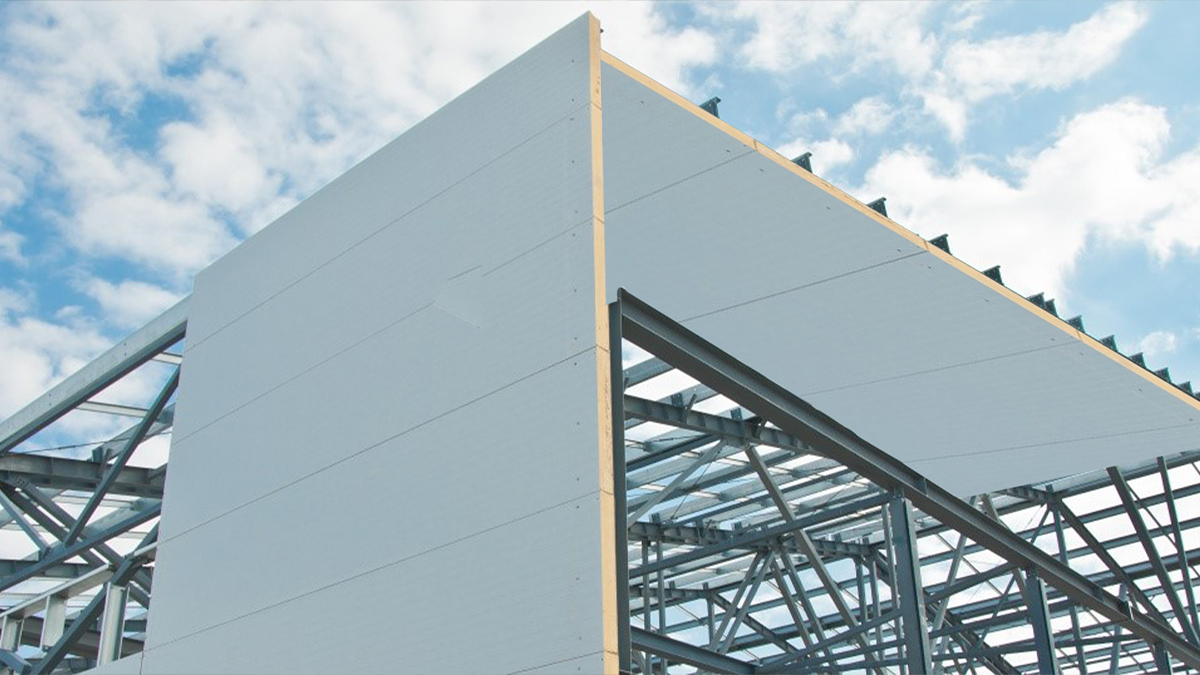
What is a PUF Panel? Definition & Overview
A PUF panel (Polyurethane Foam panel) is a composite building material consisting of an insulating core of rigid polyurethane foam sandwiched between two metal facings, typically pre-painted galvanised iron (PPGI) or pre-painted galvalume (PPGL) steel sheets. Often called a sandwich PUF panel, this product serves simultaneously as a structural element, thermal insulator, and weather barrier, making it one of the most versatile materials in modern construction.
In India, PUF sandwich panels have become the go-to cladding and roofing solution for factories, warehouses, cold storage facilities, cleanrooms, and commercial buildings. Their rapid adoption is driven by superior insulation performance, fast installation speed, and competitive lifecycle cost compared to conventional brick-and-mortar or bare metal sheet construction.
How PUF Panels Are Manufactured
The manufacturing process for PUF panels is a continuous, highly automated operation that ensures consistent quality across every metre of panel produced. Here is a step-by-step breakdown:
- Coil Decoiling & Profiling: Steel coils (PPGI/PPGL) are loaded onto decoilers and fed through roll-forming machines that create the desired profile—flat, micro-ribbed, or trapezoidal—on the top and bottom facings.
- Surface Preparation: The steel surfaces are cleaned and primed to ensure optimal adhesion between the metal and the polyurethane foam core.
- Chemical Mixing: A polyol blend and isocyanate (MDI) are precisely metered and mixed at high pressure in a mixing head. Catalysts, blowing agents, and fire-retardant additives are included in the polyol stream.
- Foam Pouring & Expansion: The liquid mixture is poured onto the lower steel facing as it moves along the production line. The chemicals react exothermically, expanding 25–30 times in volume within seconds to fill the gap between the two facings.
- Curing in Double-Belt Laminator: The panel assembly passes through a heated double-belt press where the foam cures under controlled temperature and pressure, bonding firmly to both steel skins.
- Cutting & Stacking: A flying saw cuts the continuous panel to the customer’s specified length. Finished panels are stacked, labelled, and packed for dispatch.
At Phoenixx SmartBuild, our modern continuous line can produce panels ranging from 30 mm to 200 mm thickness, with output speeds exceeding 8 metres per minute, ensuring timely delivery even for large-scale projects.
Components of a PUF Panel
1. Metal Facings (Steel Skins)
The outer skins provide structural strength, weather resistance, and aesthetic appeal. Common specifications include 0.35 mm to 0.80 mm thick PPGI or PPGL sheets in a wide range of RAL colours. For specialised environments like food processing or pharmaceutical cleanrooms, stainless steel (SS 304/316) facings are used.
2. Polyurethane Foam Core
The rigid PUF core is the heart of the panel. With a density of 38–45 kg/m³ and a thermal conductivity of just 0.020–0.024 W/mK, it offers one of the best insulation-to-thickness ratios among all building materials. The closed-cell structure also makes it inherently moisture-resistant.
3. Adhesive Bond
The chemical bond between the foam core and the metal skins is integral—formed during the foam expansion process itself, eliminating the need for separate adhesives and ensuring long-term delamination resistance.
Key Properties of PUF Panels
| Property | Value / Range | Significance |
|---|---|---|
| Thermal Conductivity | 0.020–0.024 W/mK | Continuous insulation; reduces HVAC energy by 30–40% |
| Density | 38–45 kg/m³ | Lightweight yet structurally adequate |
| Compressive Strength | 0.10–0.20 N/mm² | Withstands normal loading and impact |
| Fire Rating | B2 (self-extinguishing) to B1 with additives | Meets Indian NBC standards for industrial buildings |
| Water Absorption | < 2% by volume | Closed-cell foam resists moisture ingress |
| Operating Temperature | −40°C to +80°C | Suitable for cold storage through to roofing in hot climates |
Applications of PUF Panels
The versatility of PUF panels means they are deployed across a wide spectrum of building types:
- Industrial Roofing & Cladding: PUF roofing panels are widely used in factories, warehouses, and workshops to reduce internal heat and improve worker comfort.
- Cold Storage & Cold Chain: Panels of 80–200 mm thickness form the walls, ceiling, and floor insulation of cold rooms, maintaining temperatures from +15°C down to −35°C.
- Cleanrooms & Pharma: Flush-joint PUF panels with food-grade or GMP-compliant coatings line pharmaceutical manufacturing areas and laboratories.
- Commercial Buildings: Shopping centres, showrooms, and office complexes use PUF panels for rapid façade construction and improved energy efficiency.
- Poultry & Agriculture: Controlled-environment poultry sheds and mushroom growing rooms benefit from the thermal stability PUF panels provide.
Advantages of PUF Panels
- Superior Insulation: The lowest thermal conductivity among mainstream insulation materials translates to significant energy savings over the building’s lifetime.
- Fast Installation: Large-format panels (up to 15 m length) with interlocking joints can be erected 5–7 times faster than conventional brick walls, compressing project timelines dramatically.
- Lightweight: At roughly 10–15 kg/m² for a 50 mm panel, PUF panels impose minimal load on the supporting structure, reducing steel consumption in the framework.
- Cost-Effective Lifecycle: Although the upfront PUF panel price per sq ft may be higher than bare metal sheets, the energy savings, lower maintenance, and faster construction repay the investment within 2–3 years.
- Weather Resistance: Closed-cell foam and coated steel facings make the panel resistant to rain, humidity, and UV degradation, ideal for India’s tropical and monsoon-prone climates.
- Hygienic Surface: Smooth, washable inner surfaces meet the hygiene standards required by food processing, dairy, and pharmaceutical industries.
PUF Panels in the Indian Market
India’s PUF panel market has grown at a CAGR of over 9% in recent years, driven by the expansion of organised cold chain infrastructure, the rise of Pre-Engineered Buildings (PEB), and government initiatives such as the Pradhan Mantri Kisan SAMPADA Yojana that incentivise modern food storage. The Bureau of Indian Standards (BIS) has established IS 14925 for sandwich panels, and compliance with National Building Code (NBC) fire-safety norms is a key consideration for specifiers.
Leading manufacturers like Phoenixx SmartBuild offer a comprehensive range, from standard sandwich PUF panels to customised solutions for cold rooms and cleanrooms, backed by in-house engineering, pan-India logistics, and dedicated project support.
Frequently Asked Questions
Frequently Asked Questions
What does PUF stand for in construction?
PUF stands for Polyurethane Foam. In construction, a PUF panel is an insulated sandwich panel with a rigid polyurethane foam core bonded between two metal sheets, used for roofing, wall cladding, and cold storage insulation.
What is the lifespan of a PUF panel?
A well-manufactured PUF panel with quality PPGI/PPGL facings typically lasts 25–30 years with minimal maintenance. The foam core retains over 90% of its insulation value throughout this period, provided the panel is correctly installed and the outer coatings remain intact.
Are PUF panels fire-resistant?
Standard PUF panels carry a B2 fire rating (self-extinguishing). With fire-retardant additives, they can achieve B1 classification. For applications demanding higher fire resistance, PIR (Polyisocyanurate) or Rockwool core panels are recommended alternatives.
What thickness of PUF panel is used for cold storage?
Cold storage applications typically use 80–120 mm thick panels for temperatures between 0°C and 5°C, and 120–200 mm panels for deep-freeze storage at −18°C to −35°C. The exact thickness depends on the target temperature, ambient conditions, and energy-efficiency goals.
How much does a PUF panel cost in India?
PUF panel prices in India range from approximately ₹100–₹130 per sq ft for 30–40 mm panels used in roofing, up to ₹300–₹400 per sq ft for 120–150 mm cold storage panels. Prices vary by thickness, density, steel grade, and order volume. Contact Phoenixx SmartBuild for a project-specific quotation.
Related Resources
Explore related products, locations, case studies, and technical guides from PHOENIXX SMARTBUILD.