Best Wall Material for Warehouse in India – Complete Comparison
A detailed comparison of warehouse wall materials available in India including brick masonry, metal sheets, PUF panels, and RCC walls. Covers cost per sq ft, insulation value, construction speed, and suitability by warehouse type.
Best Wall Material for Warehouse in India – Complete Comparison
The walls of a warehouse do much more than just enclose space. They provide insulation, structural support, weather protection, security, and aesthetic appeal. In India’s varied climate and rapidly growing logistics sector, choosing the right wall material for your warehouse can significantly impact construction cost, energy efficiency, and long-term operational expenses.
This comprehensive guide compares the four most common warehouse wall materials in India and helps you select the best option for your specific use case.
Common Warehouse Wall Materials in India
Indian warehouses predominantly use one of these four wall systems:
- Brick masonry walls (conventional construction)
- Single-skin metal cladding (GI/colour-coated sheets)
- PUF/PIR sandwich panels (insulated cladding)
- RCC walls (reinforced concrete)
Detailed Comparison Table
| Parameter | Brick Masonry | Metal Sheet | PUF Sandwich Panel | RCC Wall |
|---|---|---|---|---|
| Cost per sq ft (installed) | ₹100–₹160 | ₹40–₹65 | ₹120–₹190 | ₹180–₹300 |
| Thermal insulation (U-value) | Moderate (2.0–2.5) | None (5.0+) | Excellent (0.3–0.6) | Moderate (2.5–3.0) |
| Construction speed | Slow (4–8 weeks) | Fast (1–2 weeks) | Fast (1–2 weeks) | Very slow (6–12 weeks) |
| Weight (kg/sq m) | 200–350 | 4–6 | 8–14 | 300–500 |
| Maintenance | Moderate (repointing, painting) | High (rust, fastener leaks) | Very low | Low |
| Lifespan | 30–50 years | 10–15 years | 25–30 years | 50+ years |
| Fire resistance | Good (2–4 hours) | None | Self-extinguishing | Excellent (4+ hours) |
| Aesthetic options | Limited (paint/plaster) | Colour-coated options | Wide colour range | Limited (paint/plaster) |
1. Brick Masonry Walls
Brick walls have been the traditional choice for warehouse construction in India for decades.
Advantages
- Familiar construction technique – skilled labour widely available
- Good fire resistance (2–4 hours)
- Decent thermal mass – walls absorb heat during the day and release it at night
- Sound insulation is reasonable
Disadvantages
- Slow construction – a 10,000 sq ft warehouse may take 6–8 weeks just for walls
- Heavy – requires deeper and costlier foundations
- Limited height economically (typically 6–8 metres without columns)
- Prone to seepage and dampness in monsoon areas
- Limited clear-span capability – intermediate columns needed for wide buildings
Best for: Small godowns, retail shops, and traditional construction projects where speed is not a priority.
2. Single-Skin Metal Cladding
Metal sheets (GI or colour-coated) are the budget option for warehouse walls.
Advantages
- Cheapest upfront cost (₹40–65 per sq ft)
- Very fast installation
- Lightweight – ideal for PEB structures
Disadvantages
- Zero insulation – warehouse heats up drastically in summer
- Condensation problems in humid climates
- Noise during rain (can be disruptive in work environments)
- Prone to denting, corrosion, and fastener loosening
- Short lifespan (10–15 years)
Best for: Temporary storage, budget godowns, and non-climate-sensitive storage.
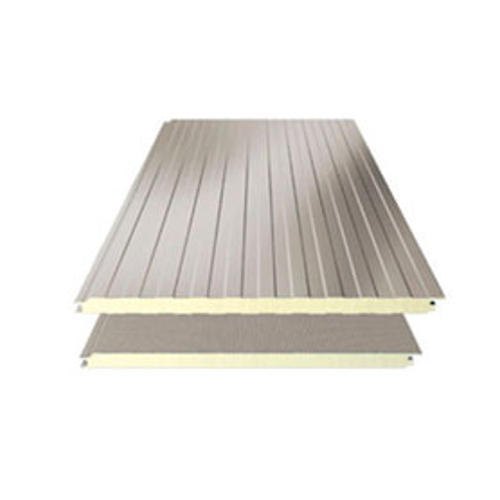
3. PUF Sandwich Panels – The Modern Choice
PUF Sandwich Panels have rapidly become the preferred wall material for modern warehouses in India, and for good reason:
Advantages
- Excellent insulation: 50 mm PUF panel provides an R-value of 2.3, keeping the warehouse significantly cooler in summer and warmer in winter
- Fast installation: Pre-manufactured panels install quickly – walls for a 20,000 sq ft warehouse can be erected in 7–10 working days
- Lightweight: At just 8–14 kg/sq m, PUF panels require lighter structural steel, reducing overall project cost
- Leak-free joints: Tongue-and-groove joints create a weather-tight seal without exposed fasteners
- Low maintenance: No painting, repointing, or waterproofing needed. Just periodic cleaning with water
- Aesthetic finish: Available in multiple colours and profiles, giving warehouses a modern, professional look
Disadvantages
- Higher upfront cost than metal sheets (though lower TCO)
- Cannot serve as structural load-bearing walls (need a steel frame)
- Requires careful handling during installation to avoid panel damage
For warehouses that need both insulation and aesthetic walls, Wall & Ceiling Panels offer flat-face designs ideal for interior and exterior applications.
4. RCC Walls
Reinforced Concrete walls are the heaviest and most expensive option.
Advantages
- Highest structural strength and security
- Excellent fire resistance (4+ hours)
- Best for multi-storey warehouses
- Longest lifespan (50+ years)
Disadvantages
- Most expensive option (₹180–300 per sq ft)
- Extremely slow construction
- Very heavy – requires expensive foundations
- Poor insulation unless additional insulation layer is added
Best for: Multi-storey warehouses, high-security storage, and boundary walls.
Recommendations by Warehouse Type
Based on our experience across hundreds of projects, here are our recommendations:
- E-commerce fulfilment centre: PUF sandwich panels (50–60 mm) – clean look, insulated, fast to build
- Agricultural godown: Metal sheet walls with brick dado (lower 4 feet in brick for durability, metal above)
- Cold chain warehouse: PIR panels (80–120 mm) with cam-lock joints and vapour barriers
- 3PL logistics warehouse: PUF sandwich panels – offers the best balance of speed, cost, and professional appearance
- Government FCI godown: Brick masonry or RCC as per government specifications
- Hazardous materials warehouse: Rockwool panels or RCC with fire-rated design
Cost Comparison for a 20,000 Sq Ft Warehouse
| Wall Material | Wall Cost (₹ Lakh) | Foundation Extra Cost | Annual Maintenance | 25-Year TCO (₹ Lakh) |
|---|---|---|---|---|
| Brick Masonry | 14–22 | +₹3–5 lakh | ₹1–2 lakh | 42–77 |
| Metal Sheet | 5.5–9 | Nil | ₹0.5–1 lakh | 18–34 |
| PUF Panel (50 mm) | 17–26 | Nil | ₹0.2–0.5 lakh | 22–38 |
| RCC Wall | 25–42 | +₹5–8 lakh | ₹0.5–1 lakh | 43–70 |
As the table shows, PUF panels offer the lowest total cost of ownership when you factor in minimal maintenance, no foundation premium, and energy savings from insulation. Read our detailed warehouse construction cost guide for more information.
Conclusion
For the majority of modern warehouse projects in India, PUF sandwich panels are the best wall material, offering the optimal combination of insulation, construction speed, aesthetics, and total cost of ownership. PHOENIXX SmartBuild’s range of Sandwich PUF Panels and Wall & Ceiling Panels are engineered for Indian conditions and backed by expert installation support.
Get a free quote and let our team recommend the right wall solution for your warehouse project.
Frequently Asked Questions
What is the best wall material for a warehouse in India?
PUF (Polyurethane Foam) sandwich panels are the best wall material for most warehouses in India. They offer excellent thermal insulation, fast installation (7–10 days for a 20,000 sq ft warehouse), low maintenance, and the lowest total cost of ownership over 25 years. They are especially suitable for PEB-based modern warehouses.
How much do PUF panel walls cost per sq ft for a warehouse?
PUF sandwich panel walls cost ₹120–190 per sq ft installed, depending on panel thickness (40–60 mm is typical for warehouses), metal facing grade, and project size. This includes the panel, accessories, and installation labour. While higher than metal sheets, the total cost of ownership is lower due to minimal maintenance and energy savings.
Are brick walls or PUF panels better for a warehouse?
PUF panels are generally better than brick for modern warehouses because they install 4–6 times faster, provide 3–4 times better insulation, are 20–30 times lighter (reducing foundation costs), and have lower lifetime maintenance costs. Brick walls are only preferred where government specifications mandate masonry construction or for very small godowns.
Can PUF panels be used as load-bearing walls?
No, PUF sandwich panels are non-load-bearing cladding panels that attach to a steel or concrete structural frame. They resist wind loads and self-weight but cannot carry roof loads or floor loads. The structural frame (typically PEB steel) must be designed to carry all structural loads independently.
How long do PUF panel walls last on a warehouse?
High-quality PUF panel walls from reputable manufacturers last 25–30 years with minimal maintenance. The PUF foam core retains its insulation properties for the full lifespan, while the PPGI/PPGL metal facings are rated for 15–25 years of corrosion resistance depending on the coating type and environment.
Related Resources
Explore related products, locations, case studies, and technical guides from PHOENIXX SMARTBUILD.