PIR Panel Price vs PUF Panel: Which Is the Better Investment in 2026?
PIR panel or PUF panel, which offers better value for your project? Compare prices, thermal performance, fire ratings, and total cost of ownership to make the right choice in 2026.
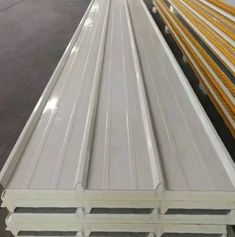
PIR vs PUF Panels: Understanding the Key Differences
When it comes to insulated sandwich panels for industrial and commercial construction, two materials dominate the market: Polyisocyanurate (PIR) and Polyurethane Foam (PUF). While both belong to the polyurethane family, they differ significantly in performance, pricing, and application suitability. Choosing between PIR panels and PUF panels is one of the most important decisions you’ll make for your building project, and it all comes down to understanding where each material excels.
This guide provides a comprehensive 2026 price comparison with performance data to help you select the right panel for your needs.
Head-to-Head Price Comparison: PIR vs PUF Panels (2026)
The following table compares pricing for both panel types across common thicknesses, based on current Indian market rates with standard PPGI/PPGL metal facings:
| Panel Thickness | PUF Panel Price (₹/sq ft) | PIR Panel Price (₹/sq ft) | Price Difference |
|---|---|---|---|
| 40mm | ₹180 – ₹240 | ₹220 – ₹300 | +20–25% |
| 50mm | ₹210 – ₹280 | ₹260 – ₹350 | +22–28% |
| 60mm | ₹240 – ₹320 | ₹300 – ₹400 | +23–28% |
| 80mm | ₹300 – ₹400 | ₹380 – ₹500 | +25–30% |
| 100mm | ₹370 – ₹480 | ₹460 – ₹600 | +24–28% |
| 120mm | ₹430 – ₹560 | ₹540 – ₹700 | +25–30% |
Key takeaway: PIR panels cost approximately 20–30% more than PUF panels at equivalent thickness. However, as we’ll see below, the performance benefits of PIR often justify the premium. For detailed pricing for your specific project, check our sandwich panel pricing guide.
Performance Comparison: Thermal, Fire, and Structural Properties
Price alone doesn’t tell the full story. Here’s how PIR and PUF panels compare on critical performance metrics:
| Property | PUF Panel | PIR Panel | Winner |
|---|---|---|---|
| Thermal Conductivity | 0.020–0.024 W/mK | 0.018–0.022 W/mK | PIR |
| Fire Rating | B2–B3 (normal flammability) | B1 (low flammability) | PIR |
| Self-Extinguishing | No (melts & drips) | Yes (chars & resists flame) | PIR |
| Smoke Generation | High | Low | PIR |
| Compressive Strength | 100–150 kPa | 120–180 kPa | PIR |
| Temperature Resistance | Up to 120°C | Up to 150°C | PIR |
| Weight (50mm panel) | 8–10 kg/sq m | 8–9.5 kg/sq m | Tie |
| Moisture Resistance | Good | Very Good | PIR |
PIR panels outperform PUF panels in virtually every technical metric. The most significant advantage is fire safety—PIR panels char rather than melt when exposed to fire, generating far less toxic smoke. This makes them mandatory for many applications including cold storage projects, pharmaceutical facilities, and buildings requiring FM Global or LPCB certification.
Cost-Benefit Analysis for Different Applications
The right panel choice depends heavily on your application. Here’s our recommendation based on cost-benefit analysis for common project types:
Standard Warehouses and Industrial Sheds
Recommended: PUF Panels
For non-temperature-controlled storage and manufacturing facilities, PUF panels offer the best value. The fire risk in open warehouse environments is manageable with standard sprinkler systems, and the 20–30% cost saving on panels translates to significant budget relief on large-area projects. A 10,000 sq ft warehouse saves ₹3–5 lakh by using PUF over PIR panels.
Cold Storage and Frozen Food Facilities
Recommended: PIR Panels
For temperature-controlled environments operating below 0°C, PIR’s superior thermal conductivity means you can achieve equivalent insulation with thinner panels. A 100mm PIR panel delivers the same thermal performance as a 120mm PUF panel, saving on structural steel costs. Over a 15-year lifecycle, the energy savings from better insulation offset the higher panel cost entirely.
Pharmaceutical and Food Processing Cleanrooms
Recommended: PIR Panels
Fire safety compliance is non-negotiable in these environments. PIR panels meet the stringent fire rating requirements of FSSAI, WHO-GMP, and international standards. Insurance premiums are also 15–20% lower for PIR-clad buildings, providing ongoing cost savings.
Commercial Buildings and Offices
Recommended: PIR Panels
Building codes for commercial occupancy increasingly mandate B1 fire ratings. PIR panels ensure compliance without the need for additional fire-resistant coatings or barriers, simplifying the approval process.
Agricultural Sheds and Poultry Houses
Recommended: PUF Panels
Budget-sensitive agricultural applications benefit from PUF’s lower cost. The thermal insulation is more than adequate for maintaining comfortable temperatures for livestock and protecting stored produce.
When to Choose PIR Over PUF: A Decision Framework
Choose PIR panels when any of the following conditions apply:
- Fire safety compliance is mandatory (pharma, food processing, data centres)
- The building requires FM Global or LPCB certification
- Operating temperatures are below -10°C (deep cold storage)
- Insurance premium reduction is a priority
- The project involves high-value inventory with fire risk concerns
- Building codes mandate B1 fire-rated materials
Choose PUF panels when:
- Budget optimisation is the primary goal
- The application is a standard warehouse or industrial shed
- Operating temperature is above 5°C
- Fire safety requirements can be met with sprinklers and detectors
- The project is in a rural or agricultural setting with relaxed codes
Total Cost of Ownership: 10-Year Comparison
For a 10,000 sq ft cold storage facility, here’s the 10-year total cost of ownership comparison:
| Cost Component | PUF (100mm) | PIR (80mm equivalent) |
|---|---|---|
| Panel Cost | ₹42,00,000 | ₹48,00,000 |
| Energy Cost (10 years) | ₹36,00,000 | ₹29,50,000 |
| Insurance Premium (10 years) | ₹8,50,000 | ₹6,80,000 |
| Maintenance (10 years) | ₹3,00,000 | ₹2,40,000 |
| Total 10-Year Cost | ₹89,50,000 | ₹86,70,000 |
Despite the higher upfront cost, PIR panels deliver a lower total cost of ownership for cold storage applications due to energy savings and reduced insurance premiums. The crossover point typically occurs at Year 4–5.
Making the Right Choice for Your Project
Both PUF and PIR panels are excellent insulated building materials. The “best” choice depends entirely on your application, budget constraints, and compliance requirements. At PHOENIXX SmartBuild, we manufacture both panel types in-house, ensuring consistent quality and competitive pricing regardless of your choice.
Our engineering team can provide a side-by-side quotation for both panel types tailored to your specific project, helping you make a data-driven decision.
Need help deciding? Get a comparative quote for PIR and PUF panels from PHOENIXX SmartBuild.
Frequently Asked Questions
How much more expensive are PIR panels compared to PUF panels?
PIR panels are typically 20–30% more expensive than PUF panels at equivalent thickness. For example, a 50mm PUF panel costs ₹210–280/sq ft while a 50mm PIR panel costs ₹260–350/sq ft. However, PIR’s superior thermal performance means you can often use a thinner PIR panel to match PUF’s insulation, reducing the actual price gap.
Is PIR panel worth the extra cost over PUF panel?
For cold storage, pharmaceutical facilities, and fire-sensitive applications, PIR panels are absolutely worth the extra cost. The superior fire rating, lower insurance premiums, and better thermal efficiency result in a lower total cost of ownership over 10 years. For standard warehouses and sheds, PUF panels offer better value.
Which panel has better fire resistance—PIR or PUF?
PIR panels have significantly better fire resistance. PIR achieves B1 (low flammability) rating and is self-extinguishing—it chars when exposed to flame rather than melting and dripping like PUF. PIR also produces far less toxic smoke, making it the safer choice for occupied buildings and high-value storage.
Can I use PUF panels instead of PIR for cold storage?
Yes, PUF panels can be used for cold storage, but you’ll need thicker panels to achieve equivalent thermal performance (e.g., 120mm PUF vs 100mm PIR for -25°C storage). PUF is suitable for chilled storage above 0°C. For deep freeze applications below -25°C, PIR is strongly recommended for both performance and fire safety reasons.
What is the price difference between PIR and PUF panels for a 5,000 sq ft project?
For a 5,000 sq ft project using 50mm panels, PUF panels would cost approximately ₹10.5–14 lakh while PIR panels would cost approximately ₹13–17.5 lakh: a difference of ₹2.5–4 lakh. However, if fire compliance requires PIR, the alternative (PUF + additional fire protection) may cost even more.
Related Resources
Explore related products, locations, case studies, and technical guides from PHOENIXX SMARTBUILD.