PUF Panel vs EPS Panel – Complete Comparison for Builders
A thorough comparison of PUF (Polyurethane Foam) panels and EPS (Expanded Polystyrene) panels for builders, covering R-value per inch, fire behaviour, moisture absorption, cost per sq ft, and best use cases.
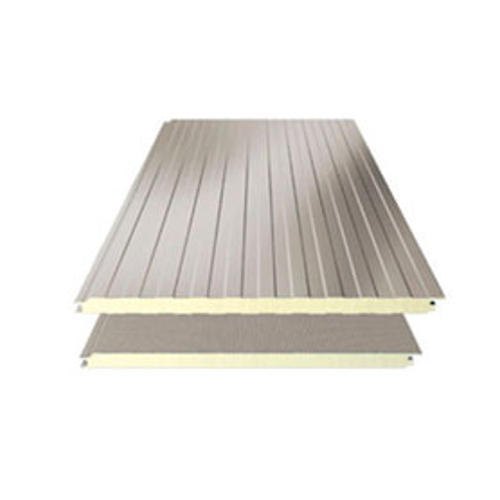
PUF Panel vs EPS Panel – Which Insulation Panel Is Right for Your Project?
Both PUF (Polyurethane Foam) and EPS (Expanded Polystyrene) panels are used extensively in Indian construction for thermal insulation and building envelopes. While they serve similar purposes, their material properties, performance characteristics, and price points differ significantly.
In this guide, we provide a data-driven comparison to help architects, builders, and project owners in India select the right panel for their specific application. Whether you’re building a warehouse, cold storage, or commercial complex, understanding these differences can save you lakhs in energy and maintenance costs over your building’s lifetime.
Understanding the Materials
PUF (Polyurethane Foam) Panel
PUF sandwich panels use a rigid closed-cell polyurethane foam core with a density of 38–42 kg/m³. The foam is formed through an exothermic reaction between polyol and isocyanate, creating a dense, uniform cellular structure with exceptional thermal resistance. PUF has one of the lowest thermal conductivity values among commercially available insulation materials.
EPS (Expanded Polystyrene) Panel
EPS panels use expanded polystyrene: the same material found in disposable packaging—as the core insulator. EPS beads are expanded with steam and moulded into blocks, which are then cut to size and laminated between metal facings. EPS has a density of 12–25 kg/m³, making it very lightweight but less thermally efficient per unit thickness compared to PUF.
PUF vs EPS – Detailed Comparison Table
| Parameter | PUF Panel | EPS Panel |
|---|---|---|
| Core Material | Rigid Polyurethane Foam | Expanded Polystyrene |
| Thermal Conductivity | 0.022–0.024 W/mK | 0.035–0.040 W/mK |
| R-Value per Inch (25 mm) | R-6.0 to R-6.5 | R-3.6 to R-4.0 |
| Density | 38–42 kg/m³ | 12–25 kg/m³ |
| Fire Behaviour | B2 (self-extinguishing with retardant) | B3 (flammable, melts and drips) |
| Moisture Absorption | < 2% by volume | 3–5% by volume |
| Compressive Strength | 150–200 kPa | 60–100 kPa |
| Temperature Range | −45°C to +80°C | −20°C to +70°C |
| Dimensional Stability | Excellent | Good (may shrink over time) |
| Price (50 mm panel, per sq ft) | ₹ 135–₹ 160 | ₹ 85–₹ 110 |
| Lifespan | 25–30 years | 15–20 years |
Thermal Performance – R-Value Comparison
The R-value (thermal resistance) per inch is the single most important metric for comparing insulation materials. PUF delivers an R-value of 6.0–6.5 per inch, while EPS achieves only 3.6–4.0 per inch. This means:
- A 50 mm PUF panel insulates as well as an 80–90 mm EPS panel
- For the same insulation requirement, PUF panels are 35–40% thinner
- Thinner panels mean lower structural steel costs and more usable interior space
For cold storage applications, this performance gap widens further. PUF maintains its insulating properties effectively down to −45°C, whereas EPS performance degrades below −20°C and is generally not recommended for deep-freeze applications.
Fire Safety Comparison
Fire behaviour is a critical concern with both materials, but PUF performs significantly better than EPS:
- PUF: With fire-retardant additives, PUF panels achieve a B2 rating (self-extinguishing). When ignited, PUF chars and forms a carbonised layer that slows flame spread.
- EPS: EPS is highly flammable (B3 rating), melts at around 100°C, and produces flaming drips that can spread fire to adjacent materials. This is a serious safety concern for industrial buildings.
Indian fire safety regulations under NBC 2016 are increasingly discouraging the use of EPS panels in industrial and commercial buildings. For projects requiring enhanced fire safety, consider PIR panels or Rockwool panels.
Moisture Resistance
PUF’s closed-cell structure absorbs less than 2% moisture by volume, making it highly resistant to humidity, condensation, and water exposure. EPS, with its bead-based structure, absorbs 3–5% moisture, which can degrade its insulating properties over time—particularly problematic in India’s humid coastal regions and during the monsoon season.
In cold storage applications, moisture ingress is especially damaging because water trapped in insulation freezes and expands, causing panel degradation. This is another reason PUF panels are preferred for refrigerated environments.
Price and Value Analysis
EPS panels are undeniably cheaper upfront—roughly 30–40% less expensive than PUF panels. However, the total cost of ownership tells a different story:
- Higher energy costs: EPS’s lower insulation value means higher electricity bills for air-conditioned or refrigerated buildings. For a 10,000 sq ft cold storage, this can amount to ₹2–3 lakhs more per year in energy costs.
- Shorter lifespan: EPS panels may need replacement in 15–20 years versus 25–30 years for PUF
- Thicker panels needed: Achieving the same insulation with EPS requires 35–40% thicker panels, increasing steel structure costs
For a comprehensive price breakdown, see our sandwich panel price guide for India. To get exact pricing for your project, request a free quote from Phoenixx SmartBuild.
Best Use Cases
Choose PUF Panels For:
- Cold storage and frozen food facilities
- Industrial warehouses and factories requiring insulation
- Cleanrooms and pharmaceutical facilities
- Buildings in hot or humid climates
- Projects where long-term energy savings matter
EPS Panels May Suit:
- Temporary structures or short-term projects
- Interior partitions in non-critical environments
- Budget-constrained projects with mild ambient temperature requirements
- Decorative cladding where insulation is secondary
Phoenixx SmartBuild Recommendation
For industrial and commercial projects in India, we strongly recommend PUF sandwich panels over EPS panels for their superior insulation, fire safety, moisture resistance, and longevity. The marginally higher upfront cost is recovered within 2–3 years through energy savings alone. Contact our team to discuss the best panel specification for your project.
Frequently Asked Questions
Is PUF panel better than EPS panel?
Yes, for most industrial and commercial applications. PUF panels offer 60–70% better insulation per inch, superior fire resistance (B2 vs B3), lower moisture absorption, and a longer lifespan (25–30 years vs 15–20 years). The only advantage of EPS is its lower upfront cost.
How much cheaper is EPS panel compared to PUF?
EPS panels are approximately 30–40% cheaper than PUF panels upfront. A 50 mm EPS panel costs ₹85–₹110 per sq ft versus ₹135–₹160 for PUF. However, when you account for energy costs, lifespan, and the thicker panels needed with EPS, PUF often has a lower total cost of ownership.
Can EPS panels be used for cold storage?
EPS panels can be used for cold rooms operating between 0°C and +5°C, but they are not recommended for frozen storage or deep-freeze applications below −20°C. PUF panels are the industry standard for cold storage due to their superior insulation value and moisture resistance.
Are EPS panels a fire hazard?
EPS is flammable (B3 fire rating) and melts at approximately 100°C, producing flaming drips that can spread fire. This is a significant safety concern for industrial buildings. PUF panels with fire-retardant additives achieve B2 (self-extinguishing) ratings and are considerably safer.
What thickness of EPS equals a 50 mm PUF panel in insulation?
Due to the difference in thermal conductivity, approximately 80–90 mm of EPS is needed to match the insulation provided by a 50 mm PUF panel. This means using EPS requires thicker panels, more space, and heavier structural support.
Related Resources
Explore related products, locations, case studies, and technical guides from PHOENIXX SMARTBUILD.