Sandwich Panel Price in India 2026 | Complete Breakdown
Detailed comparison of sandwich panel prices in India for 2026. PUF vs PIR vs Rockwool panels, thickness-wise pricing tables, coating options and their cost impact, and factors that affect your final quote.
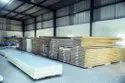
Sandwich Panel Price in India – 2026 Complete Breakdown
Sandwich panels are the backbone of modern industrial construction in India, used in everything from factory sheds and warehouses to cold storage facilities and cleanrooms. With multiple core materials, thicknesses, and facing options available, understanding the sandwich panel price in India requires a thorough comparison.
This guide compares the three most popular sandwich panels – PUF (Polyurethane Foam), PIR (Polyisocyanurate), and Rockwool (mineral wool) – across different thicknesses, coatings, and applications. Use this data to choose the right panel for your project and budget.
PUF vs PIR vs Rockwool – Price Comparison Table
The following table compares prices across the three core types for a standard 0.50 mm PPGI metal facing on both sides. Prices are ex-factory, exclusive of GST:
| Thickness | PUF Panel (₹/sq ft) | PIR Panel (₹/sq ft) | Rockwool Panel (₹/sq ft) |
|---|---|---|---|
| 30 mm | ₹ 100 – ₹ 130 | ₹ 120 – ₹ 155 | ₹ 115 – ₹ 145 |
| 40 mm | ₹ 115 – ₹ 145 | ₹ 138 – ₹ 175 | ₹ 132 – ₹ 165 |
| 50 mm | ₹ 130 – ₹ 165 | ₹ 155 – ₹ 198 | ₹ 148 – ₹ 185 |
| 60 mm | ₹ 150 – ₹ 185 | ₹ 180 – ₹ 225 | ₹ 170 – ₹ 210 |
| 80 mm | ₹ 180 – ₹ 220 | ₹ 218 – ₹ 270 | ₹ 205 – ₹ 255 |
| 100 mm | ₹ 215 – ₹ 265 | ₹ 260 – ₹ 325 | ₹ 245 – ₹ 305 |
| 120 mm | ₹ 255 – ₹ 315 | ₹ 310 – ₹ 385 | ₹ 290 – ₹ 360 |
| 150 mm | ₹ 305 – ₹ 380 | ₹ 370 – ₹ 465 | ₹ 345 – ₹ 430 |
Understanding the Three Core Materials
PUF (Polyurethane Foam) Panels
PUF sandwich panel options are the most widely used in India due to their excellent insulation-to-cost ratio. With a thermal conductivity of 0.022–0.024 W/mK, PUF panels deliver outstanding thermal performance for industrial, cold storage, and commercial applications.
- Best for: Warehouses, cold storage, PEB cladding, cleanrooms
- Fire rating: B3 (standard) or B2 (fire retardant additive)
- Temperature range: +60°C to −40°C
- Cost advantage: Most affordable per sq ft among the three
PIR (Polyisocyanurate) Panels
PIR panel options offer the same insulation performance as PUF but with significantly better fire resistance. The modified isocyanurate chemistry produces a char layer when exposed to flame, limiting fire spread.
- Best for: Cold storage, pharma facilities, food processing, high-rise cladding
- Fire rating: B1 or B2 (self-extinguishing)
- Temperature range: +60°C to −40°C
- Price premium: 18–25% more than equivalent PUF panels
Rockwool (Mineral Wool) Panels
Rockwool panel options use stone-derived mineral fibre as the core. Their standout feature is exceptional fire resistance – Rockwool is inherently non-combustible and can withstand temperatures above 1,000°C.
- Best for: Fire-rated partitions, petrochemical facilities, kitchens, escape corridors
- Fire rating: A1 (non-combustible)
- Temperature range: +60°C to −20°C (limited low-temp use due to higher conductivity)
- Trade-off: Poorer insulation than PUF/PIR (0.038–0.042 W/mK), heavier panels
Thickness-Wise Pricing Explained
Panel thickness is the primary cost driver after core material selection. Here’s how to choose the right thickness:
- 30–40 mm: Suitable for interior partitions, office spaces, and non-insulated cladding where thermal performance is secondary. Most economical option starting at around ₹ 100 per sq ft.
- 50–60 mm: The sweet spot for warehouse walls, factory cladding, and PEB envelopes. Provides meaningful insulation at a moderate cost of ₹ 130–₹ 225 per sq ft depending on core type.
- 80–100 mm: Required for cold storage applications from 0°C down to −18°C. Pricing ranges from ₹ 180 to ₹ 325 per sq ft.
- 120–150 mm: Necessary for deep-freeze and blast-freezer rooms below −18°C. The thickest panels cost ₹ 255–₹ 465 per sq ft but are essential for maintaining temperature with manageable energy costs.
Coating Options and Their Cost Impact
The external metal facing on sandwich panels serves both aesthetic and protective functions. Different coatings suit different environments:
| Coating Type | Description | Price Impact |
|---|---|---|
| PPGI (Pre-Painted Galvanised Iron) | Standard coating, good for most industrial environments | Base price |
| PPGL (Pre-Painted Galvalume) | Better corrosion resistance, ideal for coastal areas | +5–8% |
| PVC-Coated Steel | Chemical and scratch resistant, food processing grade | +10–15% |
| Stainless Steel (SS 304/316) | Maximum corrosion resistance, pharma and dairy | +80–150% |
| GI (Galvanised Iron) | Unpainted, typically used on hidden/interior face | −5–8% |
| Aluminium | Lightweight, corrosion-proof, speciality applications | +40–70% |
For most industrial projects, PPGI is the standard choice. Coastal locations in Gujarat, Kerala, or Tamil Nadu should consider PPGL for its superior salt-spray resistance. Food and pharma projects typically require PVC-coated or stainless steel facings on the interior face.
Steel Sheet Thickness and Price
The thickness of the metal facings also affects price. Here’s the impact of upgrading from the standard 0.50 mm:
- 0.40 mm: 5–8% cheaper (limited use, not recommended for exposed applications)
- 0.45 mm: 3–5% cheaper (suitable for interior partitions)
- 0.50 mm: Standard pricing (recommended for most applications)
- 0.55 mm: 4–7% premium (enhanced dent resistance)
- 0.60 mm: 8–12% premium (heavy-duty industrial use)
Factors Affecting Sandwich Panel Price in India
Beyond core material and thickness, several other factors influence the final price:
- Panel Profile: Flat panels are standard. Micro-ribbed or trapezoidal profiles for roofing may carry a small premium.
- Joint System: Tongue-and-groove (standard) vs. cam-lock (cold storage premium of 10–15%).
- Custom Lengths: Standard production lengths are most economical. Custom lengths may attract setup charges.
- Colour: Standard white, off-white, and light grey are base-priced. Custom RAL colours add 2–4%.
- Order Volume: Bulk orders above 5,000 sq ft qualify for 5–12% discounts.
- Delivery Location: Freight costs vary from ₹8 to ₹30 per sq ft depending on distance from the factory.
Where to Buy Sandwich Panels in India
PHOENIXX SmartBuild manufactures all three types of sandwich panels – PUF sandwich panel, PIR panel, and Rockwool panel – at our integrated production facility. Benefits of buying from PHOENIXX include:
- Factory-direct pricing with no dealer margins
- All three core types from a single source for mixed-panel projects
- Custom thickness, length, and coating combinations
- Technical support for panel selection and thermal calculations
- Pan-India delivery network with competitive freight rates
For a side-by-side price comparison of PIR and PUF panels, check our detailed PIR vs PUF price comparison guide.
Conclusion
The sandwich panel price in India for 2026 spans a wide range from ₹ 100 to ₹ 465 per sq ft depending on core material, thickness, and coating. PUF panels offer the best value for general industrial use, PIR panels are the top choice for fire-sensitive cold storage, and Rockwool panels excel in non-combustible fire-rated applications.
Need help choosing the right panel? Request a custom quote from PHOENIXX SmartBuild and our engineering team will recommend the optimal panel specification for your project requirements and budget.
Frequently Asked Questions
Which sandwich panel is cheapest in India – PUF, PIR, or Rockwool?
PUF panels are the most affordable, starting at approximately ₹100 per sq ft for 30 mm thickness. Rockwool panels are 10–15% more expensive, and PIR panels carry an 18–25% premium over PUF. However, the right choice depends on your insulation and fire safety requirements, not just price.
What is the price difference between PUF and PIR sandwich panels?
PIR panels typically cost 18–25% more than PUF panels of the same thickness and specification. For example, a 100 mm PUF panel costs ₹215–₹265 per sq ft while the equivalent PIR panel costs ₹260–₹325 per sq ft. The premium buys you significantly better fire performance.
How does steel sheet coating affect sandwich panel price?
Standard PPGI coating is the base price. Upgrading to PPGL adds 5–8%, PVC coating adds 10–15%, and stainless steel facings add 80–150%. Choose your coating based on the environment – coastal areas need PPGL minimum, while food/pharma requires PVC or SS interiors.
What thickness of sandwich panel do I need for a warehouse?
For a non-temperature-controlled warehouse, 40–50 mm PUF panels are standard and cost-effective at ₹115–₹165 per sq ft. If the warehouse needs to maintain cool temperatures (e.g., for perishables), consider 60–80 mm panels for better thermal performance.
Can I get sandwich panels in custom colours and lengths?
Yes. Most manufacturers including PHOENIXX SmartBuild offer custom RAL colour options at a 2–4% premium over standard colours. Custom lengths are also available, though standard production lengths are most economical. Custom orders typically require 2–3 weeks lead time.
Related Resources
Explore related products, locations, case studies, and technical guides from PHOENIXX SMARTBUILD.