PUF Panel vs RCC Construction – Cost, Speed & Performance Compared
A detailed comparison of PUF panel-based construction and traditional RCC (Reinforced Cement Concrete) construction for industrial buildings in India, covering cost per square foot, construction timeline, thermal performance, flexibility, and maintenance costs.
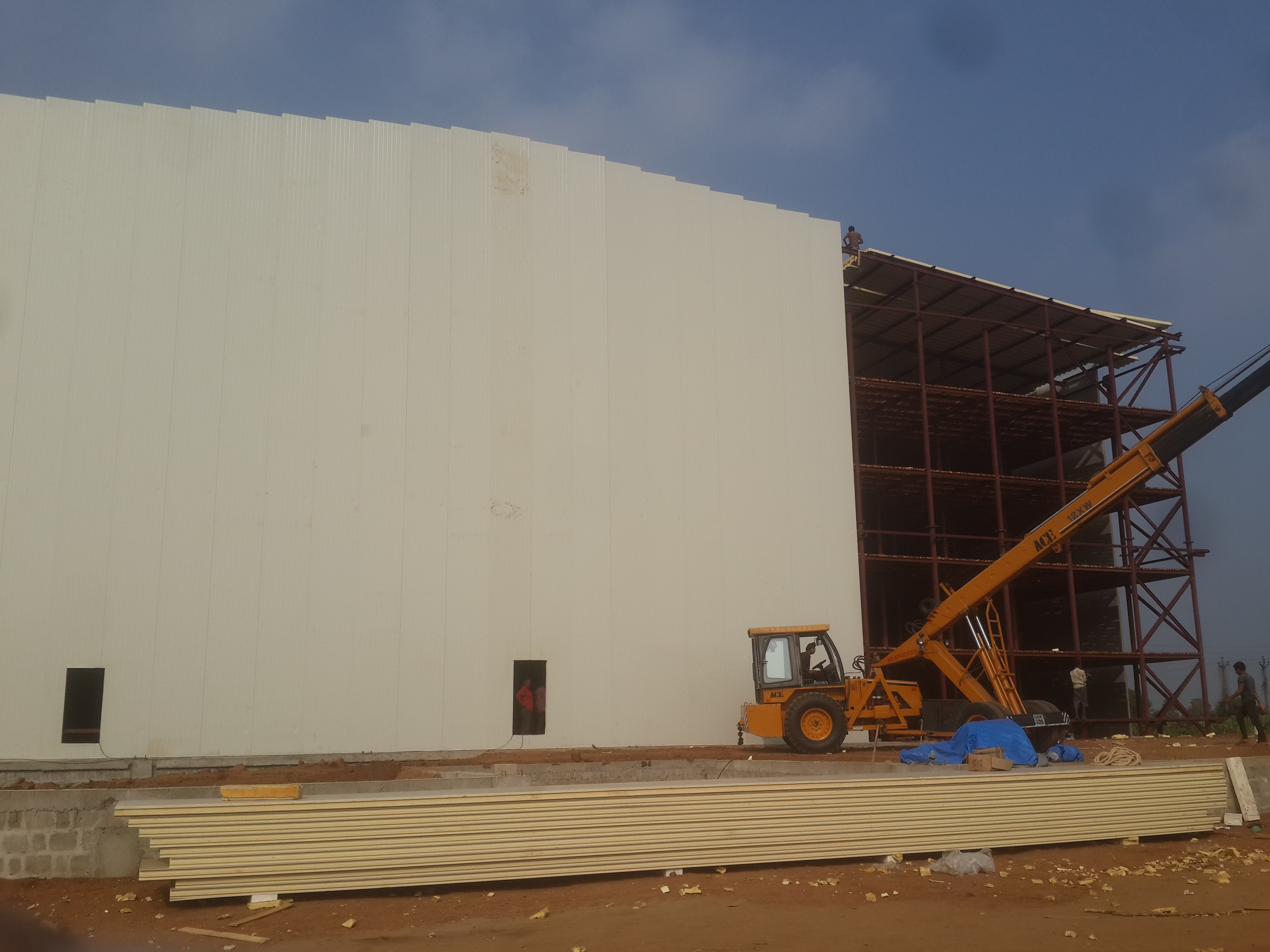
PUF Panel vs RCC Construction – The Modern Industrial Building Dilemma
India’s industrial sector is at a crossroads. Traditional RCC (Reinforced Cement Concrete) construction: the backbone of Indian infrastructure for decades—is being challenged by modern PUF panel-based PEB (Pre-Engineered Building) construction that promises faster timelines, better insulation, and lower lifecycle costs.
But is the shift always justified? In this comprehensive comparison, we analyse both construction methods across every parameter that matters to factory owners, warehouse developers, and industrial project managers in India.
Construction Cost Comparison (Per Sq Ft)
The cost comparison must account for all components of the building, not just the wall or roof material. Here is a typical comparison for a 20,000 sq ft industrial shed in India (2026 prices):
| Cost Component | PUF Panel + PEB Structure | RCC Construction |
|---|---|---|
| Structural Frame | ₹ 450–₹ 650 per sq ft | ₹ 550–₹ 800 per sq ft |
| Foundation | Light (isolated footings) | Heavy (strip/raft foundation) |
| Wall & Roof Cladding | ₹ 135–₹ 200 per sq ft | ₹ 180–₹ 350 per sq ft (incl. plastering) |
| Insulation | Built-in (PUF core) | Separate (₹30–₹60 per sq ft additional) |
| Finishing (paint, waterproofing) | Factory-finished (included) | ₹25–₹50 per sq ft |
| Total Project Cost | ₹ 800–₹ 1,200 per sq ft | ₹ 1,100–₹ 1,600 per sq ft |
PUF panel + PEB construction typically costs 20–35% less than equivalent RCC construction for single-storey industrial buildings. The savings come from lighter foundations, faster construction (lower labour costs), and the elimination of separate insulation, plastering, and painting. For specific project costing, see our warehouse construction cost guide.
Construction Timeline Comparison
Time is money in industrial construction. Delays mean lost production, missed delivery commitments, and interest costs on borrowed capital. Here’s how the timelines compare for a 20,000 sq ft industrial shed:
| Phase | PUF Panel + PEB | RCC Construction |
|---|---|---|
| Design & Engineering | 2–3 weeks | 3–4 weeks |
| Foundation | 2–3 weeks | 4–6 weeks |
| Structure Erection | 2–3 weeks | 8–12 weeks |
| Cladding/Walls/Roof | 1–2 weeks | 4–6 weeks (incl. curing) |
| Finishing | 1 week | 3–4 weeks |
| Total Timeline | 8–12 weeks | 22–32 weeks |
PUF panel + PEB construction is 2.5–3x faster than RCC. For a business that generates ₹50 lakhs per month in revenue, completing construction 3–4 months earlier translates to ₹1.5–2 crore in additional revenue: a massive financial advantage that often overshadows any material cost differences.
Thermal Performance
RCC structures have inherently poor thermal insulation. Concrete has a thermal conductivity of approximately 1.0–1.5 W/mK—about 50x worse than PUF foam (0.022–0.024 W/mK). A standard 150 mm RCC slab roof is a massive thermal bridge that transmits heat directly into the building.
Adding separate insulation to RCC structures is possible but adds cost, complexity, and construction time. In contrast, PUF sandwich panels provide built-in insulation that eliminates thermal bridges and reduces cooling energy consumption by 25–40% compared to uninsulated RCC structures.
For factories and warehouses in India’s hot climate zones (Rajasthan, Gujarat, Maharashtra, Telangana), this thermal advantage translates to significantly lower electricity bills and more comfortable working conditions for employees.
Structural Flexibility and Clear Spans
One of the biggest advantages of PEB steel structures with PUF panel cladding is the ability to achieve large column-free spans. PEB frames can span 60–90 metres without intermediate columns, providing unobstructed floor space ideal for:
- Warehouse racking and material handling
- Manufacturing assembly lines
- Vehicle parking and logistics operations
- Indoor sports facilities and exhibition halls
RCC construction typically requires columns every 6–9 metres, restricting floor plan flexibility and reducing usable area. Achieving wider spans with RCC requires expensive pre-stressed or post-tensioned beams and significantly heavier foundations.
Maintenance and Lifecycle Cost
RCC buildings require regular maintenance including:
- Waterproofing treatment for roof slabs (every 3–5 years)
- Crack repair and structural patching
- Repainting interior and exterior surfaces
- Anti-corrosion treatment for exposed reinforcement
PUF panel buildings with PEB structures require far less maintenance. The PPGI/PPGL coated panels resist corrosion, the galvanised steel structure is low-maintenance, and there’s no plastering or painting to upkeep. Over a 20-year period, PUF panel buildings typically cost 30–40% less to maintain than RCC structures.
Expansion and Modification
Need to add a bay to your warehouse or extend the factory floor? With PUF panel + PEB construction, expansion is straightforward—extend the steel frame and add more panels. The process takes 2–4 weeks for a typical 5,000 sq ft expansion.
With RCC, expansion involves new foundation excavation, concrete pouring, curing, brick work, plastering, and painting: a 2–3 month process that significantly disrupts ongoing operations.
When RCC Construction Is Appropriate
- Multi-storey industrial or commercial buildings (3+ floors)
- Heavy-load applications requiring massive structural members
- Buildings with very long design life (50+ years)
- Projects where local codes or client preferences mandate RCC
- Underground or basement construction
Build Faster and Smarter with Phoenixx SmartBuild
For single-storey and double-storey industrial buildings, PUF panel + PEB construction from Phoenixx SmartBuild offers a compelling combination of lower cost, faster timelines, better insulation, and easier expansion. Our team handles everything from structural design to panel manufacturing and on-site installation. Get a free quote for your next industrial project.
Frequently Asked Questions
Is PUF panel construction cheaper than RCC?
Yes, for single-storey industrial buildings, PUF panel + PEB construction typically costs 20–35% less than RCC construction when you account for all components including foundation, structure, cladding, insulation, and finishing. A typical PUF + PEB industrial shed costs ₹800–₹1,200 per sq ft versus ₹1,100–₹1,600 for RCC.
How much faster is PUF panel construction compared to RCC?
PUF panel + PEB construction is approximately 2.5–3 times faster than RCC. A 20,000 sq ft industrial shed takes 8–12 weeks with PEB versus 22–32 weeks with RCC construction. This speed advantage translates to earlier revenue generation and lower interest costs on project financing.
Can PUF panel buildings last as long as RCC buildings?
PUF panel buildings with properly designed PEB steel structures have a design life of 25–30 years, comparable to most industrial RCC buildings. The PUF panels themselves maintain their insulation properties for 25+ years, and the galvanised steel structure is designed for decades of service with minimal maintenance.
Is PUF panel building suitable for multi-storey construction?
PUF panels are cladding elements, not load-bearing walls. They can be used with multi-storey steel structures for up to 2–3 storeys. For buildings above 3 storeys, RCC or composite steel-concrete construction is typically more practical due to structural and code requirements.
What are the energy savings of PUF panel buildings over RCC?
PUF panel buildings offer 25–40% lower cooling energy costs compared to uninsulated RCC buildings in Indian climatic conditions. For a 20,000 sq ft air-conditioned factory, this can mean savings of ₹3–5 lakhs per year in electricity bills: a significant operational cost advantage.
Related Resources
Explore related products, locations, case studies, and technical guides from PHOENIXX SMARTBUILD.